By stabilising key phases inside the metal, silicon allows steels to absorb impact energy instead of cracking under pressure.
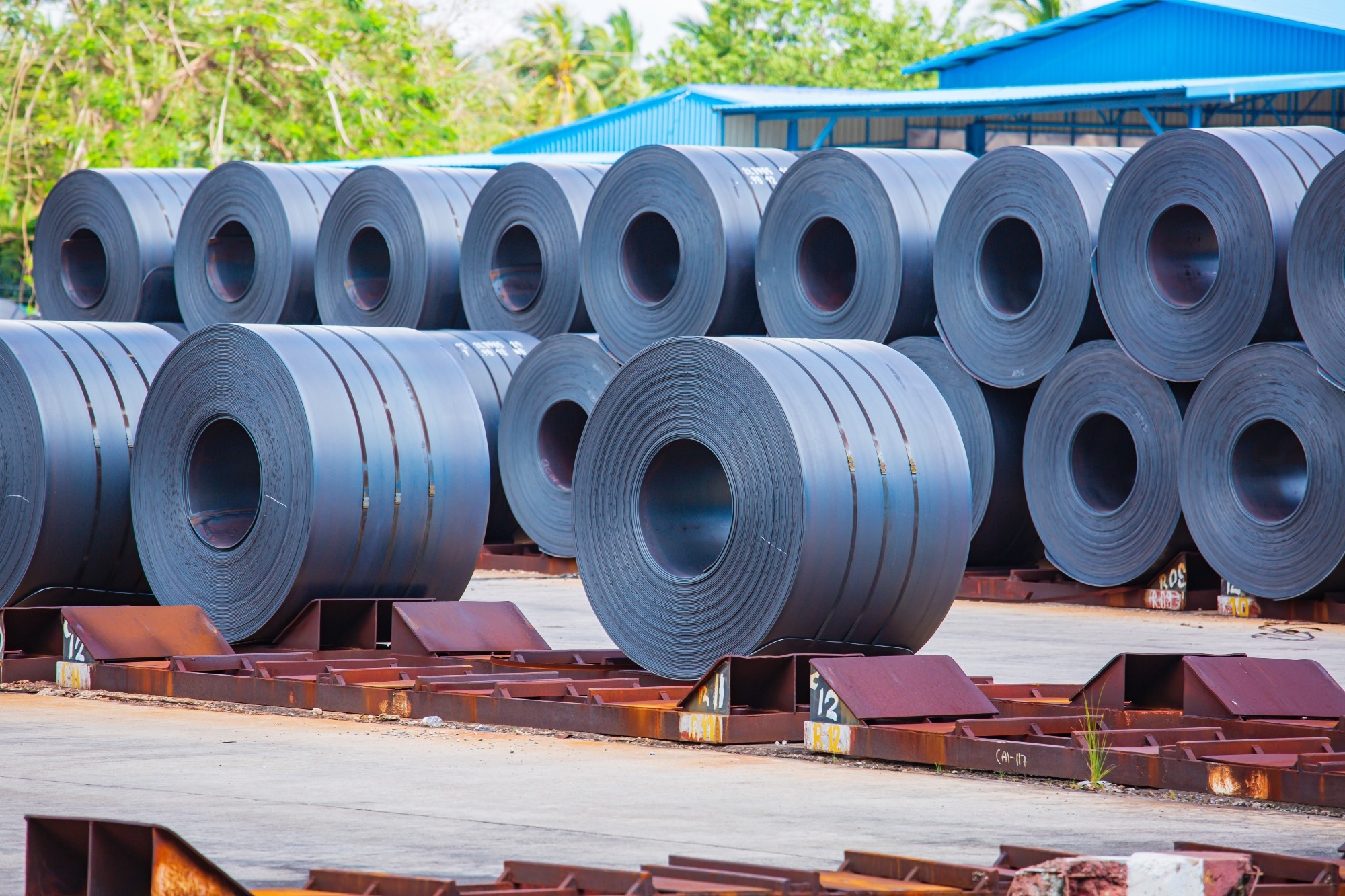 Study: Effect of Si on the Impact-Abrasive Wear Behavior of Medium-Carbon Low Alloy Steels with Different Microstructure. Image Credit: noomcpk/Shutterstock.com
The study, published in Materials, reports that carefully controlled silicon alloying can dramatically improve the impact–abrasive wear resistance of medium-carbon steels widely used in mining and mineral processing. By combining silicon additions with targeted heat treatments, researchers show how microstructural design - rather than hardness alone - determines durability under repeated impact and abrasion.
The findings point to a practical pathway for designing longer-lasting wear components such as grinding balls and crusher liners, where failure often arises from cracking rather than simple material loss.
Medium-carbon steels are a workhorse material for impact-loaded industrial components because they balance strength, cost, and manufacturability. Traditionally, wear resistance has been pursued by maximizing hardness. However, under repeated impact, very hard steels tend to crack, spall, and fail prematurely.
While heat-treatment routes such as quenching and tempering (QT), austempering, and quenching and partitioning (QP) are all used industrially, their comparative effectiveness and the role of alloying elements such as silicon have remained unclear within a single steel system.
This study directly addresses that gap.
Get all the details: Grab your PDF here!
The Experimental Setup
The researchers produced three medium-carbon low-alloy steels with identical base compositions but different silicon contents: 0.75, 1.34, and 2.72 wt.%. Each steel was processed using three industrial heat-treatment routes: QT, austempering, and QP.
Advanced characterization techniques, including SEM, XRD, residual stress analysis, and mechanical testing, were employed to investigate how silicon affected the phase composition, retained austenite content and morphology, and mechanical response. Impact–abrasive wear was evaluated using a three-body test designed to replicate realistic service conditions involving repeated impacts and abrasive particles.
Silicon’s Key Microstructural Role
Across all heat treatments, increasing silicon content suppressed cementite precipitation and promoted carbon partitioning into retained austenite. This led to higher retained austenite fractions and improved mechanical stability.
Interestingly, the study demonstrates that the morphology of retained austenite is as important as its quantity. Austempered steels with sufficient silicon developed finely dispersed, film-like retained austenite, which is mechanically more stable than coarse, blocky regions that transform prematurely and promote cracking.
Under austempering at 300 °C, increasing silicon from 0.75 to 2.72 wt.% raised retained austenite content from about 0.5 vol.% to nearly 21 vol.%, with a corresponding improvement in toughness and work-hardening capacity.
Clear performance differences emerged between the three heat-treatment routes.
Quenched and tempered steels achieved the highest hardness but showed poor ductility and low impact toughness. During wear testing, these steels developed extensive surface cracking and spalling, resulting in the highest wear losses and exceeding 1200 mg after two hours of testing.
Quenching and partitioning steels produced complex multiphase microstructures with intermediate wear resistance. Their performance depended strongly on quenching and partitioning temperatures, reflecting the sensitivity of retained austenite stability and tempering effects within this processing route.
Austempered steels, particularly at 300 °C, delivered the best overall performance. The steel containing 1.34 wt.% silicon recorded the lowest cumulative wear loss, approximately 930 mg after two hours, outperforming both QT and QP counterparts.
Austempering Improved Performance the Most, But Why?
The superior performance of the austempered steel was not due to exceptional hardness. Instead, it resulted from a favorable combination of factors:
- A moderate fraction of mechanically stable, film-like retained austenite
- A deep strain-hardened subsurface layer extending beyond 2 mm
- Reduced surface tensile residual stress
- Sustained transformation-induced plasticity (TRIP) during service
As impact loading progressed, retained austenite gradually transformed, absorbing energy, promoting work hardening, and suppressing crack propagation.
Residual stress analysis revealed a strong correlation between surface tensile stress and wear loss. Steels with lower surface tensile residual stress consistently showed better wear resistance.
The best-performing austempered steel exhibited surface tensile stresses of approximately 50 MPa, compared with more than 200 MPa in the quenched and tempered condition. This reduction delayed crack initiation and slowed the accumulation of subsurface damage under repeated impacts.
Moving Away from Hardness-Based Design
Taken together, the results show that impact-abrasive wear resistance is governed by a synergy of retained austenite stability, morphology, work-hardening response, matrix phase constitution, and residual stress state - not hardness alone.
By demonstrating how silicon content and heat treatment can be tuned to control these factors, the study provides a mechanistic framework for designing wear-resistant steels tailored to severe impact–abrasive environments.
The findings offer immediate relevance for industries seeking longer-lasting wear components without resorting to excessively hard (and brittle) materials.
Future work will focus on tracking how residual stresses evolve during service and how transformation kinetics under real operating conditions influence long-term performance.
Journal Reference
Wang, Z. et al. (2025). Effect of Si on the Impact-Abrasive Wear Behavior of Medium-Carbon Low Alloy Steels with Different Microstructure. Materials, 18(24), 5575. DOI: 10.3390/MA18245575
Disclaimer: The views expressed here are those of the author expressed in their private capacity and do not necessarily represent the views of AZoM.com Limited T/A AZoNetwork the owner and operator of this website. This disclaimer forms part of the Terms and conditions of use of this website.