New research shows small additions of nickel and yttrium can dramatically improve the performance of aluminum brazing fillers. This could be a route to stronger joints at lower processing temperatures.
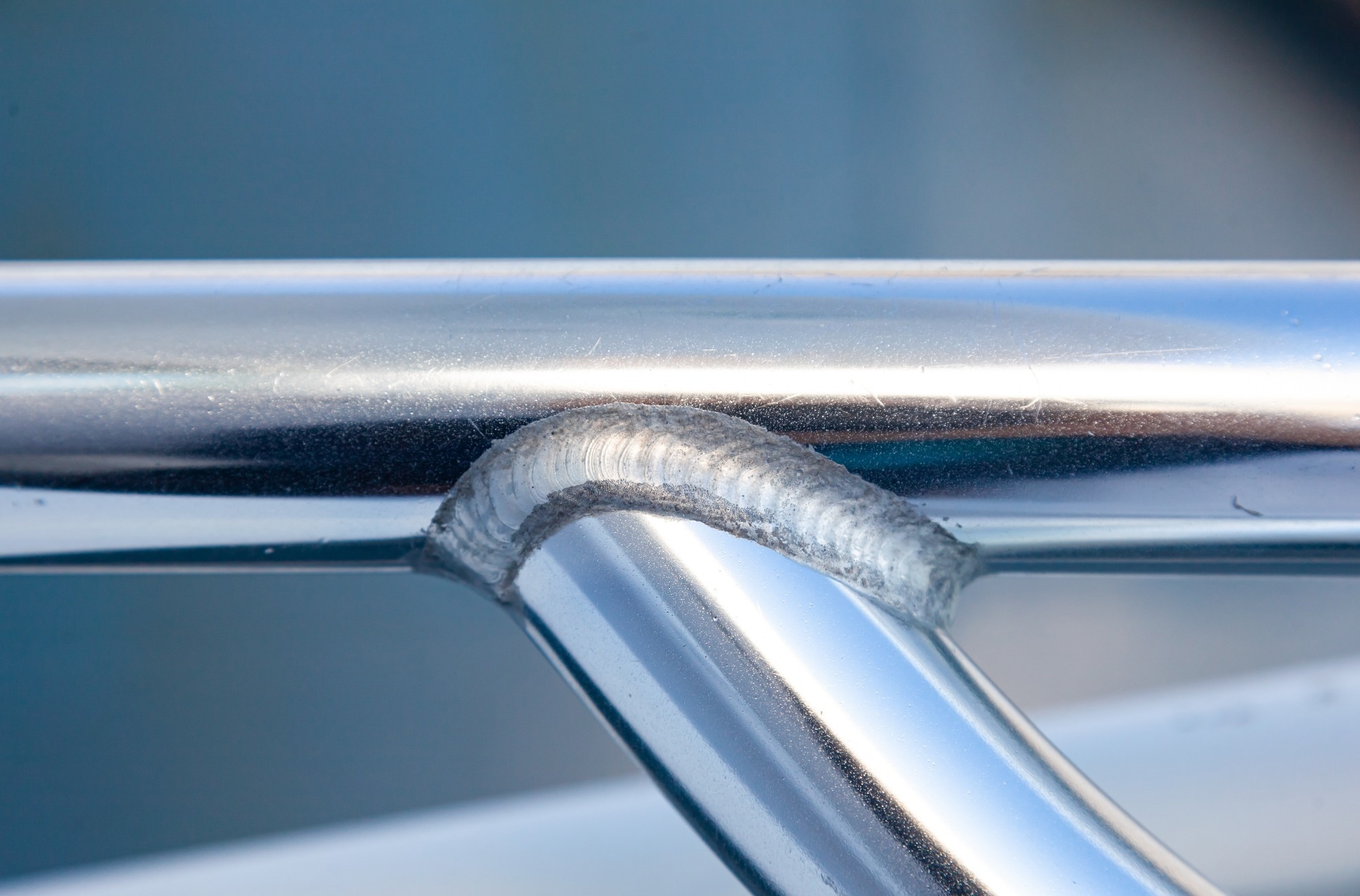 Study: Microstructure and Mechanical Properties of 7072 Aluminum Alloy Joints Brazed Using (Ni, Y)–Modified Al–Si–Cu–Zn Filler Alloys. Image Credit: ZHMURCHAK/Shutterstock.com
High-strength aluminum alloys such as 7072 are widely used in aerospace, automotive, and lightweight structural applications, but joining them reliably remains difficult. Conventional aluminum–silicon brazing fillers melt at relatively high temperatures, increasing the risk of joint softening and base-metal degradation.
Lowering the melting temperature by adding copper or zinc can ease processing, but often comes at the cost of brittle intermetallic phases that weaken the joint. Balancing brazing temperature and mechanical performance has therefore been a persistent challenge in aluminum joining.
The study, published in Materials, reports a systematic approach to this problem using a multicomponent Al-Si-Cu-Zn-Ni-Y brazing system. Rather than modifying alloys empirically, the team combined first-principles calculations with targeted experiments to guide filler design.
Using density functional theory and the Virtual Crystal Approximation, the scientists screened the ways varying nickel and yttrium content affect mechanical stability, elastic moduli, and ductility-related indicators. The computational results were then used to narrow the range of compositions tested experimentally.
Get all the details: Grab your PDF here!
Nickel and Yttrium Work Together to Improve Joint Behaviour
The study reveals distinct but complementary roles for nickel and yttrium. Nickel lowers the liquidus temperature of the filler and transforms brittle Al2Cu phases into a finer, interconnected Al2(Cu,Ni) network. This reduces crack-initiation sites while increasing joint strength.
Yttrium, added in small amounts, acts as a heterogeneous nucleation agent during solidification. It refines the microstructure, reduces porosity, and improves filler wettability without significantly raising the melting temperature. Together, the two elements enable controlled microstructural evolution rather than uncontrolled phase formation.
To validate the design strategy, the team produced a series of filler alloys. These fillers were evaluated for thermal behavior, phase composition, and microstructure using differential scanning calorimetry, X-ray diffraction, and electron microscopy.
Brazing trials were carried out using an argon-protected fusion-brazing process to join 7072 aluminum alloy plates. Mechanical testing revealed that joint strength increased with nickel addition up to an optimal level, after which it declined slightly at higher concentrations.
Introducing moderate yttrium content further improved performance. At approximately 2.0 wt.% nickel and 0.4 wt.% yttrium, the brazed joints reached a peak tensile strength of about 295 MPa, substantially higher than joints made with conventional Al-Si fillers.
Strength Gains Come with Controlled Trade-Offs
As expected, the strength improvements were accompanied by reduced elongation, reflecting a slight shift toward higher strength with lower, but still acceptable, ductility.
Fracture analysis showed a transition toward more uniform mixed-mode behavior, indicating improved load transfer and reduced stress concentration at the joint.
Notably, the researchers found that trends predicted by first-principles calculations closely matched experimental results, reinforcing the value of computation-guided alloy development for complex brazing systems.
Implications For Lightweight Structures
The study demonstrates that multicomponent aluminum brazing fillers can be designed rationally, rather than empirically, to meet demanding performance requirements. By linking alloy chemistry to microstructure and joint behavior, the work provides a scalable framework for developing next-generation fillers.
Potential applications include aerospace structures, automotive heat exchangers, and other lightweight load-bearing components where both low processing temperature and high joint strength are critical. Future research will focus on the long-term stability of materials under thermal exposure and cyclic mechanical loading.
Journal Reference
Guo, W., et al. (2025). Microstructure and Mechanical Properties of 7072 Aluminum Alloy Joints Brazed Using (Ni, Y)–Modified Al–Si–Cu–Zn Filler Alloys. Materials, 19(1), 138. DOI:10.3390/MA19010138
Disclaimer: The views expressed here are those of the author expressed in their private capacity and do not necessarily represent the views of AZoM.com Limited T/A AZoNetwork the owner and operator of this website. This disclaimer forms part of the Terms and conditions of use of this website.