A UK battery pack manufacturer has set out a clearer framework for how OEMs can approach battery development. The new approach, from Alexander Battery Technologies (ABT), defines four routes into battery design and manufacture, reflecting the different constraints OEMs face around cost, lead time and technical risk.
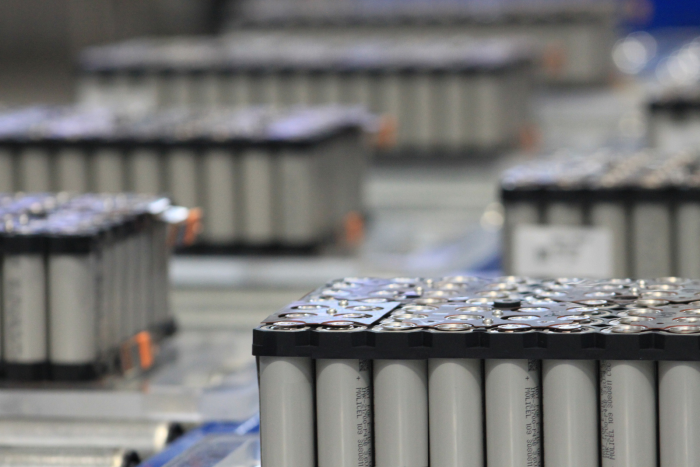 Image Credit: Alexander Battery Technologies
Across sectors such as unmanned aerial vehicles (UAVs), robotics and medical devices, OEMs are under pressure to move quickly from prototype to production while managing compliance, cost and long-term supply. In practice, battery programs are rarely uniform, with many sitting between off-the-shelf solutions and full custom battery development.
These projects are often treated as one or the other, creating uncertainty around scope, lead time and delivery expectations. The structure is intended to address this by making the implications around flexibility, delivery and investment clearer at an early stage of a program.
Mark Rutherford, chief executive officer at Alexander Battery Technologies, said: “OEM battery programs hardly ever follow a single, linear path. Some teams need to move fast using proven designs, others need room to adapt as their product evolves and many are managing existing platforms alongside new development. Treating all of that as a single type of project creates friction and delay.
“What we’re seeing is a need for clearer decision points much earlier in the process. Making those routes explicit allows engineering and procurement teams to understand the implications of their choices on cost, compliance and timescale before they are committed.”
The service structure ranges from use of established battery architectures with limited modification, through to full end-to-end custom development, as well as UK build-to-print manufacture of existing OEM designs. All design-led programs include UN38.3 testing as standard, with additional regulatory support available where required. Depending on material lead times, build-to-print programs can be turned around within weeks.
OEMs can also operate across more than one route at the same time, for example combining build-to-print manufacture of an existing product with development of a new custom battery pack, allowing shared tooling or components where appropriate.
Rutherford added: “The challenge for OEMs is not simply designing a battery but designing a program that can be delivered and scaled over time. Being clear about route decisions from the outset helps teams manage regulatory requirements, make practical engineering and procurement decisions and avoid unnecessary rework as products move towards production.”
The framework is aimed at OEMs developing battery-powered products across sectors including UAVs, robotics, power tools and medical devices, with all services delivered through ABT’s UK-based manufacturing supported by a global supply chain.