A layered antiferromagnet has been shown to switch its magnetic state in a clean, ferromagnet-like way, contradicting previous assumptions about antiferromagnet behaviour under magnetic fields.
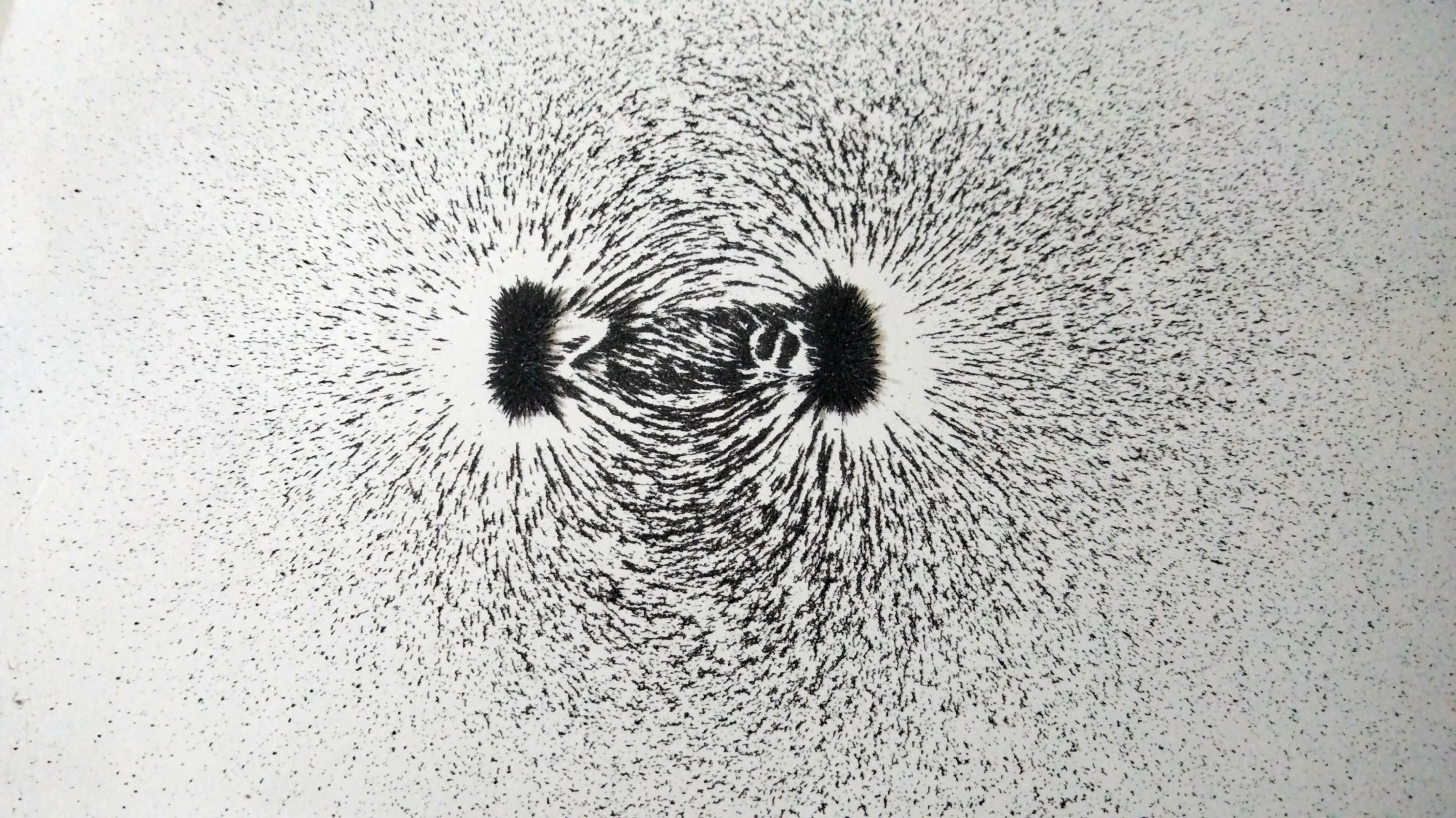 Study: Ferromagnet-like binary switching of a Stoner–Wohlfarth antiferromagnet. Image Credit: Probowening/Shutterstock.com
A study published in Nature reports that few-layer chromium thiophosphate (CrPS4) demonstrates highly reproducible binary hysteresis, a hallmark of single-domain ferromagnets.
Despite having no net magnetization in its ground state, the material reverses its antiferromagnetic order in a predictable, two-state fashion under relatively low magnetic fields.
The team describes CrPS4 as a rare experimental example of a “Stoner-Wohlfarth antiferromagnet” – an antiferromagnetic analogue of the classic ferromagnet model.
Get all the details: Grab your PDF here!
Antiferromagnets are attractive for future spintronic technologies because they produce no stray magnetic fields and can operate at ultrafast timescales. But those same properties make them notoriously difficult to manipulate. Instead of switching cleanly between two states, most antiferromagnets reverse through complex, multistep processes involving multiple layers or domains.
In layered materials, this often leads to sequential, layer-by-layer flipping, producing irregular hysteresis loops that are difficult to control or reproduce. CrPS4 behaves differently.
Interlayer Locking Enables Binary Switching
CrPS4 is an A-type antiferromagnet made of weakly bonded atomic layers. The study shows that strong exchange coupling between layers locks their spins together, forcing the entire stack to reverse as a unit along the vertical direction.
As a result, the material displays a sharp, binary hysteresis loop at low fields on the order of tens of millitesla, well below the higher-field spin-flop and spin-flip transitions typical of antiferromagnets.
However, the authors emphasize that this does not mean the material switches uniformly everywhere.
While the layers reverse together, switching within the crystal plane is likely driven by domain-wall motion rather than perfectly coherent rotation. This distinction helps reconcile the ferromagnet-like hysteresis with the underlying antiferromagnetic physics.
Switching Mechanism Examined with Optical Probe
The team studied exfoliated CrPS4 flakes just a few atomic layers thick, using two complementary optical techniques.
Reflective magnetic circular dichroism (RMCD) detected hysteresis only in samples with an odd number of layers, where a small uncompensated magnetic moment remains.
In contrast, second-harmonic generation (SHG) microscopy revealed clear hysteresis even in fully compensated, even-layer samples, directly probing changes in antiferromagnetic order.
Temperature-dependent measurements showed that the hysteresis disappears around 34 K, consistent with the material’s bulk Néel temperature of about 38 K.
A Contrast With Layer-by-Layer Switching
To underline what makes CrPS4 unusual, the researchers compared it with the related layered antiferromagnet CrSBr. That material exhibits multistep, plateau-like switching, with individual layers reversing one at a time.
Micromagnetic simulations traced the difference to a competition between interlayer exchange coupling and magnetic anisotropy. From this, the team defined a characteristic exchange length that predicts whether a layered antiferromagnet will switch collectively or layer by layer.
In CrPS4, the exchange length exceeds the layer spacing, enforcing interlayer-locked behavior. Similar physics has been observed in MnBi2Te4, suggesting the mechanism may apply to a broader class of materials.
While no devices were demonstrated in the study, the work provides an unexpected example of predictable, binary switching in an antiferromagnet, a persistent goal in spintronics research.
By linking switching behavior to a quantitative materials criterion, the study offers a framework for identifying or engineering other antiferromagnets with similarly controllable dynamics.
Combined with their lack of stray fields and nanoscale thickness, such materials could help inform future designs for low-power memory, logic, and neuromorphic technologies.
Journal Reference
Wang, Z., et al. (2026). Ferromagnet-like binary switching of a Stoner–Wohlfarth antiferromagnet. Nature,1-6. DOI:10.1038/s41586-025-10019-9
Disclaimer: The views expressed here are those of the author expressed in their private capacity and do not necessarily represent the views of AZoM.com Limited T/A AZoNetwork the owner and operator of this website. This disclaimer forms part of the Terms and conditions of use of this website.