A computational survey of nearly 7,300 superconductors reveals surprising Type-I behavior, identifies high-field candidates reaching nearly 67 Tesla, and shows why transition temperature alone cannot determine technological performance.
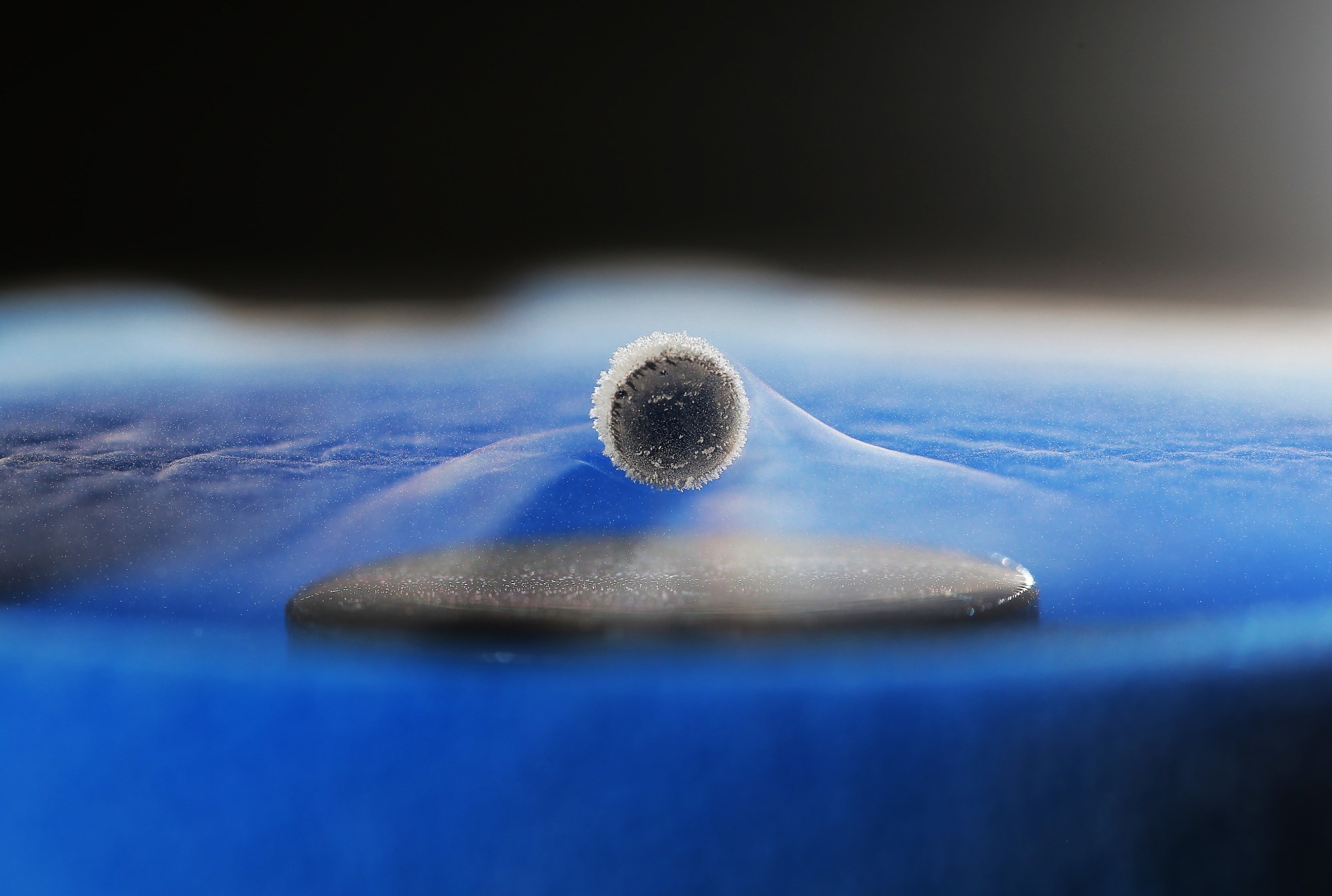
Paper: Towards the discovery of high critical magnetic field superconductors. Image Credit: SeniMelihat / Shutterstock
In a recent study accepted for publication in the journal npj Computational Materials, materials physicists in the United States have mapped the critical magnetic-field properties of nearly 7,300 electron-phonon superconductors. They predicted upper critical fields as high as 66.9 Tesla in select cubic compounds, while also challenging assumptions about the relative prevalence of Type-I and Type-II superconductors.
Researchers developed an automated framework that predicts the thermodynamic lower and upper critical fields from first-principles electronic structures and electron-phonon calculations. This approach shifts the focus of superconductor discovery beyond merely achieving higher critical transition temperatures, emphasizing the design of materials capable of sustaining extreme magnetic fields.
Essential Criteria for Practical Superconductors
Superconducting materials conduct electric current without resistance and expel magnetic flux below a critical transition temperature. For decades, superconductivity research primarily focused on raising this transition temperature, leading to advancements in high-pressure hydride superconductors and complex cuprates that remain superconducting at high temperatures. However, many of these compounds require megabar pressures or have brittle ceramic structures, making them impractical for large-scale manufacturing.
Practical superconductors must satisfy three key requirements. First, they should have transition temperatures of about 20 Kelvin or higher to minimize reliance on costly liquid helium cooling. Second, they need sufficient ductility to fabricate flexible, defect-free wires and tapes. Third, they must withstand magnetic fields exceeding 10 Tesla without losing superconductivity. Because critical magnetic fields and the associated critical currents jointly constrain superconducting performance, identifying compounds that combine thermal stability, mechanical processability, and strong magnetic-field tolerance remains a central challenge in superconductor engineering.
Computational Framework for Superconductors
To bridge the critical-field data gap across known superconductors, researchers developed a high-throughput computational workflow that combines Density Functional Theory (DFT) with clean-limit isotropic Eliashberg theory. They screened approximately 7,300 conventional superconductors from comprehensive electronic and vibrational databases. Furthermore, crystal structures were optimized using the Vienna Ab initio Simulation Package (VASP).
Dense k-point grids were used to achieve numerical convergence, while automated Fermi surface analysis extracted directional Fermi velocities and volume-normalized electronic densities of states at the Fermi level. In parallel, the EPW code, embedded in a Python-based high-throughput framework, solved the isotropic Eliashberg equations using electron-phonon spectral functions to calculate zero-temperature superconducting gaps and transition temperatures while accounting for Coulomb screening. For some very-low-temperature compounds where the Eliashberg calculations did not converge, Allen-Dynes transition temperatures and/or BCS gaps were used instead.
The framework also incorporated electron-phonon mass renormalization to evaluate important superconducting length scales. By accounting for the increase in effective mass due to electron-phonon interactions, the model predicted the superconducting coherence length, London penetration depth, and Ginzburg-Landau parameter, enabling the classification of materials as Type-I or Type-II superconductors.
Statistical Analysis and High-Field Candidates
The resulting database showed that critical magnetic fields span four orders of magnitude across superconductors with transition temperatures between 1 and 37 Kelvin. The calculations also demonstrated that conventional weak-coupling Bardeen-Cooper-Schrieffer (BCS) theory systematically underestimates the predicted magnetic-field limits.
Eliashberg strong-coupling corrections significantly increased the predicted upper critical fields, with superconducting energy-gap ratios exceeding standard values by more than a factor of two in strongly coupled materials. In elemental niobium, electron-phonon mass renormalization shifted the behavior from Type-I to Type-II superconductivity, increasing the upper critical field from 0.072 to 0.321 Tesla, bringing the predicted value within the reported experimental range.
Statistical analysis challenged the common assumption that Type-II superconductors greatly outnumber Type-I materials. Among compounds with transition temperatures above 1 Kelvin, the database contained 1,626 Type-I superconductors compared to 801 Type-II materials. However, the authors emphasized that this predominance emerged within their clean-limit framework, because impurities and microstructural disorder can shift nominally Type-I materials toward Type-II behavior. The database is also weighted toward materials with smaller unit cells. The study found a correlation between Type-II behavior and crystal structural complexity, with the Ginzburg-Landau parameter increasing as the number of atoms in the unit cell rose.
Several compounds emerged as high-field candidates. Lithium molybdenum nitride (LiMoN2) was predicted to have an upper critical field of 48.0 Tesla and a transition temperature of 36.8 Kelvin, associated with a coherence length of 2.62 nanometers. The Cr4NbRe compound, part of the cubic F-43m structural family, had the highest predicted upper critical field at 66.9 Tesla with a transition temperature of 19.9 Kelvin. This indicates that low average Fermi velocities and short coherence lengths can be as important as high transition temperatures for maximizing magnetic-field performance. The researchers cautioned that some Cr-based candidates may host subtle antiferromagnetic instabilities or spin-fluctuation effects, underscoring the need for experimental validation.
Implications for Industry and Advanced Technologies
The identification of candidate superconductors capable of sustaining high magnetic fields has significant potential across clean energy, healthcare, and advanced manufacturing. In magnetic confinement fusion reactors and next-generation particle accelerators, materials that combine sufficiently high transition temperatures with critical fields above about 10 Tesla could enable the construction of more compact and powerful magnets.
In healthcare, these superconductors could ultimately help reduce reliance on liquid helium cooling in MRI magnet systems, although the study did not assess device costs or engineering feasibility. The study emphasizes that the framework also provides access to the superheating field, a key quantity for minimizing power losses in superconducting radio-frequency cavities, as well as the depairing current. High-critical-field candidates may also be relevant to compact and efficient electron-beam lithography systems used in semiconductor manufacturing.
Conclusion: Toward AI-Guided Superconductor Discovery
In summary, this study establishes an open-access database that links electron-phonon interactions, band structures, and critical magnetic-field properties, thereby overcoming a significant bottleneck in computational superconductor discovery. It provides a resource for identifying small-unit-cell, three-dimensional materials with promising superconducting and critical-field properties.
The database of over 7,000 characterized superconductors provides a foundation for future AI-guided inverse materials design aimed at identifying compounds with simultaneously high transition temperatures and critical magnetic fields. Future extensions addressing disorder, anisotropy, and multiband electronic effects could improve predictive accuracy and support the experimental search for next-generation superconductors for quantum technologies and high-field magnetic systems.
Disclaimer: The views expressed here are those of the author expressed in their private capacity and do not necessarily represent the views of AZoM.com Limited T/A AZoNetwork the owner and operator of this website. This disclaimer forms part of the Terms and conditions of use of this website.