A new purple cooling fabric developed by Chinese and Australian researchers could help people stay cooler during scorching summer days without having to resort to wearing white.
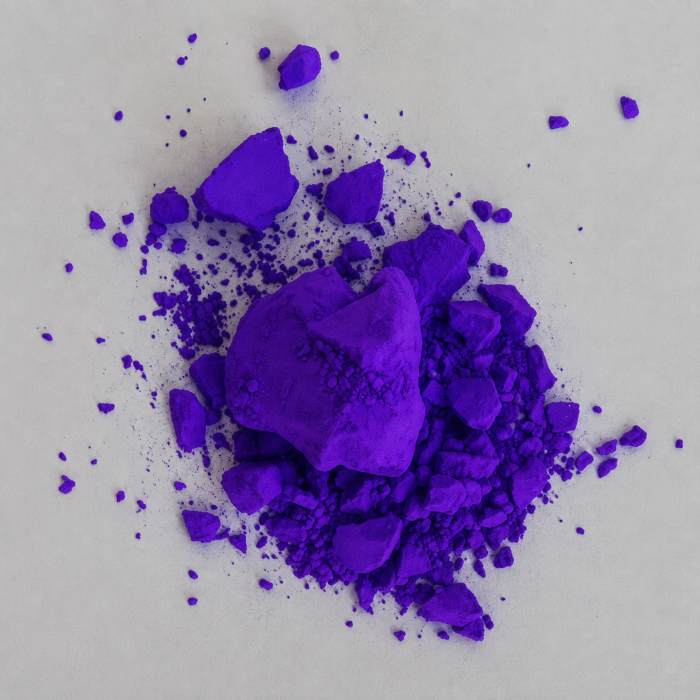 The electrospun purple fabric developed for passive radiative cooling and personal thermal management. Image Credit: Adelaide University
The high-tech fabric has been shown to stay up to 6.2 °C cooler than conventional purple cotton when exposed to direct sunlight, potentially opening the door to a new generation of clothing designed to keep people cool during heatwaves.
The breakthrough, led by researchers from Zhengzhou University and involving Adelaide University, tackles a difficult problem: making colored clothing that actually cools you down.
Most passive cooling fabrics are white because they work by reflecting sunlight away from the body. But darker colors absorb more of the sun’s energy, making them much harder to cool effectively.
Purple is particularly challenging because the color comes from absorbing green light – one of the strongest parts of the solar spectrum.
Adelaide University Professor Jun Ma, a materials engineer from the School of Chemical Engineering and a co-author on the paper, said the researchers wanted to prove that effective cooling did not have to mean giving up color.
“We have traditionally had to make a choice between cooling performance and appearance,” Professor Ma said.
“Our research shows that we can have both. We can make a fabric that looks purple, but at the same time reflects most of the sun’s energy and releases heat very efficiently.”
The researchers created the fabric using microscopic fibers containing a purple material called a metal-organic framework (MOF) and zinc oxide nanoparticles.
Together, the materials give the fabric its distinctive purple color while helping it perform like a highly effective cooling material.
The fabric reflects an average 87.6% of solar radiation, while also emitting 96.4% of mid-infrared radiation – allowing heat from the fabric to escape through the atmosphere towards outer space.
The results were striking.
In outdoor testing under direct sunlight, the purple fabric was:
- 4.2 °C cooler than commercial white cotton
- 6.2 °C cooler than commercially dyed purple cotton
The testing also showed that simulated skin covered with the new fabric was up to 8 °C cooler than uncovered simulated skin during the day.
That compared with a 4.6 °C maximum reduction for white cotton and just 2.8 °C for conventional purple cotton.
Adelaide University co-author Yangzhe Hou, a PhD candidate in the School of Chemical Engineering, said the technology could eventually benefit people who spend long periods outdoors.
“For outdoor workers, athletes and anyone exposed to hot weather, staying cool is not just about comfort,” Hou said.
“We are interested in developing fabrics that can help manage body temperature without consuming additional energy.”
Unlike many experimental cooling materials, the new fabric is also lightweight and flexible, can withstand significant stretching, and allows water vapor – including perspiration – to pass through.
It was also found to be highly water-repellent and retained its cooling performance after 50 washing cycles.
The fabric provided strong UV resistance and retained its optical performance after high-intensity UV age testing equivalent to about 108 days outdoors.
Hou said the research could ultimately pave the way for cooling clothing in a much wider range of colors.
“The long-term opportunity is to move beyond the idea that cooling fabrics have to be white. However, there is enormous potential to combine color, comfort and cooling performance in the next generation of textiles.”
The researchers say the approach could potentially be adapted to other colors by using different metal-organic frameworks with different optical properties, creating opportunities for a broader range of aesthetically appealing cooling fabrics.