AXT is pleased to announce that it is now distributing Tritone Technologies’ innovative metal and ceramic additive manufacturing solutions in Australia and New Zealand, expanding AXT’s portfolio of advanced manufacturing technologies, offering more options for Australian manufacturers as they look to scale up their capabilities.
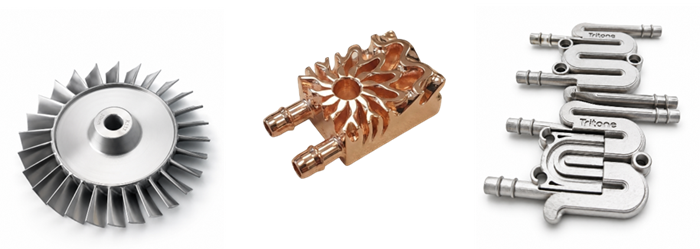 Image Credit: Tritone Technologies
Tritone Technologies has developed the patented MoldJet® additive manufacturing process, which provides a fundamentally different approach to producing complex metal and ceramic components. Instead of conventional powder-bed processes that work with loose metal powder, MoldJet creates a temporary mould layer by layer and fills it with a high-density metal or ceramic paste. The process is designed for industrial production, combining high throughput, complex geometries, high part density and repeatability with a powder-free manufacturing environment.
A New Approach to Metal Additive Manufacturing
MoldJet is particularly differentiated by its focus on production economics and industrial-scale manufacturing. Tritone’s systems use multiple independently operating build trays to manufacture multiple components or different geometries in parallel, while integrated optical inspection and automatic layer correction help maintain process quality throughout production. The Tritone Dominant, for example, incorporates six simultaneous and independent trays and offers throughput of up to 1,600 cm3/h, with parts achieving densities of up to 99% after sintering.
The powder-free process also provides practical benefits for manufacturers by eliminating loose powder from the printing environment. Metal and ceramic feedstocks are supplied through sealed cartridges, simplifying material handling and potentially reducing the safety, storage and housekeeping requirements associated with exposed metal powders. MoldJet is also capable of producing complex geometries without conventional printed support structures, opening opportunities for intricate components that may be difficult or costly to manufacture using traditional metal AM technologies.
Supporting the Next Generation of Metal Manufacturing
AXT will provide access to Tritone’s Dominant and DIM systems, supporting applications ranging from materials development and prototyping through to high-volume serial production. The DIM provides a flexible platform for development and smaller-scale production, while the Dominant is designed for higher-throughput industrial manufacturing.
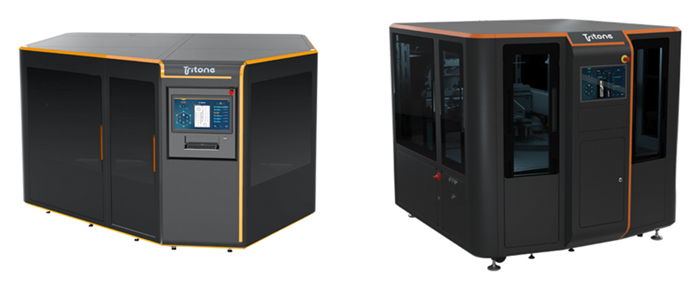
Image Credit: Tritone Technologies
The technology is suited to a broad range of applications across aerospace and defence, medical devices, tooling, industrial manufacturing and consumer products, with materials including stainless steels, tool steels, titanium, copper alloys and ceramics.
Expanding AXT’s Additive Manufacturing Expertise
The addition of Tritone strengthens AXT’s commitment to providing manufacturers with access to advanced additive manufacturing technologies for increasingly demanding production applications. Tritone’s MoldJet technology complements AXT’s existing portfolio of Stratasys polymer additive manufacturing solutions, providing customers with another pathway to produce complex components while selecting the technology best suited to their material, volume, geometry and production requirements.
“The addition of Tritone Technologies gives Australian and New Zealand manufacturers access to a genuinely differentiated approach to metal additive manufacturing,” said Richard Trett, Managging Director at AXT. “MoldJet’s powder-free process, production focus and ability to manufacture complex geometries provide an exciting alternative for organizations looking to scale additive manufacturing into industrial metal production.”
Discover Tritone MoldJet Technology
AXT can assist manufacturers in evaluating where Tritone’s MoldJet technology can deliver value within their production environment, including applications where conventional metal additive manufacturing may face limitations in throughput, powder handling, geometric complexity or production economics.