From membranes that react to heat to bio-inspired filters, the ways in which we purify water are getting smarter.
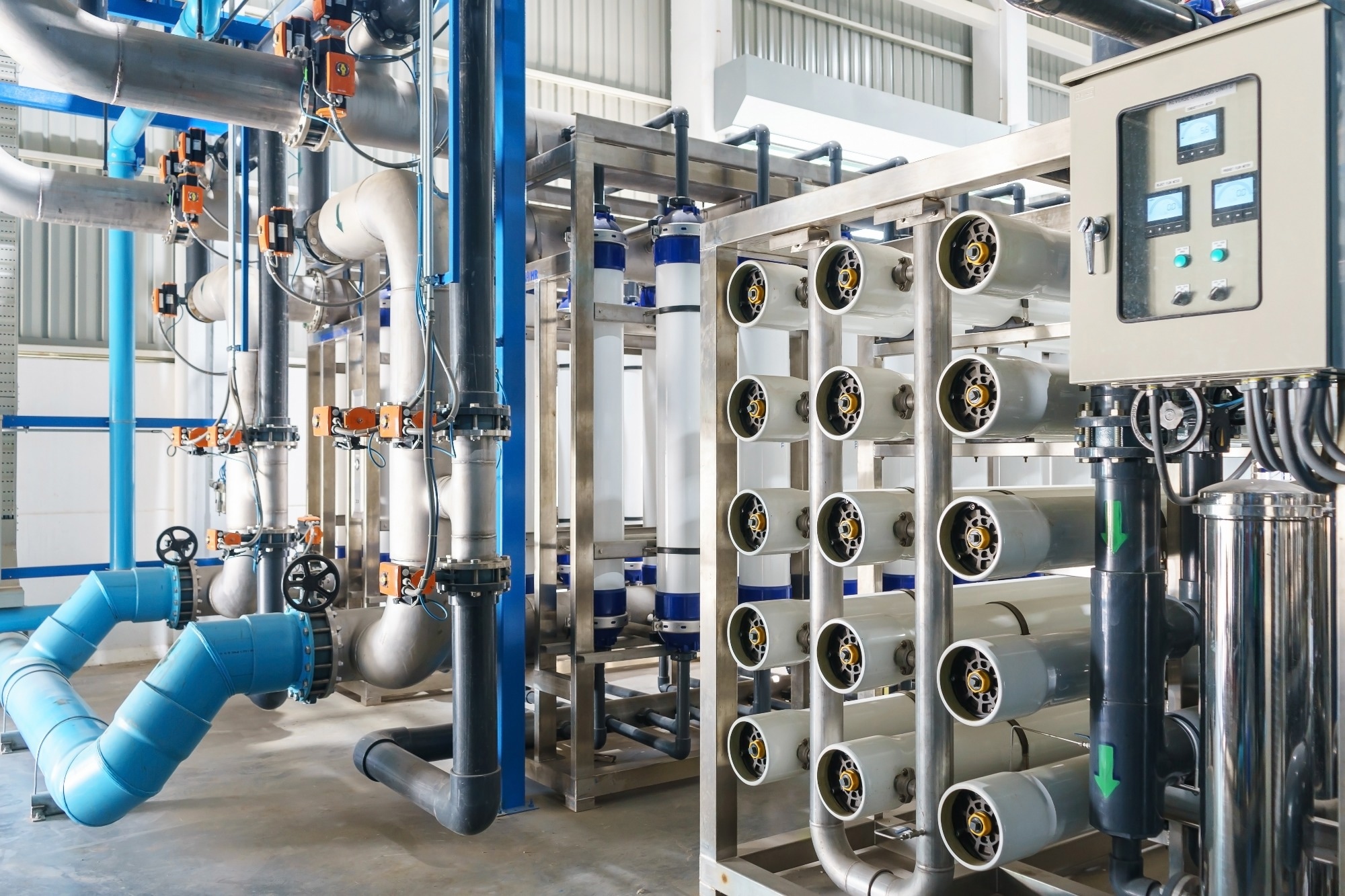 Image Credit: NavinTar/Shutterstock.com
Access to safe, clean water varies across the globe. Vital to life, this is a problem scientists are trying to fix. Researchers have been turning to smart materials for a solution, engineered substances designed to respond reversibly to environmental stimuli.
For water treatment, this could include polymers that expand or contract in response to pH changes, membranes whose porosity adapts to temperature, or catalytic systems activated by light.
This article describes some of the most recent breakthroughs, explaining the science that could bring accessible water purification closer to reality.
Get all the details: Grab your PDF here!
Making Nanofiltration Membranes Greener
Nanofiltration membranes are often used in water treatment as they can selectively remove dissolved salts, organic contaminants, and microorganisms. But they're not always that efficient. Ongoing research is focused on improving their permeability, selectivity, and resistance to fouling to enhance long-term performance and sustainability.
In a 2025 Scientific Reports study, researchers developed green-synthesized silver nanoparticle-enhanced mixed-matrix nanofiltration membranes to improve water purification performance. They employed a plant-based synthetic approach to produce silver nanoparticles, thereby reducing reliance on toxic chemicals while maintaining strong antimicrobial properties.
These nanoparticles, when incorporated into polymeric membranes, improved water permeability, salt rejection, and resistance to biofouling compared to conventional nanofiltration membranes. The study also showed that the membranes retained stable performance over repeated filtration cycles. This shows their suitability for long-term operation in wastewater treatment and drinking water purification systems. 1
Metal-Organic Frameworks (MOFs) for Targeted Filtration
Metal-organic frameworks (MOFs) are porous materials known for their surface area, tunable structures, and chemical versatility. These properties make them useful for water purification applications, where precise control over pore size can improve contaminant removal efficiency.
A 2025 review examined the latest advancements in metal-organic framework (MOF)-based materials tailored for water purification. It highlights their potential as smart adsorbents and selective capture materials. MOFs are crystalline materials comprising metal nodes linked by organic molecules, creating highly tunable pore sizes, large internal surface areas, and versatile functional groups that can be engineered to target a wide range of contaminants, including heavy metals and organic pollutants.
The review emphasizes how structural modifications and composite designs, such as linking MOFs with polymers, carbon materials, or magnetic particles, can enhance stability, selectivity, and recyclability. 2
Carbon Nanocone Structures: Geometry-Controlled Water Transport
In a 2025 molecular dynamics simulation study, researchers investigated how carbon nanocone (CNC) membranes can enable selective water transport and impurity rejection by tuning their geometry and structure.
The simulations showed that the conical shape of CNCs influences water flow. Larger cone openings facilitate rapid water movement by reducing friction, and narrower sections can restrict water mobility due to confinement effects.
This forms ordered, hydrogen-bonded water structures inside the cone. This shape-dependent behavior creates a directed flow that both enhances water flux and helps block salts and impurities as molecules pass through the membrane.
The study also shows that carbon nanocones’ combination of high transport rates, structural control, and tunable selectivity places them ahead of many other nanostructured materials for advanced filtration applications. 3
Bio-Based Materials as Sustainable Solutions for Low-Cost Water Treatment
Biomaterials are naturally derived or biologically compatible materials. These are used for environmental and health applications due to their sustainability, biodegradability, and ability to interact with biological or chemical contaminants. Their use in water treatment helps develop efficient, low-cost, and eco-friendly purification systems.
In a 2024 IEE Explore paper, researchers investigated the use of naturally derived materials to enhance water purification systems. The study proposed a multi-stage bio-based filtration system where layers such as gravel, activated carbon, ceramic, and sand, in combination with biosourced filter media, work together to remove sediments, dissolved solids, and microbial contaminants from water.
The system was equipped with real-time sensors for monitoring total dissolved solids (TDS) and pH to quantitatively assess purification performance. It consistently reduced TDS in contaminated water samples to safe levels while bringing pH values into the desirable drinking range.
This work used low-cost, locally available biomaterials in filtration layers and sensor-based quality feedback, enabling a scalable approach to water purification that could be particularly impactful for rural or resource-limited communities. 4
Saving this article for later? Grab a PDF here.
Emerging Membrane Materials: Innovation in Desalination and Heavy Metal Removal
 Image Credit: Adriano Fernandes/Shutterstock.com
A 2025 review discussed the most recent membrane technologies for desalination and the removal of heavy metals. The evaluation demonstrated how various material classes, including nanocomposite membranes, thin-film composites (TFC), forward osmosis membranes, hybrid systems, and biomimetic designs, contribute to enhanced separation performance.
Among these, nanocomposite and thin-film composite membranes stood out for their enhanced mechanical strength, higher removal efficiencies, and better scalability for industrial use. Hybrid and biomimetic membranes were also investigated for selective transport and energy-efficient separation. 5
The authors discussed performance factors: permeability, fouling resistance, economic viability, and environmental sustainability, and the need to balance these to develop advanced membranes capable of meeting global water treatment needs.
AI and ML are increasingly being used in research to further optimize membrane design and performance for more intelligent, more adaptive systems in future water treatment technologies. 5
A Future of Pure Water
Future research will explore ways to integrate responsive membranes, bio-based materials, and nanostructures with real-time monitoring and AI-driven optimization.
Advances in material design and fabrication could enable water treatment systems that adjust to varying contaminant levels, reduce energy consumption, and improve long-term performance. As these technologies mature, they may provide more flexible and resource-efficient solutions for both urban and resource-limited settings.
References
- Bashir, N., Afzaal, M., Khan, A. L., Nawaz, R., Irfan, A., Almaary, K. S., ... & Ahmed, Z. (2025). Green-synthesized silver nanoparticle-enhanced nanofiltration mixed matrix membranes for high-performance water purification. Scientific Reports. https://doi.org/10.1038/s41598-024-83801-w
- Al-Anazi, A., Anwar, M. T., Husnain, N., Asghar, M. R., Ahmed, S., Ihsan, A., ... & Rasheed, T. (2025). Metal organic framework-based materials for water remediation: recent progress, challenges, and future perspectives. Environmental Science: Water Research & Technology. https://doi.org/10.1039/D5EW00336A
- Mendonça, B. H., de Moraes, E. E., Abal, J. P., Valle, J. V., Fonseca, T. O., & Chacham, H. (2025). Influence of carbon nanocone structure on ultra-efficient water flow. arXiv preprint. https://doi.org/10.48550/arXiv.2511.04701
- Khanna, V. (2025, January). Designing a smart drinking vessel utilizing UV sterilization for water purification. In 2025, the IEEE International Students' Conference on Electrical, Electronics, and Computer Science (SCEECS). https://doi.org/10.1109/SCEECS64059.2025.10940829
- Foorginezhad, S., Zerafat, M. M., Ismail, A. F., & Goh, P. S. (2025). Emerging membrane technologies for sustainable water treatment: a review on recent advances. Environmental Science: Advances. https://doi.org/10.1039/D4VA00378K
Disclaimer: The views expressed here are those of the author expressed in their private capacity and do not necessarily represent the views of AZoM.com Limited T/A AZoNetwork the owner and operator of this website. This disclaimer forms part of the Terms and conditions of use of this website.