In this interview, AZoMaterials speaks with Andre Hugentobler, Vice President New Business Development, Technology & Innovation at Trinseo, about the future of cost-competitive battery manufacturing in Europe. He discusses the key factors shaping competitiveness, from manufacturing scale and supply chain localization to recycling, digitalization, and policy support, and explains what Europe must do to build a resilient and sustainable battery ecosystem by 2035.
How do you define 'cost-competitive' batteries in Europe, and how long do you think it will take to achieve them?
Cost competitiveness must be measured at the system level, in terms of three key metrics: €/kWh, supply chain risk, and carbon footprint. Europe’s cost gap is mainly due to scale and manufacturing maturity, not fundamental technology differences. With scale-up and learning effects, this gap can narrow significantly by 2030. Local production and material supply reduce logistics costs and risk, improving overall competitiveness.
Which two or three key levers can most effectively close Europe's battery cell cost gap compared to North America and Asia?
The main drivers are manufacturing scale, localized supply chains, and yield improvement. Europe needs larger production volumes to match global cost curves. Local sourcing reduces logistics costs and exposure to external shocks, and yield optimization, especially through digital tools, has a direct and immediate impact on cost.
How can European companies secure sustainable and affordable access to critical raw materials while maintaining ESG commitments?
Europe must diversify sourcing while developing local refining and recycling capacity. Recycling will increasingly supply raw materials and reduce dependency on imports.
Material choices in adjacent components also matter, as using recycled polymers in battery housing reduces cost exposure and emissions. Combining global sourcing with local production improves both resilience and ESG performance.
Which manufacturing or digital innovations will have the biggest impact on reducing €/kWh in European gigafactories?
The largest cost reductions will come from higher yields, lower scrap, and energy efficiency. AI-enabled process control can optimize production in real time and stabilize operations. Though automation reduces labor and variability, material performance also matters. Well-designed materials widen processing windows and enable faster, more stable ramp-up.
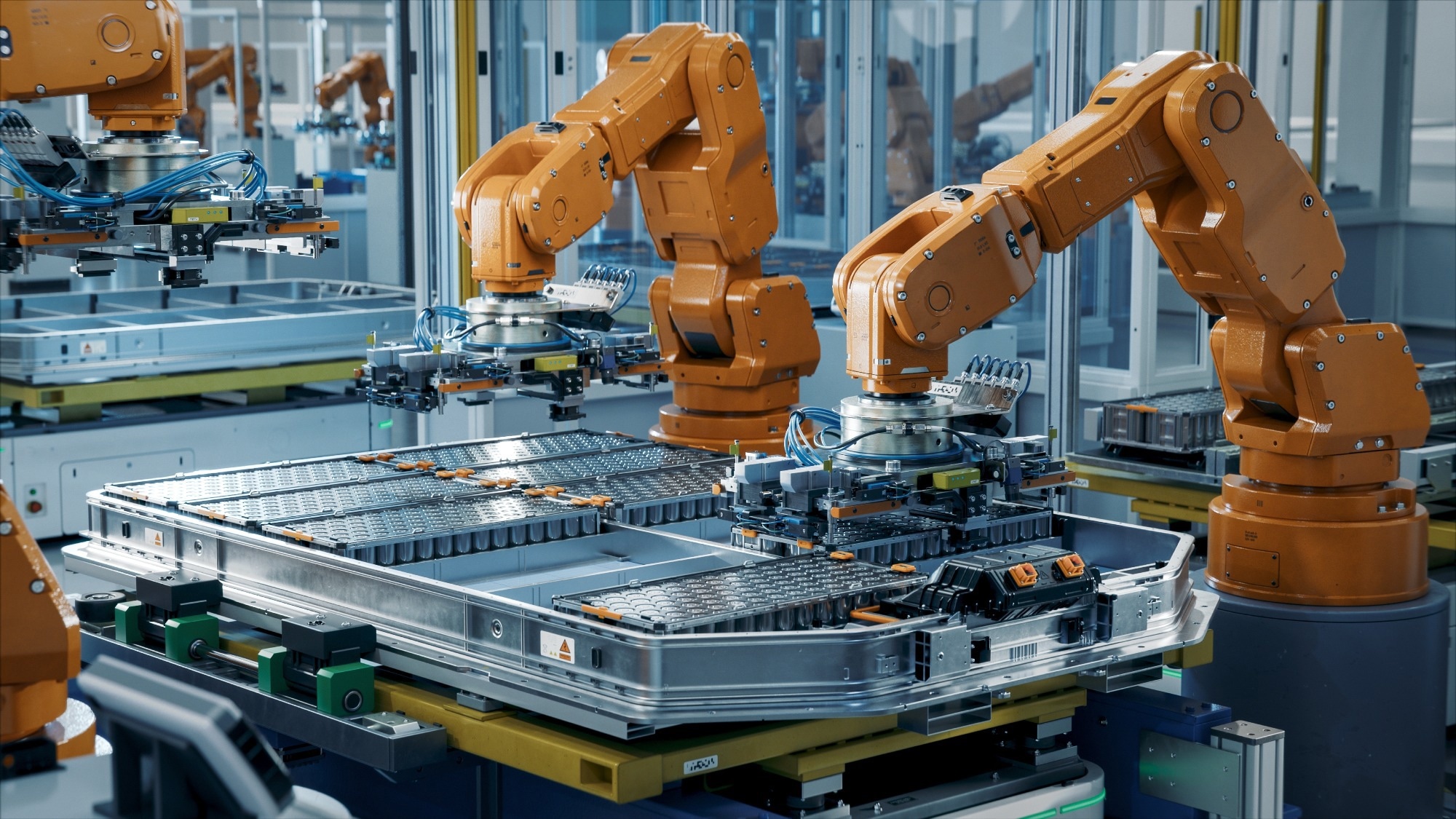
Image Credit: IM Imagery/Shutterstock.com
How realistic is it that recycling and circularity will become a meaningful cost advantage for Europe's battery industry within the next decade?
Recycling will become cost-relevant as volumes grow, but the impact will build over time.
In the near term, recycling improves supply security and reduces exposure to volatile raw material prices. By the mid-2030s, recycled inputs could account for a significant share of the supply, thereby stabilizing costs rather than immediately lowering them.
Which policy mechanisms are truly effective to strengthen Europe's long-term battery competitiveness, and where do gaps or unintended consequences remain?
Policies must directly support industrial-scale operation and execution speed; key examples include predictable incentives, faster permitting, and lower energy cost volatility. Fragmented or complex regulations delay investment and increase cost. It is essential to achieve alignment across energy, materials, and industrial policy.
What types of partnerships or business models are necessary to reduce costs while retaining strategic battery expertise in Europe?
Integrated ecosystems are essential for this. Close collaboration between material suppliers, manufacturers, OEMs, and recyclers improves efficiency and shortens development cycles, while early integration of material innovation supports stable production. Strong application support ensures solutions work at greater scales.
Ultimately, cost reduction requires integrated ecosystems, not fragmented efforts.
By 20235, what is Europe's battery industry expected to look like, and what factors will determine this outcome?
Europe will remain a major battery market, but production competitiveness depends on execution. Success requires competitive energy costs, localized supply chains, and fast industrial scale-up. Without this, production will concentrate in lower-cost regions. The outcome depends on how quickly Europe can scale and implement its strategy.
About the Speaker

Andre Hugentobler currently manages Trinseo's Latex Binders Research & Development department and the Latex Binders New Business Development ventures (Battery). Additionally, he is heading Trinseo’s Artificial Intelligence for R&D program, enabling accelerated innovation across departments, materials, and the company’s key growth segments.
Hugentobler has gained extensive technical and commercial experience over the past 20+ years, first at Dow, then at Trinseo. He has previously held roles across many industries and markets, including Construction, Adhesives & Sealants, Technical Textiles, Tires, Paper & Board, Battery, Emulsion Polymers, Synthetic Rubber, and Carbon Nanotubes.
Hugentobler holds a Master of Science in Chemical Engineering from the Swiss Federal Institute of Technology and an EMBA from the Australian Graduate School of Management / University of New South Wales. He is based in Switzerland.

This information has been sourced, reviewed, and adapted from materials provided by The Battery Show Europe.
For more information on this source, please visit The Battery Show Europe.
Disclaimer: The views expressed here are those of the interviewee and do not necessarily represent the views of AZoM.com Limited (T/A) AZoNetwork, the owner and operator of this website. This disclaimer forms part of the Terms and Conditions of use of this website.