A straightforward internal design change can significantly improve how efficiently liquid nitrogen suppresses thermal runaway in large lithium-ion battery packs.
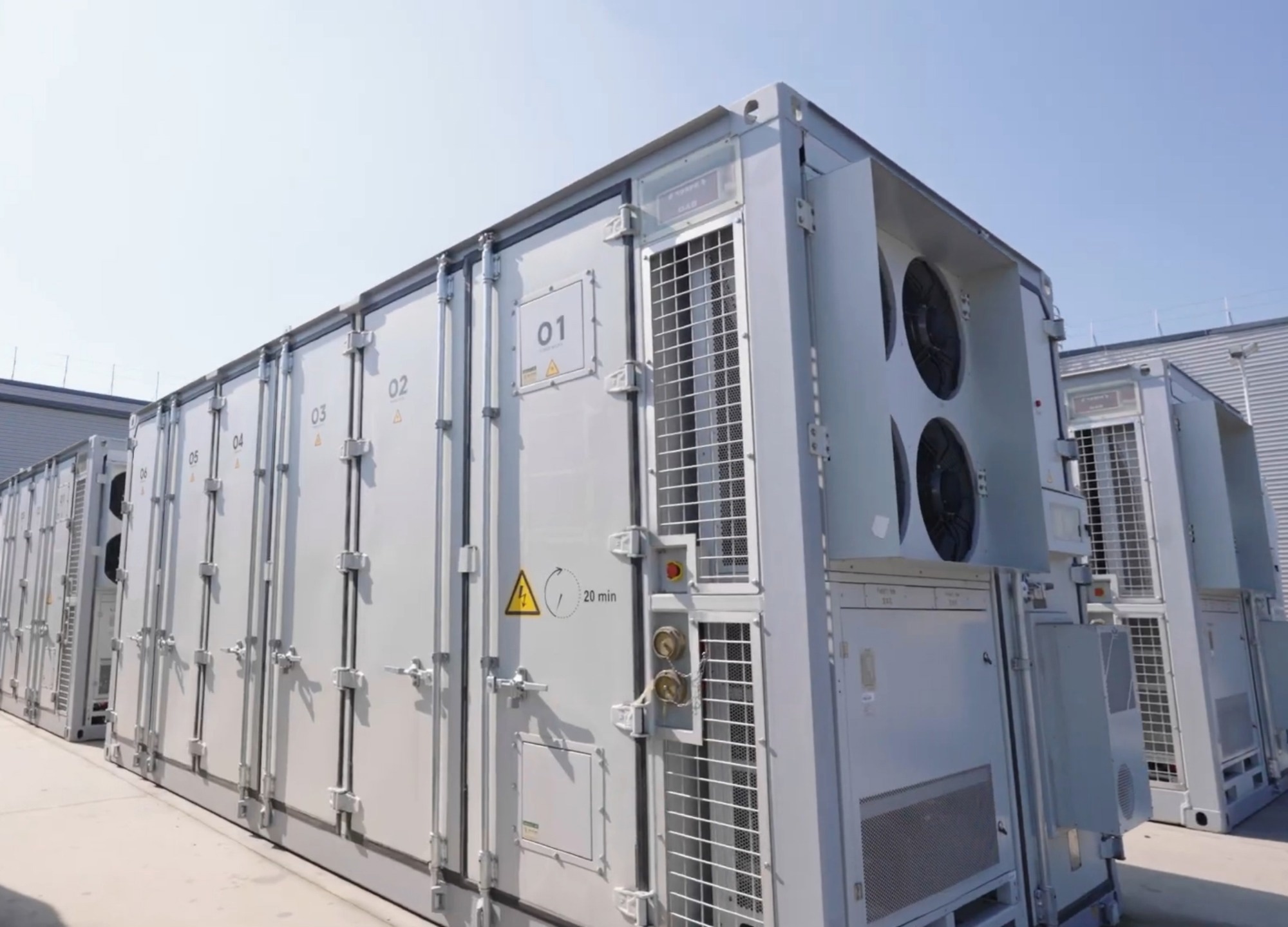 Study: Improving the Effective Utilization of Liquid Nitrogen for Suppressing Thermal Runaway in Lithium-Ion Battery Packs. Image Credit: harhar38/Shutterstock.com
Researchers found that adding lightweight fire compartments inside a 100 Ah LiFePO4 battery module increased liquid nitrogen’s effective cooling from 0.037 to 0.051 under the same nitrogen dose – a substantial gain in a system where cooling efficiency is critical.
The findings, published in Batteries, outline practical methods to improve fire-mitigation strategies in grid-scale energy-storage systems, where battery fires are difficult to extinguish and can reignite days or weeks later.
Get all the details: Grab your PDF here!
Liquid nitrogen is a promising agent for battery fire suppression due to its extreme cold and its large latent heat of vaporization. In open or poorly confined environments, however, liquid nitrogen boils off rapidly, limiting the amount of heat it can actually remove from failing cells.
Thermal runaway propagation (TRP) in tightly packed battery modules is driven by multiple heat-transfer pathways, including solid conduction between cells, flame impingement, and hot-gas convection. Once one cell fails, these mechanisms can accelerate cascading failure across the pack.
The study focuses on how to make better use of a fixed liquid nitrogen dose by controlling where and how its cooling capacity is applied.
Full-Scale Tests Under Energy-Storage Conditions
To replicate real-world conditions, the researchers built a full-scale experimental platform representing an energy-storage-station enclosure. A four-cell, 100 Ah LiFePO4 module was tightly clamped inside a 0.62 × 0.41 × 0.26 m box and heated externally until thermal runaway was triggered in the first cell.
Each test involved injecting 17.4 kg of liquid nitrogen through the top opening of the enclosure with an 8 mm nozzle at 2 MPa. Each cell was instrumented with thermocouples at multiple locations, and voltage, temperature, and visual data were recorded throughout the event.
While initial cell temperatures varied between tests, injection parameters were held constant to allow direct comparison. A baseline test without liquid nitrogen established the natural progression of thermal runaway and propagation within the module.
What Happened Without Suppression
In the absence of liquid nitrogen, each cell followed a clear four-stage failure sequence: external heating, safety-valve rupture at 171-189 °C, rapid self-heating to peak temperatures of 368-472 °C, and eventual cooling.
Gas temperatures inside the enclosure reached approximately 701 °C near the top and 249 °C near the bottom, and each cell lost about 20 % of its mass.
As the event progressed, thermal runaway propagated faster from one cell to the next, clearly demonstrating the severity of tightly packed configurations.
Liquid Nitrogen Cooling Puts a Stop to Thermal Runaway
Direct liquid nitrogen injection sharply reduced cell temperatures and interrupted propagation. The initiating cell experienced a maximum temperature drop of 164 °C, while adjacent cells cooled by 24-97 °C. No re-ignition was observed within the experimental observation window.
However, the researchers found that liquid nitrogen became progressively less effective along the propagation sequence. Downstream cells required less cooling and shared the same vapor space, reducing the overall effect of the injected nitrogen’s cooling.
To address this, the team introduced internal fire compartments using 6 mm aerogel blankets. These partitions limited heat transfer between regions undergoing thermal runaway and the rest of the module.
In the two-zone configuration, the maximum temperature reduction of the first cell increased to 245 °C, total absorbed heat reached 629 kJ, and the effective use of liquid nitrogen rose to 0.051. More finely divided configurations achieved utilization values of up to 0.058, though gains diminished as compartments became smaller.
The results show that reducing the effective cooling volume concentrates liquid nitrogen’s enthalpy change around the hottest regions, improving suppression efficiency.
Volume Increases Performance More Than Geometry
A key conclusion of the study is that volume confinement, rather than geometric confinement, dominates suppression effectiveness under the tested conditions.
While compartment geometry can influence local flow and heat transfer, its impact was secondary compared with the overall reduction in available vapor space.
The researchers also showed that excessive compartmentalization gave diminishing returns. In smaller compartments, heat accumulates more rapidly per unit volume, making further improvements harder to achieve.
Sensitivity analysis confirmed that these trends remain even when accounting for potential ±10% temperature measurement uncertainty in the extreme cryogenic environment.
Implications for Engineering Battery Safety
The findings suggest that liquid nitrogen can be far more effective as a fire-mitigation tool when paired with simple internal design modifications. Instead of increasing the liquid nitrogen dosage, improving how and where its cooling capacity is applied is a more practical and scalable solution.
This approach could be particularly valuable for retrofitting existing energy-storage installations, supporting safer deployment of lithium-ion batteries in grid-level storage and electric-vehicle infrastructure.
Future work will extend the framework to high-nickel battery chemistries, dynamic charge–discharge conditions, and alternative injection strategies, combining experiments with simulations.
As large battery fires continue to challenge emergency responders, as seen in the 2024 Gateway energy-storage-station incident, the study provides quantitative evidence that smarter thermal confinement can substantially reduce the risk of cascading failure.
Journal Reference
Xu, D. et al. (2026). Improving the Effective Utilization of Liquid Nitrogen for Suppressing Thermal Runaway in Lithium-Ion Battery Packs. Batteries, 12(2), 40. DOI: 10.3390/batteries12020040
Disclaimer: The views expressed here are those of the author expressed in their private capacity and do not necessarily represent the views of AZoM.com Limited T/A AZoNetwork the owner and operator of this website. This disclaimer forms part of the Terms and conditions of use of this website.