By combining screen-printed indium telluride with smart co-doping and heterojunction design, researchers have created flexible thermoelectric generators that deliver big performance gains without sacrificing bendability. The breakthrough positions InTe as a new printable platform for turning everyday waste heat into wearable power.
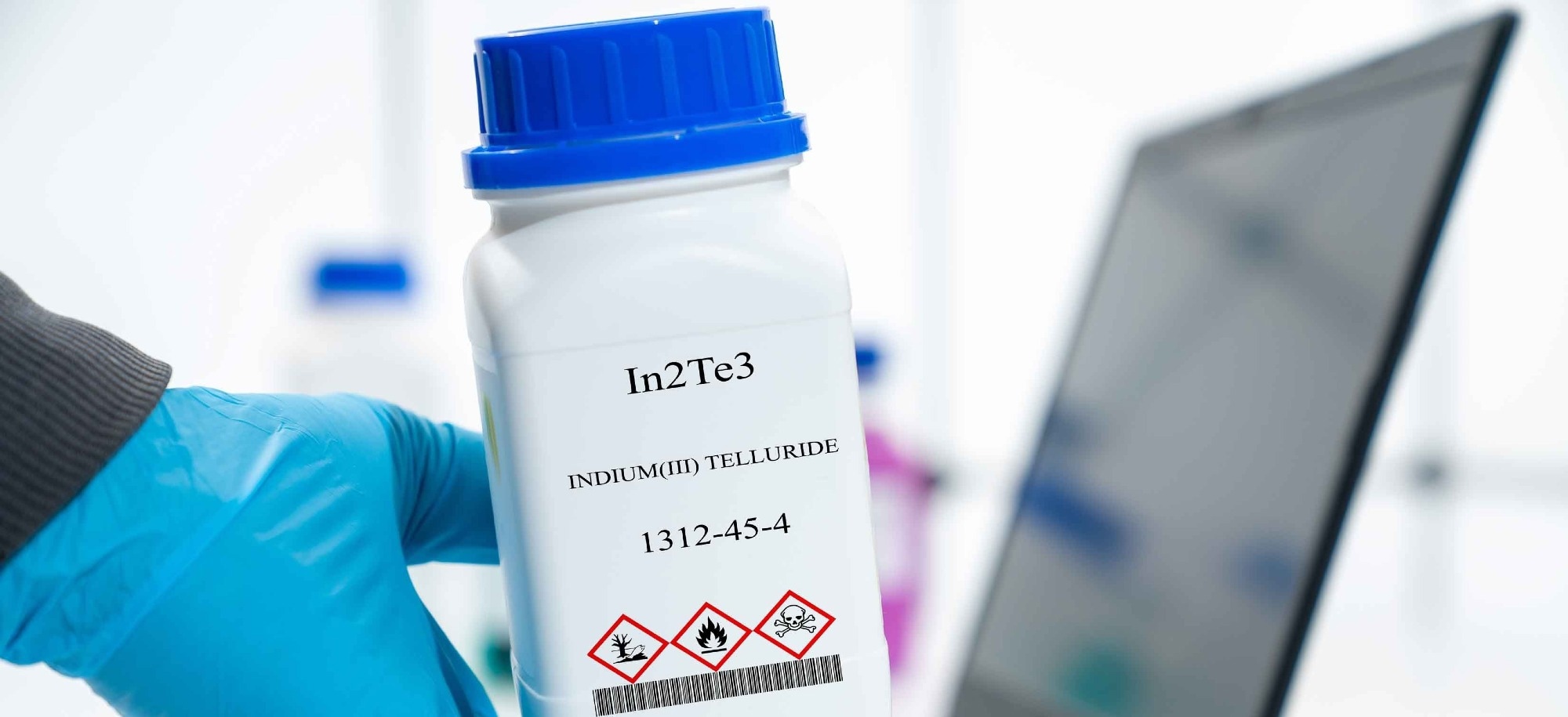
Study: Unveiling InTe for flexible thermoelectric applications with enhanced performance via Bi/Se co-doping and MnO2 integration. Image Credit: luchschenF/Shutterstock.com
The research, published in Scientific Reports, introduces the first flexible thermoelectric generators (FTEGs) made using screen-printed indium telluride (InTe). By combining Bi/Se co-doping with MnO2, the researchers achieved major gains in Seebeck coefficient, internal resistance, and power output - all while preserving excellent mechanical flexibility.
Turning Heat into Power: Why Flexible Thermoelectrics Matter
Thermoelectric materials convert temperature differences directly into electrical energy, making them essential for self-powered sensors, wearable electronics, and Internet of Things (IoT) systems. Traditional inorganic thermoelectrics, such as Bi2Te3, PbTe, and GeTe, offer high efficiency, but their brittleness, toxicity, and reliance on high-temperature processing make them poorly suited to flexible substrates and large-area printing.
Indium telluride (InTe) offers an intriguing alternative. As a mixed-valence Zintl compound, it features ultralow lattice thermal conductivity driven by strong lattice anharmonicity and weakly bonded In? ions. However, pristine InTe also suffers from low electrical conductivity, limited carrier mobility, and an unfavourable band structure, all of which constrain its thermoelectric performance. Until now, its potential in flexible and printed devices has remained largely unexplored.
To address these challenges, the team combined two complementary strategies: tuning the electronic structure through Bi/Se co-doping and enabling scalable fabrication via screen printing. By pairing materials engineering with low-temperature, solution-based processing, the study bridges the gap between high-performance inorganic thermoelectrics and mechanically flexible devices, establishing InTe as a promising platform for wearable and flexible waste-heat energy harvesting.
From Powders to Printed Generators: How the Devices Were Made
The researchers synthesized pristine and Bi/Se co-doped InTe powders via a solid-state reaction under vacuum-sealed conditions to ensure phase purity and precise stoichiometry. These powders were then formulated into screen-printable inks using a cellulose acetate propionate–diacetone alcohol binder system and deposited uniformly onto polyethylene terephthalate (PET) substrates.
Flexible thermoelectric legs were produced through multi-pass screen printing, followed by low-temperature curing at 60 °C. This approach preserved the integrity of the polymer substrates and supports compatibility with roll-to-roll manufacturing. Silver inks were used to print interconnects, forming planar FTEGs with eight thermoelectric legs. For p–n junction devices, the team paired the p-type InTe films with a previously optimized n-type MnO2 ink, creating interfacial heterojunction networks.
Structural and microstructural characterization was carried out using X-ray diffraction (XRD) and field-emission scanning electron microscopy (FESEM). Hall measurements provided carrier concentration and mobility data, while device-level Seebeck coefficient, internal resistance, and power output were evaluated under temperature gradients of up to 100 K. Mechanical robustness was assessed through both static bending and cyclic fatigue tests.
Want to save for later? Click here.
Big Gains from Co-Doping: What the Measurements Revealed
XRD confirmed phase-pure tetragonal InTe across all compositions and revealed systematic lattice expansion with Bi/Se incorporation. Increasing Bi content led to larger crystallite sizes and reduced microstrain, pointing to improved crystallinity and lattice relaxation.
FESEM images showed denser, more compact grain networks with lower porosity in highly doped films - a structure that supports efficient carrier transport while maintaining phonon-scattering centres.
Hall measurements indicated that all samples remained p-type, with hole concentration rising from 4.2 × 10¹7 cm?³ in pristine InTe to 5.9 × 10¹7 cm?³ in the 6 % Bi-doped composition. This increase is attributed to dopant-induced indium vacancy formation and band-structure modification. At the same time, both carrier concentration and mobility improved, driving a strong reduction in resistivity and a substantial boost in electrical conductivity.
These material-level improvements translated directly into device performance. The optimized In0.94Bi0.06Te0.97Se0.03 FTEG achieved a Seebeck coefficient of 1320 µV K?¹, reduced internal resistance by nearly two orders of magnitude compared with pristine InTe, and delivered a power output of 29.45 nW.
The enhanced Seebeck response is linked to an increased density-of-states effective mass, Bi-induced spin–orbit coupling, and energy filtering driven by point-defect scattering.
Just as importantly, the devices proved mechanically resilient. After bending to 120° and completing 500 cyclic bending cycles, the FTEGs showed only a 2 % change in resistance, demonstrating stable electrical performance under repeated deformation and underscoring their suitability for wearable and soft-electronics applications.
A Printable Path Toward Wearable Energy Harvesting
Overall, the study shows that screen-printed InTe can serve as a viable, scalable inorganic thermoelectric material for flexible energy harvesting. Bi/Se co-doping overcomes InTe’s intrinsic electrical limitations by simultaneously enhancing carrier concentration, mobility, and band-structure characteristics, leading to a marked increase in Seebeck coefficient and a dramatic reduction in internal resistance. The added integration of MnO2 creates functional p–n heterojunctions that further improve interfacial charge transport and boost power output.
Equally significant is the low-temperature, solution-processable fabrication route, which is compatible with polymer substrates and large-area printing. The resulting FTEGs deliver nanowatt-level power while maintaining mechanical robustness and stable performance under repeated bending.
Looking ahead, the combination of targeted co-doping, heterojunction engineering, and printable ink technologies offers a promising pathway for translating high-performance chalcogenide thermoelectrics into practical, flexible devices - delivering next-generation wearable and distributed energy harvesters that can convert low-grade waste heat into usable electrical power.
Journal Reference
Shankar, M. R., Prabhu, A. N., & Nayak, R. (2026). Unveiling InTe for flexible thermoelectric applications with enhanced performance via Bi/Se co-doping and MnO2 integration. Scientific Reports. DOI: 10.1038/s41598-026-35782-1 https://www.nature.com/articles/s41598-026-35782-1
Disclaimer: The views expressed here are those of the author expressed in their private capacity and do not necessarily represent the views of AZoM.com Limited T/A AZoNetwork the owner and operator of this website. This disclaimer forms part of the Terms and conditions of use of this website.