A research team led by Professor Lu Jian, Dean of the College of Engineering and Chair Professor in the Department of Mechanical Engineering at City University of Hong Kong (CityUHK), has discovered for the first time that the naturally occurring porous ceramic structure within sea urchin spines possesses an unexpected capability for mechanoelectrical perception.
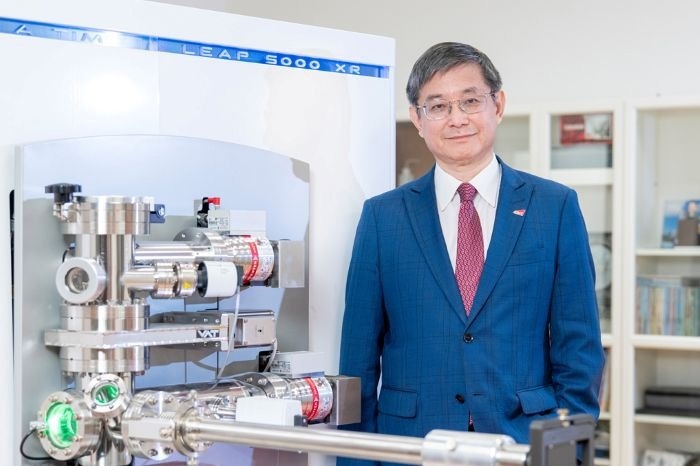 Professor Lu. Image Credit: City University of Hong Kong
The team revealed that when water droplets or flowing water passes over the spine’s surface, its gradient cellular structure instantaneously generates measurable voltage signals. The response speed is remarkably efficient – more than a thousand times faster than echinoderm visual perception.
Inspired by this natural architecture, the team combined biomimetic structural design with advanced 3D printing technology to replicate and enhance this capability, opening new avenues for next-generation smart sensing and underwater monitoring materials.
The study, titled “Echinoderm stereom gradient structures enable mechanoelectrical perception”, was recently published in the prestigious international journal Nature.
Through in situ observations of the long-spined sea urchin (Diadema setosum), the researchers found that when a seawater droplet falls onto the spine’s apex, the spine rotates rapidly within approximately one second, demonstrating a highly sensitive tactile response. Subsequent voltage measurements revealed that droplet stimulation induces a transient potential of approximately 100 mV, while flowing water triggers stable electrical signals. The entire response occurs within tens of milliseconds. Notably, even in the absence of any viable cellular tissue, the spines still produce the same voltage response, confirming that this perception capability stems from the intrinsic physical mechanism of the material and its microstructure rather than from neural or biological tissues.
Scanning electron microscopy and micro-computed tomography analyzes revealed that the spine consists of a bicontinuous porous skeleton, known as stereom, which exhibits a pronounced gradient in pore size along the spine axis. Compared with the base, the apex region features smaller pore diameters, higher porosity and greater specific surface area, enhancing solid–liquid interfacial charge separation when fluid flows through. As water moves through these microchannels, an electric double layer forms at the interface, generating a streaming potential that is converted into measurable voltage signals, effectively enabling the spine to function as a natural microscale sensor.
To verify the generality of this structure-induced phenomenon, the team fabricated biomimetic gradient porous polymer and ceramic samples using vat photopolymerization 3D printing. Experimental results showed that compared to gradient-free structures, the biomimetic gradient designs exhibited a threefold increase in voltage output and an eightfold increase in signal amplitude. These findings show that mechanoelectrical perception is governed primarily by topological structure rather than material composition. The researchers then constructed a biomimetic metamaterial mechanoreceptor comprising multiple gradient units. This device is capable of real-time detection of underwater flow direction and intensity with time-resolved self-monitoring, without the need for external sensors or power supplies.
“Through biomimetic structural design and 3D printing, we have successfully translated nature’s wisdom into smart materials,” said Professor Lu. “Our goal in fabricating biomimetic functional materials is to extend this structure–function integration concept found in nature into engineered systems, paving the way for a new generation of self-sensing intelligent materials.”
This study challenges the conventional view that natural porous structures serve primarily mechanical functions, revealing their latent sensing capabilities and providing new insights into structure–function integrated material design. With continued advances in 3D printing technologies, these biomimetic gradient porous structures hold strong potential for applications in marine environmental monitoring, intelligent underwater exploration, water resource management, energy storage, biomedical devices and aerospace engineering, forming a foundational platform for next-generation of integrated structural/ functional materials.
This study is a collaborative effort between CityUHK, The Hong Kong Polytechnic University, and Huazhong University of Science and Technology.