Wiley, a global leader in authoritative content and research intelligence, today released the new edition of the Wiley Registry/NIST Mass Spectral Library, a reference database that combines two essential mass spectrometry references in a single, integrated collection, giving scientists the full depth of both to identify unknown chemical compounds.
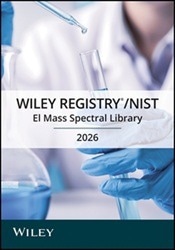 Image Credit: Wiley
For years, laboratories doing GC-MS analysis have relied on Wiley’s renowned Wiley Registry of Mass Spectral Data and the NIST/EPA/NIH EI Mass Spectral Library from the U.S. government’s National Institute of Standards and Technology (NIST) to power their analytical workflows. These two respected references are united in this database, one of the most comprehensive resources of its kind.
The new 2026 edition updates the collection, adding tens of thousands of newly validated compounds across both libraries and bringing the total to more than 1.2 million electron ionization (EI) mass spectra – unique chemical “signatures” used to identify substances.
The Wiley Registry/NIST Mass Spectral Library is part of Wiley’s growing portfolio of scientific data and research intelligence solutions, which spans spectral databases, chemistry and materials literature, and analytical tools supporting researchers from discovery through applied outcomes.
Wiley’s spectral database solutions are trusted by leading pharmaceutical, environmental, and forensic laboratories worldwide, reflecting Wiley’s mission to transform knowledge into actionable intelligence that helps researchers make confident, high-stakes decisions.
“When a scientist runs a sample through a mass spectrometer, the results are only as good as the reference data behind them,” said Armughan Rafat, Wiley senior vice president and chief AI & data analytics officer. “By uniting the Wiley Registry and the NIST Library in a single resource, we deliver the breadth, quality, and validation scientists need to identify unknown compounds faster and with confidence.”
Available in the most common instrumentation manufacturer formats, the library supports high-confidence analysis across GC-MS workflows.
Spectral Databases
Spectral databases contain unique molecular “fingerprints” of substances captured through analytical techniques such as infrared (IR), mass spectrometry (MS), nuclear magnetic resonance (NMR), and Raman spectroscopy. By comparing experimental spectra against validated reference data, researchers can accurately identify unknown compounds across a wide range of applications.
For more information about the Wiley Registry/NIST Mass Spectral Library 2026, please visit: sciencesolutions.wiley.com/solutions/technique/gc-ms/wiley-registry-nist-mass-spectral-library/