A “clean” pigment in cosmetics represents a commitment to safe chemistry, processing, and performance that minimizes risks to people and the environment while ensuring reliable color and texture. It brings together origin, purity, particle engineering, and surface treatments in ways that control exposure, avoid unnecessary hazards, and fit within modern expectations of transparency and environmental responsibility.
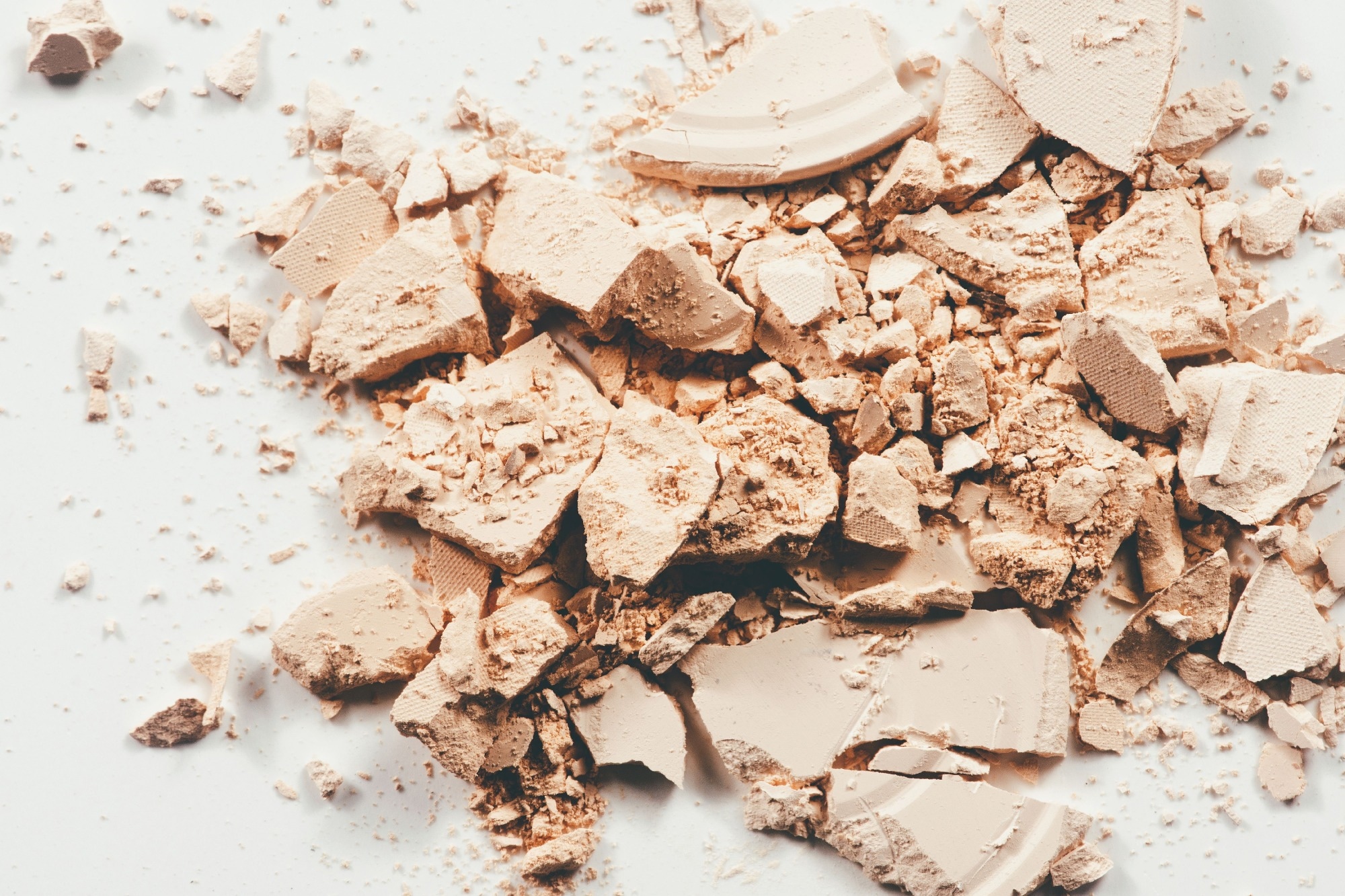 Image Credit: palimarijulia/Shutterstock.com
What does “Clean” mean for Pigments?
In practice, “clean” has no single legal definition, so formulators interpret it through safety margins, toxicological data, and life-cycle considerations. The concept focuses on whether a pigment introduces avoidable risks through its chemistry, impurities, or physical form, and whether those risks are well characterized and controlled for the intended use on skin, lips, or around the eyes.1,2
A clean pigment supports predictable behavior in a formula, allowing a brand to justify its safety narrative with reproducible data on stability, migration, and interaction with the skin barrier.
This shifts the discussion away from a “natural versus synthetic” debate and toward more detailed questions about particle size, solubility, bioavailability, and degradation products throughout a product’s life.3,4,5
Get all the details: Grab your PDF here!
Mineral Pigments and Perceived Naturalness
Mineral pigments such as iron oxides, titanium dioxide, and zinc oxide define a large share of modern “clean” color cosmetics, partly because they are chemically inert, non-bleeding, and highly stable under light and heat.
They also provide opaque coverage and ultraviolet (UV) scattering, making them essential for foundations, concealers, and mineral sunscreens where long-wear performance and low reactivity matter.6
Natural origin does not automatically guarantee cleanliness. Ore-derived pigments must be carefully refined and treated to remove heavy metals and adjust their surface chemistry.
For instance, regulations on titanium dioxide consider specific particle sizes and uses, showing that even "natural" materials require strict controls on inhalation exposure and on their formulation.4,6
Botanical Pigments and Biological Complexity
Botanical pigments, such as carotenoids, anthocyanins, and chlorophyll derivatives, are derived from natural sources and are often considered a cleaner alternative to synthetic dyes. They can sometimes provide extra benefits, such as antioxidant properties, which brands promote in multi-functional skincare products.3
However, using these natural colorants can be tricky.
They are sensitive to light, pH levels, and oxidation. Additionally, large-scale farming for pigment extraction can impact land and water if not done responsibly. To use botanical pigments effectively, it's important to have proper extraction methods and to manage stability and shelf life in actual consumer products.3,4
Lab-grown and Hybrid Pigments
Lab-grown pigments include high-purity organic lakes, synthetic iron oxides, and engineered metal oxide dispersions designed for tight control over composition and particle distribution.
These materials offer consistent shade matching, low batch-to-batch variability, and optimized dispersion behavior, which reduces the need for high pigment loadings and can simplify preservative and solvent systems.4,6,7
Hybrid pigments combine inorganic cores with organic coatings or polymer shells, enabling better control over properties such as shine and texture without compromising color stability.
A "clean" evaluation for these lab-grown materials focuses on the toxicology of both the core and the shell, their degradation pathways in the body and environment, and the absence of problematic aromatic amines or heavy elements in the production process.1,4
Purity, Impurities, and Trace Metals
Purity is essential for clean pigments, as even trace amounts of metals and residual monomers can cause sensitivity reactions or long-term toxicity, despite a pigment appearing safe. Current standards for cosmetic iron oxides and other mineral pigments set strict limits on lead, arsenic, cadmium, and mercury based on health guidelines and testing capabilities.1,4,6
Clean practices involve careful management at every stage, from mining to final testing. Brands that genuinely aim for a “clean” image prioritize third-party certification, reliable testing methods, and transparent disclosure of impurity limits as technical features of the pigment system rather than as marketing afterthoughts.1,2,4,6
Particle Size, Skin Interaction, and Exposure
Particle size plays a key role in how pigments interact with the skin, lungs, and environment, making it important for defining cleanliness. Pigmentary-grade particles usually measure in microns and stay on the skin's surface. In contrast, nanometric particles can reach hair follicles or interact more deeply with the skin's outer layer, affecting exposure and potential toxicity.5,8
Studies on nanosystems in cosmetics highlight that safety depends not just on the chemical makeup but also on factors like surface area, shape, and how particles group together.
Careful pigment design connects particle size with product type, reducing ultrafine particles in loose powders that can be inhaled, while tailoring submicron systems for applications where their benefits outweigh the risks.1,5,9
Coating Technologies and Functional Cleanliness
 Image Credit: Ekaterina_Klishevnik/Shutterstock.com
Surface coatings on pigment particles influence how they mix in oils or water, how they feel on the skin, and how they interact with other ingredients like preservatives, fragrances, or UV filters.
Common coatings include silanes, silicones, amino acids, and phosphates, which can enhance water resistance, sticking ability, and sensory feel while minimizing direct contact between the pigment core and skin.6,7
Recent studies on titanium dioxide nanoparticle coatings show that proper coatings can lower harmful reactions, control the creation of reactive oxygen species, and stabilize mixtures. Clean assessment of coated pigments asks whether the coating itself introduces allergens, endocrine-active structures, or persistent residues, and whether it degrades into compounds with well-understood toxicological profiles.4,5,7
Environmental Footprint of Pigment Choices
A clean pigment also reflects concern for what happens outside the bottle, across both upstream manufacturing and downstream release into wastewater and solid waste streams.
Studies on cosmetic pollution point out that synthetic dyes, micro- and nanomaterials, and solvent-heavy methods lead to aquatic toxicity, sediment accumulation, and greenhouse gas emissions across the product life cycle.1,2,4
Mineral pigments can raise concerns about mining impacts, while some natural pigments can drive land changes if not sourced responsibly.
Clean strategies respond with lower-impact synthesis routes, renewable feedstocks where appropriate, and pigments that maintain performance at lower inclusion levels so that formulations achieve the same color payoff with less material throughput.3,4
Performance, Color Payoff, and Skin Safety
A clean pigment design affects how a product appears and feels on the skin. Poor coverage may force formulators to use more ingredients, which can complicate safety evaluations.
Improving particle engineering helps create vibrant colors with less product, reducing potential irritants and simplifying preservative systems.6
Clean performance also means the product should not migrate into the eye, have controlled staining, and remove easily with gentle cleansers.
Tested combinations of pigments and carriers that minimize barrier disruption and do not enhance the effects of known sensitizers align with emerging research on how inorganic particles may affect skin sensitization when combined with other chemicals.1,5,8
Saving this article for later? Grab a PDF here.
Using Materials Science to Navigate “Clean” Claims
Materials science provides the tools to turn “clean” from a vague aesthetic into a set of measurable properties that connect origin, processing, and function. Techniques such as electron microscopy, dynamic light scattering, and surface analysis are used to characterize particle size, morphology, and coatings. Toxicology and exposure modeling then assess how these properties impact consumer safety.5,6,10
For brands and formulators, using the term “clean” accurately means aligning marketing with this scientific basis. As regulations around cosmetics become stricter, pigments with well-defined properties, controlled production methods, and careful environmental considerations will establish a clear standard for what “clean” means in ingredient lists and on the skin.1,2,5
References and Further Reading
- Alnuqaydan, A. M. (2024). The dark side of beauty: An in-depth analysis of the health hazards and toxicological impact of synthetic cosmetics and personal care products. Frontiers in Public Health, 12, 1439027. DOI:10.3389/fpubh.2024.1439027. https://www.frontiersin.org/journals/public-health/articles/10.3389/fpubh.2024.1439027/full
- Wirtu, Y. D. (2024). A review of environmental and health effects of synthetic cosmetics. Frontiers in Environmental Science, 12, 1402893. DOI:10.3389/fenvs.2024.1402893. https://www.frontiersin.org/journals/environmental-science/articles/10.3389/fenvs.2024.1402893/full
- Yadav, S. et al. (2023). A brief review on natural dyes, pigments: Recent advances and future perspectives. Results in Chemistry, 5, 100733. DOI:10.1016/j.rechem.2022.100733. https://www.sciencedirect.com/science/article/pii/S2211715622004520
- Randhawa, K. S. (2023). Synthesis, Properties, and Environmental Impact of Hybrid Pigments. The Scientific World Journal, 2024(1), 2773950. DOI:10.1155/tswj/2773950. https://onlinelibrary.wiley.com/doi/10.1155/tswj/2773950
- Ferraris, C. et al. (2021). Nanosystems in Cosmetic Products: A Brief Overview of Functional, Market, Regulatory and Safety Concerns. Pharmaceutics, 13(9), 1408. DOI:10.3390/pharmaceutics13091408. https://www.mdpi.com/1999-4923/13/9/1408
- Ergin, N., & Suvaci, E. (2025). Advanced metal oxide powders for cosmetic science. Open Ceramics, 23, 100832. DOI:10.1016/j.oceram.2025.100832. https://www.sciencedirect.com/science/article/pii/S2666539525000999
- Kim, N. et al. (2023). Surface Coating of Titanium Dioxide Nanoparticles with a Polymerizable Chelating Agent and Its Physicochemical Property. ACS Omega, 8, 21, 18743–18750. DOI:10.1021/acsomega.3c00734. https://pubs.acs.org/doi/10.1021/acsomega.3c00734
- Meindl, C. et al. (2023). Skin Sensitization Potential of Sensitizers in the Presence of Metal Oxide Nanoparticles In Vitro. Nanomaterials, 14(22), 1811. DOI:10.3390/nano14221811. https://www.mdpi.com/2079-4991/14/22/1811
- Yustina, Y. et al. (2024). Review: Policy strategy of nano cosmetic testing in Indonesia. Pharmacia, 71, 1–10. DOI:10.3897/pharmacia.71.e118872. https://pharmacia.pensoft.net/article/118872/
- Ma, C. et al. (2025). Review of in-situ non- and micro-destructive techniques for pigment analysis in architectural heritage. Npj Heritage Science, 13(1), 222. DOI:10.1038/s40494-025-01675-1. https://www.nature.com/articles/s40494-025-01675-1
Disclaimer: The views expressed here are those of the author expressed in their private capacity and do not necessarily represent the views of AZoM.com Limited T/A AZoNetwork the owner and operator of this website. This disclaimer forms part of the Terms and conditions of use of this website.