Sodium-Ion Batteries: The Closest Commercial Competition
Solid-State Batteries: Safer and More Energy Dense
Zinc-Based Batteries: Safe and Sustainable Energy Storage
Redox Flow Batteries: Built for the Grid
Metal-Air Batteries: Exceptional Theoretical Energy Density
What Does the Future Hold for Lithium-Ion Alternatives?
References and Further Reading
For more than three decades, lithium-ion batteries have dominated the energy storage sector. They power smartphones, laptops, electric vehicles, and an increasing proportion of renewable energy storage systems. Yet growing concerns over lithium supply chains, raw material costs, resource concentration, and sustainability have accelerated the search for alternative battery technologies that can support the world's expanding energy demands.1
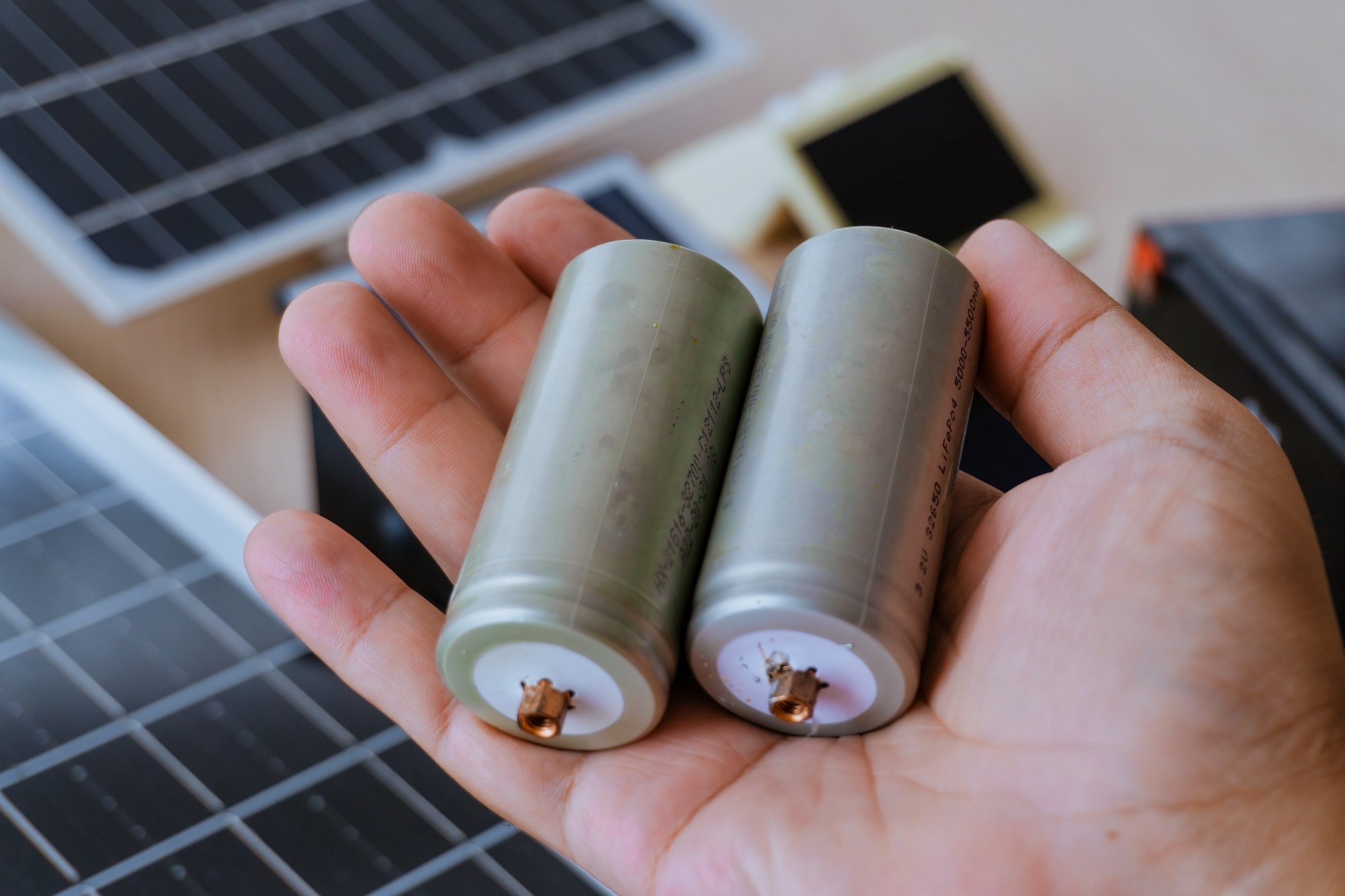
Image Credit: Casezy idea/Shutterstock.com
While lithium-ion technology will remain important for years to come, researchers are actively developing new battery chemistries that could offer advantages in cost, safety, sustainability, or performance. The race is no longer focused solely on achieving higher energy density. Instead, future energy storage systems must also address resource availability, manufacturing scalability, and environmental impact. Several promising contenders have emerged, each targeting different applications ranging from electric vehicles to large-scale grid storage.
Sodium-Ion Batteries: The Closest Commercial Competition
Among all emerging technologies, sodium-ion batteries currently appear to be the most realistic near-term alternative to lithium-ion systems.
Sodium is abundant, inexpensive, and widely distributed worldwide, reducing concerns about resource security and geopolitical supply constraints.2
Although sodium-ion batteries generally deliver lower energy density than lithium-ion cells, recent advances in cathode and electrolyte design have significantly improved their performance. Researchers have demonstrated that sodium-based systems can achieve long cycle life, competitive charging characteristics, and attractive safety profiles.2
Recent work has also highlighted the importance of engineering crystal structures in sodium storage materials. For example, hydrated sodium vanadate materials have shown exceptionally high sodium storage capacities when they retain structural water within the crystal lattice, challenging conventional assumptions about battery material processing.3 For stationary energy storage and lower-cost electric vehicles, sodium-ion batteries are increasingly viewed as one of the most commercially viable alternatives to lithium-ion technology.
Solid-State Batteries: Safer and More Energy Dense
While most alternative chemistries replace lithium entirely, solid-state batteries pursue a different strategy. They retain lithium-based electrochemistry but replace the flammable liquid electrolyte with a solid material, offering many benefits.
Solid-state batteries can improve safety, reduce fire risk, and potentially enable lithium metal anodes, which could significantly increase energy density compared with conventional lithium-ion systems.4
Major automotive manufacturers and battery developers continue to invest heavily in solid-state technology because it could extend electric vehicle range while improving safety.
However, several technical obstacles remain. Manufacturing complexity, interface stability, and large-scale production challenges must still be overcome before widespread commercial adoption becomes a reality.5
Despite these hurdles, many experts view solid-state systems as an important evolutionary step in battery technology rather than a complete replacement for lithium-based chemistry.
Zinc-Based Batteries: Safe and Sustainable Energy Storage
Zinc is another attractive alternative. It is abundant, low-cost, and has excellent safety characteristics. Unlike lithium-ion batteries, many zinc-based systems use aqueous electrolytes that significantly reduce flammability risks.
Aqueous zinc-ion batteries have attracted considerable research interest in recent years because they combine environmental friendliness with relatively straightforward manufacturing processes.6 Zinc also benefits from a mature global supply chain that makes it less vulnerable to resource bottlenecks than lithium and cobalt.7
Although zinc batteries currently struggle to match the energy density of advanced lithium-ion systems, they are increasingly considered promising candidates for stationary energy storage applications where safety, affordability, and sustainability are prioritized over maximum energy density. As renewable energy installations continue to expand, zinc-based technologies could play an important role in stabilizing electricity grids and supporting long-duration energy storage.
Redox Flow Batteries: Built for the Grid
Not every energy storage challenge demands small, lightweight batteries.
In large-scale grid and utility applications, longevity, cost-effectiveness, and scalability often take precedence. This is where redox flow batteries perform exceptionally well. Unlike conventional batteries, they store energy in liquid electrolytes held in external tanks. Power generation and energy capacity can therefore be scaled independently, creating highly flexible storage systems.8
Flow batteries are particularly attractive for renewable energy integration because they can deliver long-duration storage and extremely long operational lifetimes. Vanadium redox flow batteries are currently the most mature example, although researchers are exploring iron-based, zinc-based, and organic electrolyte systems to further reduce costs and improve sustainability.9
While they are unlikely to replace lithium-ion batteries in portable electronics or electric vehicles, flow batteries may become a cornerstone of future electricity grids.
Among the most ambitious battery technologies under investigation are metal-air batteries. These systems use oxygen from the surrounding air as a reactant, dramatically reducing battery weight and enabling extraordinarily high theoretical energy densities.
Lithium-air, sodium-air, and zinc-air batteries have generated substantial excitement because their energy-storage potential significantly exceeds that of conventional lithium-ion cells.10
However, translating theory into practical devices remains challenging. Researchers continue to struggle with poor cycle life, low round-trip efficiency, and unstable electrode reactions. Despite these obstacles, metal-air batteries remain one of the most intriguing long-term prospects for electric aviation, long-range transportation, and other applications requiring lightweight energy storage. The technology is unlikely to reach widespread commercial deployment in the immediate future, but its potential continues to drive significant research investment.
What Does the Future Hold for Lithium-Ion Alternatives?
The future of energy storage is unlikely to be dominated by a single battery chemistry. Different technologies will serve different markets according to their strengths and limitations.
Sodium-ion batteries may provide affordable alternatives for large-scale manufacturing. Solid-state batteries could enhance the performance and safety of electric vehicles. Zinc-based systems offer sustainable stationary storage opportunities, while flow batteries are ideally positioned for grid-scale deployment. Metal-air batteries, meanwhile, represent a longer-term vision of ultra-high-energy storage.
The next generation of batteries will therefore be characterized not by one successor to lithium-ion technology, but by a diverse ecosystem of complementary solutions. As the global transition toward electrification accelerates, that diversity may ultimately prove to be the greatest strength of all.
Continue Reading: Why Do Lithium-Ion Batteries Catch Fire?
References and Further Reading
- Manthiram, A. (2020). A reflection on lithium-ion battery cathode chemistry. Nature Communications, 11, 1550. https://doi.org/10.1038/s41467-020-15355-0
- He, J., et. al. (2024). Tuning the solvation structure with salts for stable sodium-metal batteries. Nature Energy, 9, 446-456. https://doi.org/10.1038/s41560-024-01469-y
- Commandeur, D., et. al. (2025). Nanostructured sodium vanadate hydrate as a versatile sodium ion cathode material for use in organic media and for aqueous desalination. Journal of Materials Chemistry A, 13, 34493-34506. https://doi.org/10.1039/d5ta05128b
- Thomas, F., Mahdi, L., Lemaire, J., & Santos, D. M. F. (2024). Technological advances and market developments of solid-state batteries: A review. Materials, 17, 239. https://doi.org/10.3390/ma17010239
- Sung, J., et. al. (2024). Recent advances in all-solid-state batteries for commercialization. Materials Chemistry Frontiers, 8, 1861-1898. https://doi.org/10.1039/d3qm01171b
- Tang, L., et. al. (2024). Zn-based batteries for sustainable energy storage: strategies and mechanisms. Chemical Society Reviews, 53, 4877-4930. https://doi.org/10.1039/d3cs00295k
- Innocenti, A., et. al. (2024). A critical discussion of the current availability of lithium and zinc for use in batteries. Nature Communications, 15, 4068. https://doi.org/10.1038/s41467-024-48368-0
- Zhang, L., et. al. (2022). Emerging chemistries and molecular designs for flow batteries. Nature Reviews Chemistry, 6(8), 524-543. https://doi.org/10.1038/s41570-022-00394-6
- He, C., et. al. (2025). Aqueous iron-based redox flow batteries for large-scale energy storage. National Science Review, 12(7). https://doi.org/10.1093/nsr/nwaf218
- Wang, H.-F., & Xu, Q. (2019). Materials design for rechargeable metal-air batteries. Matter, 1(3), 565-595. https://doi.org/10.1016/j.matt.2019.05.008
Disclaimer: The views expressed here are those of the author expressed in their private capacity and do not necessarily represent the views of AZoM.com Limited T/A AZoNetwork the owner and operator of this website. This disclaimer forms part of the Terms and conditions of use of this website.