An innovative electrolyte design was created by a research team headed by Professor Tohru Higuchi of Tokyo University of Science (TUS), Japan’s Department of Applied Physics.
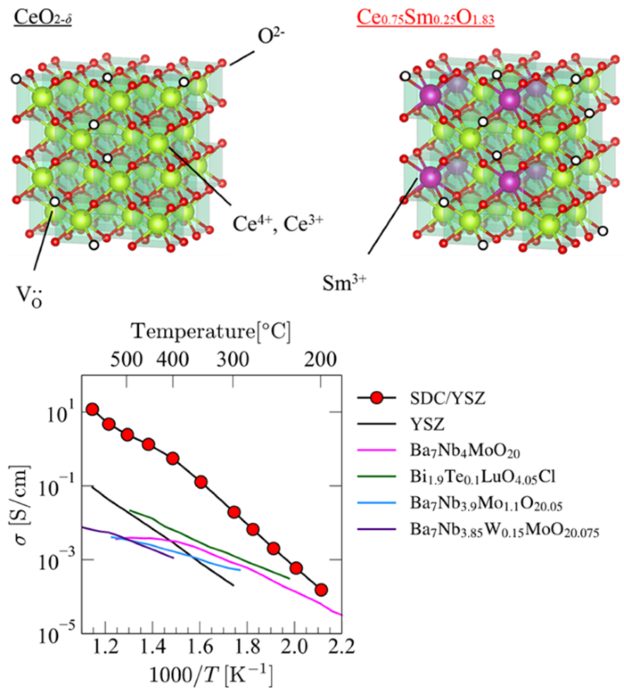 New thin-film electrolyte design outperforms existing solutions. The highly oriented Sm-doped CeO2 thin films developed in this study achieved remarkable oxide-ion conductivities over a wide temperature range. Image Credit: Professor Tohru Higuchi from Tokyo University of Science, Japan
The world urgently needs to discover sustainable and renewable energy solutions because of the threat posed by climate change and the geopolitical issues associated with fossil fuels.
Despite being important renewable energy sources, wind, solar, and hydroelectric power cannot supply contemporary systems with a steady supply of electricity since their output is highly dependent on environmental factors. On the other hand, solid oxide fuel cells (SOFCs) are a viable substitute that directly generate power on demand through clean electrochemical processes combining oxygen and hydrogen.
Nevertheless, there are still technical issues with current SOFC designs that prevent them from being widely used for power production. Usually using bulk ceramic electrolytes, SOFCs need high operating temperatures between 600 and 1000 °C. In addition to requiring manufacturers to employ expensive, high-performance materials, this tremendous heat causes early component degradation, which shortens the cell's service life and raises costs.
Such high temperatures are required to overcome the resistance that prevents the passage of oxide ions (charge carriers) through the ceramic electrolyte. This problem, known as grain boundary resistance, is produced by flaws and chemical barriers at the surfaces of ceramic particles.
Mr. Ryota Morizane, a second-year Master's Course student at TUS's Graduate School of Advanced Engineering, co-authored the study with Assistant Professor Daisuke Shiga and Professor Hiroshi Kumigashira from Tohoku University's Institute of Multidisciplinary Research for Advanced Materials.
The team’s approach entailed creating ultra-thin electrolyte layers of samarium-doped cerium oxide (SDC), a material already recognized for its high oxide-ion conductivity. Their important breakthrough was to ensure exact control over the material's structure during film deposition.
The researchers used a single-crystal yttria-stabilized zirconia (YSZ) substrate and instructed the SDC crystals to align themselves in a precise direction, known as the a-axis orientation, across the thin film. This carefully regulated crystal orientation reduced structural defects that normally generate significant grain boundary resistance and impede oxide-ion conductivity.
We thought if we could fabricate an oriented film based on SDC with a large number of oxygen vacancies on YSZ as a substrate, we could achieve high oxide-ion conductivity at a practical level, higher than that of the existing materials.
Tohru Higuchi, Professor, Department of Applied Physics, Tokyo University of Science
The researchers conducted a number of experiments and analytical measurements to test their innovative thin-film electrolyte design. They discovered that the structurally organized SDC thin film exhibited world-record-high oxide-ion conductivity at temperatures ranging from 200-550 °C .
Operating in this temperature range, rather than the normal 600-1000 °C, can significantly enhance the practicality and safety of fuel cell technology. The technology is more resistant to material stress because it requires less heat. This enables the use of less expensive components, reduces the cell’s startup time, and enhances overall energy efficiency.
Our findings suggest that a-axis-oriented SDC thin films with high chemical stability are promising as innovative electrolyte materials for practical SOFCs.
Tohru Higuchi, Professor, Department of Applied Physics, Tokyo University of Science
This green energy breakthrough directly addresses one of the major barriers to the widespread deployment of hydrogen power. The suggested technology, which makes SOFCs safer, more durable, and less expensive, may help accelerate the transition away from fossil fuels and toward a hydrogen economy.
Notably, Prof. Higuchi clarified that this development extends beyond power generation.
The proposed thin films with high oxide-ion conductivity have interesting potential applications not only in fuel cells but also in all-solid-state electric double layer transistors based on ionic conductors, which can be used in brain-inspired computing.
Tohru Higuchi, Professor, Department of Applied Physics, Tokyo University of Science
Therefore, this advancement in materials science could have ramifications for cutting-edge computing as well as energy solution technologies.
If an electrode material that could enhance the performance of this electrolyte membrane is developed in the future, practical applications could be possible. If further studies employing the sputtering approach are published throughout the world, the technology could be commercialized. Further developments in this area should pave the way for inexpensive, sustainable energy in the near future.
This study was partially funded by a Grant-in-Aid for Scientific Research (25K01661) from the Japan Society for the Promotion of Science.
Journal Reference:
Morizane, R. et.al. (2025) Oxide Superionic Conductivity of a-Axis-Oriented Ce0.75Sm0.25O2−δ Thin Film on Yttria-Stabilized Zirconia Substrate. Journal of the Physical Society of Japan. Doi: 10.7566/JPSJ.95.014706. https://journals.jps.jp/doi/10.7566/JPSJ.95.014706.