A one-step 3D-printing method builds a binder-free ZrO2/Cu metamaterial electrode that quickly detects glucose without enzymes.
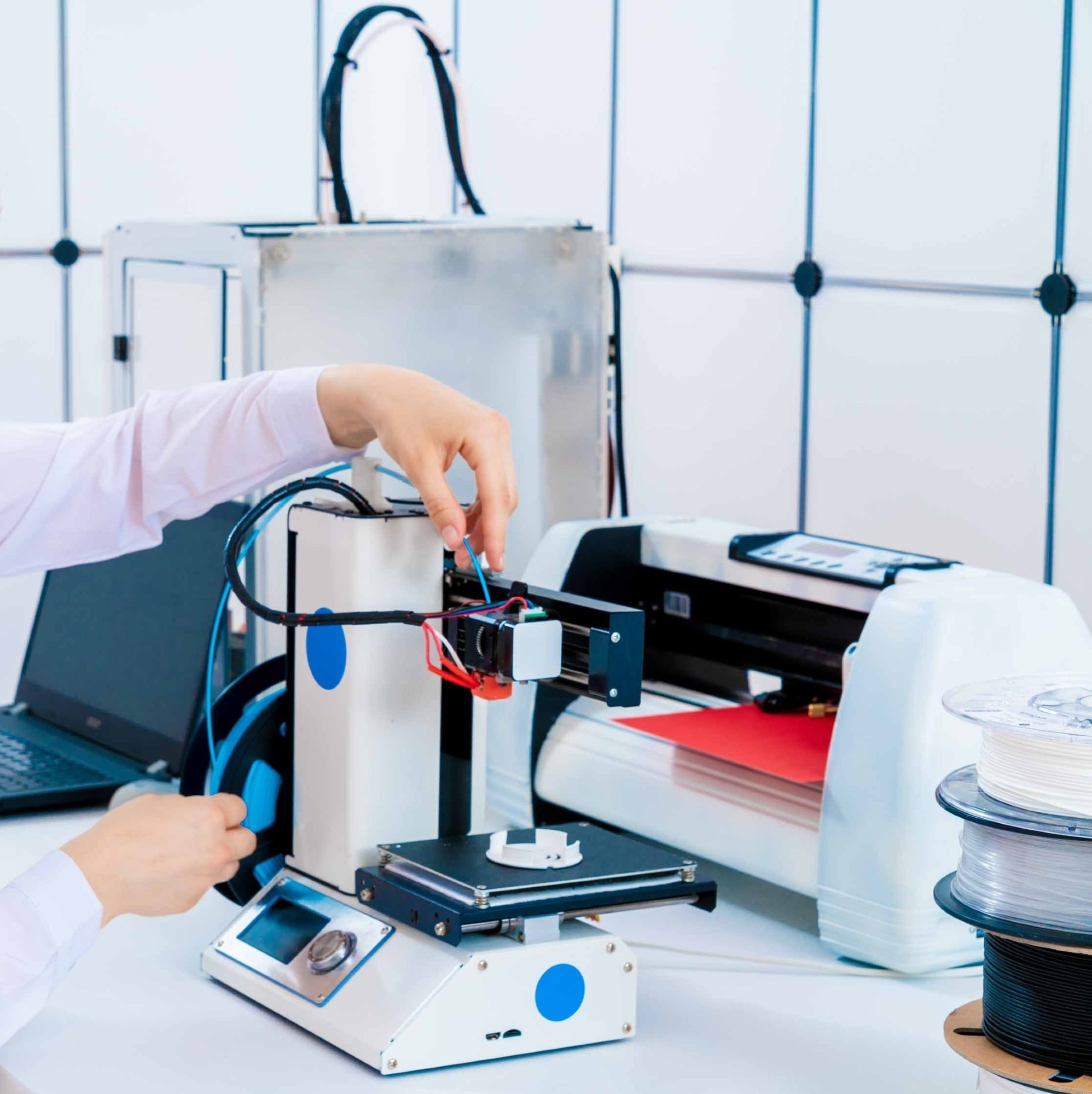
Study: A One-Step 3D-Printing Fabrication of ZrO2/CuMetamaterial Electrodes for Efficient Nonenzymatic Glucose Sensing. Image Credit: luchschenF/Shutterstock.com
Reliable glucose monitoring is central to diabetes care, and electrochemical sensors are widely used because they are fast and relatively simple.
Most commercial devices rely on enzymes such as glucose oxidase, but enzyme activity can decline with changing temperature, pH, or humidity, reducing stability and shortening device lifetime.
Nonenzymatic sensors aim to avoid those factors by driving glucose oxidation directly at the electrode surface. Materials such as copper, nickel, and cobalt have received attention as lower-cost catalysts, but they often still face limitations: low conductivity and insufficient active surface area.
The new study addresses that problem by combining zirconium dioxide (ZrO2) and copper (Cu) in a 3D-printed conductive lattice. The result is a binder-free metamaterial electrode designed to improve catalytic activity, speed charge transport, and offer tighter control over structure during fabrication.
Saving this for later? Download a PDF here.
From Print to Precursor
The team used digital light processing (DLP) to print a polyethylene glycol diacrylate (PEGDA) hydrogel lattice. The structure was based on a six-membered tricapped trigonal prism design, chosen to spread stress and better preserve the printed architecture during processing.
The printed hydrogel was then soaked in copper chloride and zirconium chloride precursor solutions, allowing metal ions to diffuse through the network. After drying, the structure underwent carefully controlled heat treatment in argon.
During calcination, the hydrogel template converted into a conductive carbon scaffold, while the metal precursors formed copper and copper oxide species together with nanoscale, oxygen-deficient zirconium dioxide.
The study also found that a slow-heating profile with an isothermal hold was important for preventing cracking and maintaining the printed lattice's integrity.
Conductive Nanoparticle Pathways for Glucose Sensing
Microscopy showed that Cu and ZrO2 nanoparticles were distributed across the carbon scaffold, creating continuous conductive pathways and a high density of catalytic sites.
Structural analysis indicated that tetragonal ZrO2 nanoparticles, about 10 nm in size, formed on the surface of larger copper particles, creating an interface that appears central to the electrode’s performance.
In glucose-sensing tests, the optimized ZrO2/Cu electrode reached a sensitivity of about 1093 μA mM-1 cm-2 over a glucose range of 0.05-1.50 mM. By comparison, the Cu-only electrode reached about 183 μA mM-1 cm-2.
The composite electrode also showed an electrochemically active surface area roughly thirteen times greater than the copper control.
The study suggests that zirconia does more than support the structure. At the ZrO2/Cu interface, it altered the electronic state of copper, promoted the formation of catalytically active Cu+ species, and may also have improved glucose adsorption through Lewis-acid Zr4+ sites.
Together, those effects were proposed to lower the barrier for glucose oxidation and improve charge transfer, while leaving the underlying crystal structure of Cu unchanged.
Selectivity And Stability
The electrode also performed well in interference tests. Signals from sodium chloride, potassium chloride, sucrose, citric acid, and urea remained low relative to the glucose response, indicating good selectivity under the test conditions.
In stability tests, the electrode retained 97.39 % of its current after about 170 minutes of continuous operation, and repeat measurements remained stable over seven days. That supports good laboratory stability, though the work was carried out in an alkaline electrolyte rather than real-world biological samples.
3D Printed Sensing in the Future
The study presents a materials-by-design route for building electrochemical electrodes with tightly controlled architecture, composition, and interfacial chemistry.
Rather than relying on a conventional slurry-coated electrode, the approach produces a binder-free lattice in which structure and catalytic function are built together from the start.
That could be useful beyond glucose sensing. The same design logic may help in other areas where hierarchical conductive architectures and active nanoscale interfaces matter, including biosensing, electrocatalysis, and energy storage.
Next Steps
The work remains a laboratory demonstration in alkaline electrolyte, so further validation will be needed in practical sensing environments and real-sample analysis.
Future studies will also need to test whether the printing strategy can be extended to other catalytic materials and whether the lattice geometry can be tuned further for better electrochemical performance.
Journal Reference
Zhang, W., et al. (2026). A One-Step 3D-Printing Fabrication of ZrO2/Cu Metamaterial Electrodes for Efficient Nonenzymatic Glucose Sensing. CMat, 3(1), e70030. DOI: 10.1002/cmt2.70030
Disclaimer: The views expressed here are those of the author expressed in their private capacity and do not necessarily represent the views of AZoM.com Limited T/A AZoNetwork the owner and operator of this website. This disclaimer forms part of the Terms and conditions of use of this website.