A high-throughput computational framework narrowed 12 nickel-based alloys to four leading candidates, placing Ni-Cr-Pt at the forefront of efforts to develop durable catalysts for cleaner aircraft exhaust.
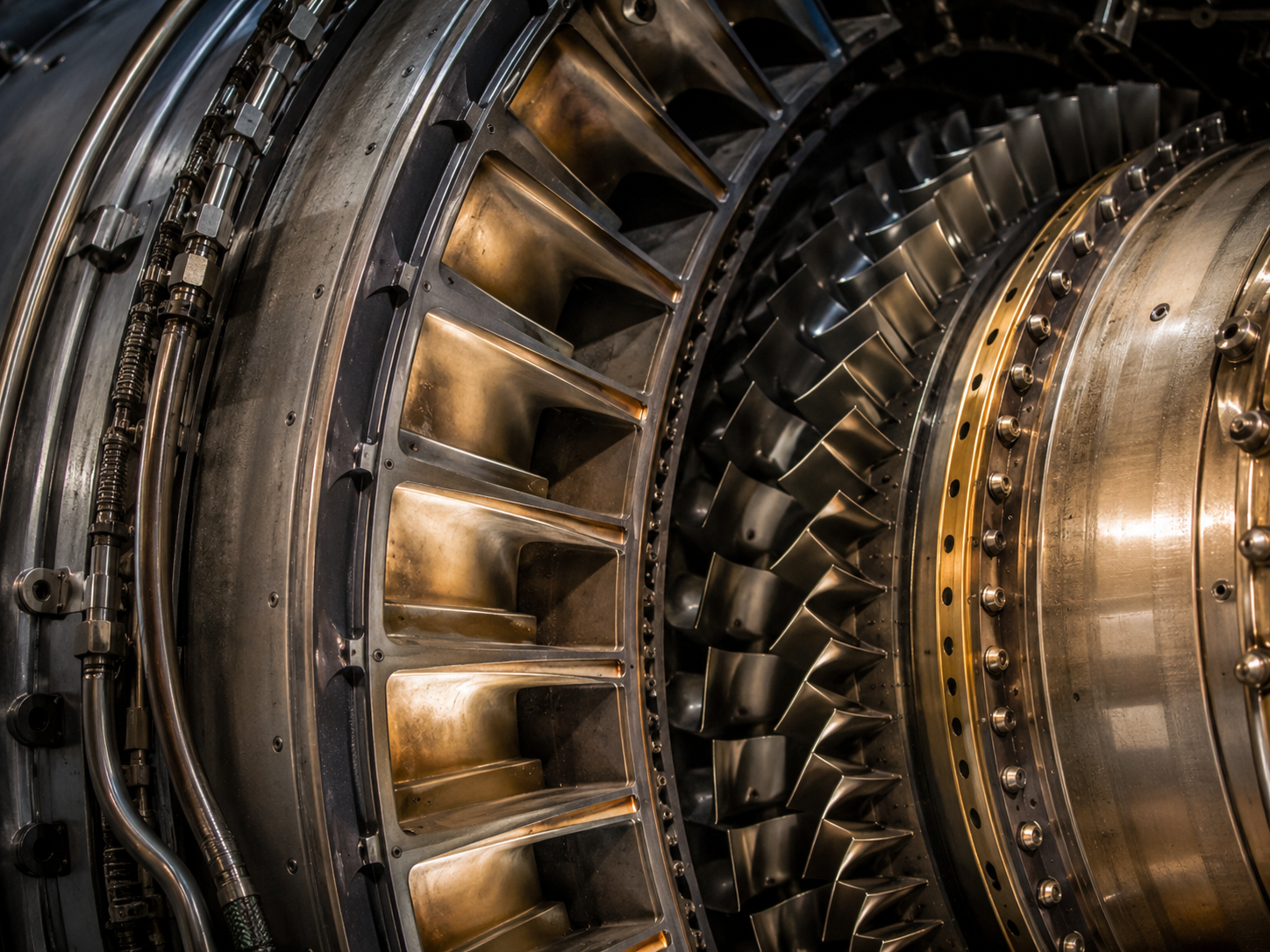
Paper: High-throughput design of catalytic materials for NOx reduction from aircraft emissions. Image credit: AI-generated image created using ChatGPT/OpenAI
A recent paper, published online as an article in press in the journal npj Computational Materials, introduced a computational framework for designing catalysts to reduce nitrogen oxide (NOx) emissions from commercial aircraft. Utilizing quantum chemical simulations, microkinetic modeling, and high-throughput screening, researchers identified a new class of nickel (Ni)-based ternary alloys predicted to combine catalytic activity with thermodynamic stability under representative jet-engine exhaust conditions.
The study established design rules linking alloy composition with catalytic activity and modeled stability and carbon-binding behavior, leading to the identification of four material candidates: nickel-cobalt-palladium (Ni-Co-Pd), nickel-cobalt-platinum (Ni-Co-Pt), nickel-iron-platinum (Ni-Fe-Pt), and nickel-chromium-platinum (Ni-Cr-Pt). These findings provide a computational starting point for developing catalysts that could reduce aviation emissions, subject to further modeling and experimental validation.
The Environmental Impact of Aircraft Emissions
NOx emissions from aircraft contribute to climate change and degrade air quality around major airport hubs. At cruising altitudes, these emissions alter atmospheric concentrations of ozone and methane, resulting in a greater climate impact than ground-level emissions. While altering the fuel-to-oxygen ratio in jet engines can reduce NOx formation, this approach may increase carbon dioxide (CO2) emissions, making post-combustion catalytic treatment an attractive alternative.
Applying automotive catalytic converters to aircraft engines is challenging. Jet-engine exhaust temperatures can exceed 1000 K, and exhaust velocities from 670 to 1300 miles per hour reduce the time available for catalytic reactions. Under these conditions, conventional platinum-group catalysts may deactivate through sintering, creep, coking, corrosion, and sulfidation, leading to a loss of catalytic activity. Thus, there is a need for catalysts that combine high-temperature stability, deactivation resistance, and rapid reaction kinetics.
Computational Screening for Catalyst Discovery
To identify suitable catalysts for aircraft engines, researchers developed an automated computational screening framework based on density functional theory (DFT). They performed quantum-mechanical calculations using the Vienna Ab Initio Simulation Package (VASP), with atomic structures managed through the Atomic Simulation Environment (ASE). Electronic interactions were described using the revised Perdew-Burke-Ernzerhof (RPBE) functional within the generalized gradient approximation (GGA).
The study examined twelve equi-compositional Ni-based ternary alloys across three face-centered cubic surface structures: the (111) terrace, (100) terrace, and (211) stepped surface. Chemically disordered bulk alloys were modeled as special quasi-random structures using the Alloy Theoretical Automated Toolkit (ATAT) with 108-atom supercells. The reaction network included five key adsorbates: atomic oxygen, nitrogen, carbon, nitric oxide, and carbon monoxide, to model NO reduction using carbon monoxide as the reductant. The model did not include hydrocarbon oxidation, even though hydrocarbons are present in real aircraft exhaust.
Linear adsorption-energy scaling relationships and facet-specific transition-state scaling relations were employed to reduce the computational cost of screening. Machine-learning-enhanced nudged elastic-band calculations determined the activation barriers for key reaction steps. The resulting thermodynamic and kinetic parameters were incorporated into a self-consistent mean-field microkinetic model implemented in CatMap. Simulations were conducted using representative jet-engine exhaust gas compositions and temperatures, including 1100 K, allowing researchers to predict catalyst activity across various alloy compositions.
Performance Evaluation of High-Temperature Catalysts
The microkinetic simulations generated Sabatier volcano plots under representative aircraft engine exhaust conditions, demonstrating that modeled catalyst performance strongly depends on surface coordination and adsorption strength. Undercoordinated (211) stepped surfaces exhibited lower activation barriers and higher predicted reaction rates than close-packed terrace surfaces, thereby expanding the range of alloy compositions with high catalytic activity.
Screening of Ni-based ternary alloys identified four leading candidates: Ni-Co-Pd, Ni-Co-Pt, Ni-Fe-Pt, and Ni-Cr-Pt. The platinum-containing alloys, closely followed by the palladium-containing alloys, showed calculated NO consumption rates up to 6 orders of magnitude higher than those of ternary alloys lacking platinum, palladium, or rhodium. However, the calculated absolute rates are highly uncertain, so the authors emphasized broad activity trends and promising compositional regions rather than definitive catalyst rankings. The clean-surface calculations also suggested that surface configurations enriched in Ni and catalytically active metals could be energetically favorable. However, explicit equilibrium segregation under operating conditions was not modeled.
Among the four candidates, Ni-Cr-Pt provided the best balance of modeled catalytic activity, stability, and estimated material cost. The presence of chromium reduced lattice mismatch and improved bulk stability. Furthermore, leading candidates such as Ni-Cr-Pt and Ni-Co-Pt showed weaker carbon-binding energies, suggesting a reduced thermodynamic tendency to retain carbon. However, the study did not directly model the formation or removal of coke under operating conditions.
Practical Applications in Aircraft Engine Design
Although the alloys have not been experimentally tested, the authors propose evaluating these Ni-based ternary alloys as high-temperature catalytic coatings inside commercial aircraft engines. Instead of relying heavily on bulky catalytic converters or pure precious-metal catalysts, future studies could assess thin alloy coatings on existing hot-section components, such as turbine stators, rotors, and other exhaust-path components.
This proposed approach could combine modeled stability with catalytic activity, but the study did not evaluate coating adhesion, thermal cycling, aerodynamic effects, added weight, turbine cooling, or engine performance. The modeled alloys were equi-compositional Ni-containing materials rather than Ni-rich matrices, and their high-temperature strength and creep resistance were not directly calculated or experimentally tested. Their surface chemistry was calculated to favor NO conversion under demanding conditions. Among the materials identified, Ni-Cr-Pt emerged as the most promising for future investigation due to its favorable predicted combination of catalytic performance, thermodynamic stability, and estimated material cost.
Future Directions for Catalyst Development
In summary, this study demonstrates how combining DFT, adsorption-energy descriptors, and microkinetic modeling can accelerate the discovery of high-temperature catalysts for aviation. The framework efficiently identified promising nickel-based ternary alloys while balancing modeled catalytic activity with stability under representative exhaust conditions.
Future work should focus on modeling long-term surface segregation and microstructural evolution under operating conditions. Studies should also account for surface-oxide formation, gas transport, high-velocity flow, adsorbate interactions, multicomponent exhaust chemistry, and the kinetics of coke formation and removal. Experimental testing will be required to validate catalytic activity, mechanical durability, coating performance, and long-term stability. Integrating machine-learned interatomic potentials into these workflows could improve predictions of catalyst behavior over extended timescales. Together, these advancements provide a computational foundation for the experimental development of durable catalysts that could improve the performance of aircraft engines.
Disclaimer: The views expressed here are those of the author expressed in their private capacity and do not necessarily represent the views of AZoM.com Limited T/A AZoNetwork the owner and operator of this website. This disclaimer forms part of the Terms and conditions of use of this website.
Source:
- Goswami, A., Abild-Pedersen, F., Lawson, J. W., & Halldin Stenlid, J. (2026). High-throughput design of catalytic materials for NOx reduction from aircraft emissions. Npj Computational Materials. DOI: 10.1038/s41524-026-02220-9, https://www.nature.com/articles/s41524-026-02220-9