Shortwave infrared cameras, commonly known as InGaAs cameras or SWIR cameras, are capable of detecting wavelengths between 900 and 2500 nm that are invisible to silicon-based visible cameras.
InGaAs SWIR cameras can image through silicon wafers, profile NIR and SWIR laser beams, detect moisture changes imperceptible to the human eye, and reveal surface and subsurface details in materials that appear featureless under visible illumination, because silicon is transparent to SWIR light.
Pembroke Instruments provides InGaAs SWIR camera systems for machine vision, semiconductor inspection, laser beam profiling, microscopy, spectroscopy, material sorting, and scientific research. These systems range from uncooled VGA versions to deeply TE-cooled extended-SWIR cameras.
Why Use SWIR? Top 10 Uses of SWIR Cameras
Finding the Right SWIR Camera
Pembroke Instruments assists engineers and researchers in selecting the appropriate SWIR camera by matching the sensor format, wavelength range, cooling level, data port type, optics, and software workflow to the original measurement requirement. Before requesting a quote or technical evaluation, users can easily narrow down the camera family with this layout.
Need More Detail?
Select 1.3 MP or 2 MP SWIR cameras for spatially detailed machine vision, microscopy, and semiconductor inspection. The SenS 1920 has the highest spatial resolution in the Pembroke series, with 1920 × 1080 pixels at an 8 µm pixel pitch.
Need More Sensitivity?
For longer exposures, spectroscopy, and low-light imaging, select SWIR cameras that are TE-cooled or thoroughly cooled. Dark current is reduced to levels appropriate for astronomy and rigorous scientific measurement by deep TE cooling in the eZephir and ALIZE.
Need Higher Speed?
For dynamic processes, laser events, and quick inspection jobs, go for qVGA or high-speed VGA SWIR cameras. For incredibly quick event capture, the WiDy SenS 320V-ST-HS delivers 10,000 frames per second at qVGA resolution.
Need Integration Help?
For the system architecture, compare the alternatives for USB3, GigE Vision, Camera Link, CoaXPress, HD-SDI, and analog output. Pembroke can assist in matching the data port to the software environment, cable run, and frame grabber.
Discover SWIR Camera Applications
Selection Factors that Should Be Considered
- Wavelength range: 900–1700 nm standard InGaAs, extended 900–1800 nm (HiPe SenS), or extended SWIR to 2500 nm (eZephir) based on the use. While moisture detection and material sorting often benefit from 1400–1700 nm, silicon examination usually performs well at 1100–1300 nm.
- Resolution and pixel size: 2 MP (8 µm pixel), 1.3 MP (10 µm pixel), VGA (15 µm pixel), qVGA (15 µm pixel), or line scan (7.5 µm pixel) are the best options depending on field of view, spatial resolution, optics, and working distance.
- Cooling and noise: TE-cooled cameras are favored for low-light, long-exposure, or high-sensitivity scientific work; uncooled cameras are best for affordability and practicality in well-lit machine vision.
- Data port type and software: Early in the selection process, confirm the requirements for USB3, GigE Vision, Camera Link, CoaXPress, HD-SDI, triggering, SDK, and GUI. Long cable runs and PoE are supported by GigE Vision models, while CoaXPress and Camera Link are appropriate for high-bandwidth industrial integration.
SWIR Camera Selection Table
The full list of SWIR camera models from Pembroke Instruments, along with their features, is shown in the tables below.
- Deeply Cooled SWIR Cameras
- 2 Megapixel SWIR Cameras
- 1.3 Megapixel SWIR Cameras
- Uncooled VGA SWIR Cameras
- TE-Cooled VGA SWIR Cameras
- qVGA SWIR Cameras
- Line-Scan SWIR Cameras
Deep Thermoelectric Cooling
Deeply TE-cooled SWIR cameras lower thermal noise and dark current to levels needed for extended-SWIR measurement, astronomy, low-light scientific imaging, and spectroscopy. Below, users can compare the wavelength range, frame rate, sensor format, and data port type.
Source: Pembroke Instruments, LLC
Camera
Model |
Image |
Spectral
Range |
Data Port
Type |
Sensor
Format |
Cooling |
Max
Frame Rate |
Best Fit |
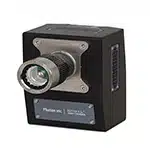
| eZephir |
 |
900–2500 nm |
USB 3.0/Camera Link |
640 x 512 px/15 µm |
TE cooled |
240 fps |
SWIR was extended to 2500 nm using deep TE cooling. The best option for astronomy, spectroscopy, and other uses needing wavelengths longer than the typical 1700 nm InGaAs. Camera Link output and USB3 for adaptable integration |
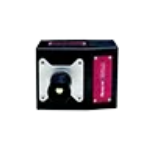
| ALIZE |
 |
900–1700 nm |
USB 3.0/Camera Link |
640 x 512 px/15 µm |
TE cooled |
250 fps |
Standard 900–1700 nm InGaAs with a frame rate of 250 frames per second and deep TE cooling. Excellent for applications involving long-exposure spectroscopy, low-light scientific imaging, and laboratory research where cooling depth is more important than extended wavelength range. |
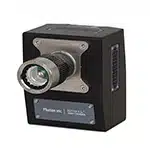
| Zephir 1.7 |
 |
900–1700 nm |
USB 3.0/Camera Link |
640 x 512 px/15 µm |
TE cooled |
240 fps |
Photon Etc.'s deeply cooled 1.7 µm cutoff InGaAs camera is ideal for demanding scientific imaging, photoluminescence, and low-noise laboratory tests where the Zephir platform's deep cooling and optical design are essential. |
2 Megapixel SWIR Cameras
The SenS 1920 family has the highest spatial resolution in the Pembroke SWIR lineup with 1920 x 1080 pixels at an 8 µm pixel pitch. Industrial, OEM, and laboratory integration needs are met by three data port variations (Camera Link SDR26, Camera Link LSHM130, and USB 3.0).
Source: Pembroke Instruments, LLC
| Camera Model |
Image |
Spectral
Range |
Data Port
Type |
Sensor
Format |
Cooling |
Max
Frame Rate |
Best Fit |
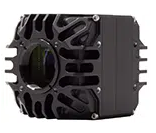
| SenS 1920M-ST |
 |
900–1700 nm |
Camera Link SDR26 |
1920 x 1080 px/8 µm |
TE cooled |
40 fps |
For high-bandwidth industrial integration, 2 MP SWIR via Camera Link SDR26 is ideal for semiconductor inspection lines, automated machine vision systems, and OEM instruments that need Camera Link frame grabbers and deterministic triggering. |
| SenS 1920L-ST |
|
900–1700 nm |
Camera Link LSHM130 |
1920 x 1080 px/8 µm |
TE cooled |
40 fps |
2 MP SWIR via the Camera Link LSHM130 connector is appropriate for systems that require the LSHM130 form factor for compact integration or specific frame-grabber compatibility in semiconductor and industrial inspection setups. |
| SenS 1920V-ST |
|
900–1700 nm |
USB 3.0 |
1920 x 1080 px/8 µm |
TE cooled |
40 fps |
2 MP SWIR via USB 3.0 is the best option when Camera Link infrastructure is unavailable. It connects directly to a PC for microscopy, material analysis, and high-resolution SWIR imaging without a frame grabber. |
1.3 Megapixel SWIR Cameras
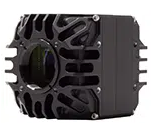
With six data port options (USB3, Camera Link SDR26, Camera Link LSHM130, CoaXPress, HD-SDI, and an extended-range version), the SenS 1280 family offers 1280 x 1024 px resolution at 10 µm pixel pitch. The SenS 1280 is the most versatile high-resolution SWIR camera in the Pembroke series.
Source: Pembroke Instruments, LLC
Camera
Model |
Image |
Spectral
Range |
Data Port
Type |
Sensor
Format |
Cooling |
Max
Frame Rate |
Best Fit |
| SenS 1280V-ST |
 |
900–1700 nm |
USB 3.0 |
1280 x 1024 px/10 µm |
TE cooled |
60 fps |
USB 3.0 1.3 MP SWIR at 60 frames per second. Ideal for university setups, laboratory research, and inspection systems when Camera Link infrastructure is unavailable, and a direct PC connection is needed. |
| SenS 1280M-ST |
|
900–1700 nm |
Camera Link SDR26 |
1280 x 1024 px/10 µm |
TE cooled |
60 fps |
1.3 MP SWIR for OEM integration and industrial inspection using Camera Link SDR26. Ideal for automated systems and production lines that need to be compatible with Camera Link frame grabbers and have deterministic triggering. |
| SenS 1280M-STE |
|
900–1700 nm |
Camera Link SDR26 |
1280 x 1024 px/10 µm |
TE cooled |
60 fps |
1.3 MP SWIR with improved TE cooling using Camera Link SDR26 (STE variant). Ideal for applications where a lower dark current than the normal ST is needed, such as longer exposures, higher sensitivity, or high-temperature settings. |
| SenS 1280C-STE |
|
900–1700 nm |
CoaXPress |
1280 x 1024 px/10 µm |
TE cooled |
60 fps |
1.3 MP SWIR via CoaXPress for fast industrial systems that need a lot of data bandwidth and long coaxial cable runs. The CoaXPress infrastructure is ideal for factory automation and standardized inspection lines. |
| SenS 1280H-STE |
|
900–1700 nm |
HD-SDI |
1280 x 1024 px/10 µm |
TE
cooled |
60 fps |
1.3 MP SWIR over HD-SDI for video infrastructure integration or broadcast compatibility. Ideal for military, inspection systems, and field deployments where HD-SDI cabling and monitors are already installed. |
| SenS 1280L-STE |
|
900–1700 nm |
Camera Link LSHM130 |
1280 x 1024 px/10 µm |
TE cooled |
60 fps |
1.3 MP SWIR with improved TE cooling with Camera Link LSHM130. The LSHM130 connection form factor, which has less noise than the normal ST type, is ideal for OEM instruments and small industrial applications. |
TE-Cooled VGA SWIR Cameras
With USB3, Camera Link SDR26, Camera Link LSHM130, GigE Vision/PoE, HD-SDI, and analog video, the WiDy SenS 640 series offers 640 x 512 px VGA SWIR imaging across the broadest range of data port options in the Pembroke array. For applications demanding sensitivity beyond the typical 1700 nm InGaAs, the HiPe SenS 640 versions expand the spectral range to 900–1800 nm.
Source: Pembroke Instruments, LLC
Camera
Model |
Image |
Spectral
Range |
Data Port
Type |
Sensor
Format |
Cooling |
Max
Frame Rate |
Best Fit |
| WiDy SenS 640V-ST |
 |
900–1700 nm |
USB 3.0 |
640 x 512 px/15 µm |
TE
cooled |
250 fps |
VGA SWIR with TE cooling via USB 3.0 at 250 frames per second. Ideal for machine vision assessments, university installations, and lab research where a direct PC connection without a frame grabber is preferred. |
| WiDy SenS 640V-STP |
|
900–1700 nm |
USB 3.0 |
640 x 512 px/15 µm |
TE cooled |
250 fps |
Peltier temperature control and TE-cooled VGA SWIR over USB 3.0 (STP variant). Ideal for uses where the detector needs to be more tightly thermally stabilized to provide more reliable dark current performance over time. |
| WiDy SenS 640M-ST |
|
900–1700 nm |
Camera Link SDR26 |
640 x 512 px/15 µm |
TE cooled |
250 fps |
TE-cooled VGA SWIR via Camera Link SDR26 for OEM integration and industrial machine vision. Ideal for industrial inspection systems that need hardware triggering, deterministic acquisition, and Camera Link frame grabbers. |
| WiDy SenS 640L-ST |
|
900–1700 nm |
Camera Link LSHM130 |
640 x 512 px/15 µm |
TE cooled |
250 fps |
For small OEM instruments and systems that need the LSHM130 connection form factor with Camera Link functionality, TE-cooled VGA SWIR via Camera Link LSHM130. |
| WiDy SenS 640M-STE |
|
900–1700 nm |
Camera Link SDR26 |
640 x 512 px/15 µm |
TE cooled |
250 fps |
TE-cooled VGA SWIR with improved TE cooling (STE) using Camera Link SDR26. Ideal for industrial inspections with longer integration times, higher sensitivity, or thermally demanding situations that call for a lower dark current than the regular ST. |
| WiDy SenS 640M-STE2 |
|
900–1700 nm |
Camera Link SDR26 |
640 x 512 px/15 µm |
TE cooled |
250 fps |
TE-cooled VGA SWIR using second-generation improved cooling (STE2) via Camera Link SDR26. The WiDy SenS Camera Link family's lowest possible dark current is ideal for the most demanding industrial and scientific applications. |
| WiDy SenS 640L-STE2 |
|
900–1700 nm |
Camera Link LSHM130 |
640 x 512 px/15 µm |
TE cooled |
250 fps |
TE-cooled VGA SWIR with second-generation improved cooling via Camera Link LSHM130. The lowest dark current in the LSHM130 connector family is ideal for small OEM devices that use the LSHM130 form factor. |
| WiDy SenS 640M-STP |
|
900–1700 nm |
Camera Link SDR26 |
640 x 512 px/15 µm |
TE cooled |
250 fps |
TE-cooled VGA SWIR with Peltier temperature control (STP) using Camera Link SDR26. Ideal for industrial systems that require more precise detector temperature stabilization for reliable, repeatable dark-current performance across a range of environmental conditions. |
| WiDy SenS 640M-STPE |
|
900–1700 nm |
Camera Link SDR26 |
640 x 512 px/15 µm |
TE cooled |
250 fps |
TE-cooled VGA SWIR using Camera Link SDR26 with improved cooling and Peltier temperature control (STPE). Ideal for the most thermally demanding industrial OEM applications requiring greater cooling depth and tighter temperature stability. |
| WiDy SenS 640G-STE |
|
900–1700 nm |
GigE Vision/PoE |
640 x 512 px/15 µm |
TE cooled |
250 fps |
TE-cooled VGA SWIR using Power over Ethernet and GigE Vision. GigE Vision standards and PoE make cabling and integration easier for multi-camera setups, long cable run installations, and networked machine vision systems. |
| WiDy SenS 640G-STE2 |
|
900–1700 nm |
GigE Vision/PoE |
640 x 512 px/15 µm |
TE cooled |
250 fps |
GigE Vision/PoE TE-cooled VGA SWIR with second-generation improved cooling. Long exposures over Ethernet are ideal for networked industrial systems that need the lowest dark current in the GigE Vision SenS family. |
| WiDy SenS 640A-STE-PAL |
|
900–1700 nm |
Analog Video (PAL) |
640 x 512 px/15 µm |
TE cooled |
60 fps |
VGA SWIR with PAL analog visual output and TE cooling. Ideal for applications in PAL-standard regions (Europe, Asia) with pre-existing analog video infrastructure, field deployments, and legacy inspection systems. |
| WiDy SenS 640A-STE-NTSC |
|
900–1700 nm |
Analog Video (NTSC) |
640 x 512 px/15 µm |
TE cooled |
60 fps |
VGA SWIR with NTSC analog video output and TE cooling. In North America and other NTSC-standard locations where analog video monitors and recorders are already in use, it is ideal for field deployments and legacy inspection systems. |
| WiDy SenS 640H-STE |
|
900–1700 nm |
HD-SDI |
640 x 512 px/15 µm |
TE cooled |
250 fps |
HD-SDI VGA SWIR with TE cooling at 250 frames per second. Ideal for defense, field inspection, and broadcast-compatible integration systems where HD-SDI cable, monitors, and recorders are the standard infrastructure. |
| HiPe SenS 640V-ST |
 |
900–1800 nm |
USB 3.0 |
640 x 512 px/15 µm |
TE cooled |
250 fps |
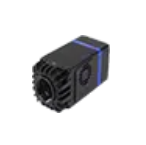
USB 3.0 extended-range VGA SWIR up to 1800 nm. Ideal for applications with straightforward USB3 connectivity that need sensitivity above the typical 1700 nm InGaAs, such as specific moisture detection bands, material sorting, and research jobs. |
| HiPe SenS 640M-ST |
 |
900–1800 nm |
Camera Link SDR26 |
640 x 512 px/15 µm |
TE cooled |
250 fps |
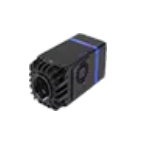
VGA SWIR with extended range up to 1800 nm using Camera Link SDR26. Ideal for OEM systems and industrial inspection that require wavelength sensitivity above 1700 nm, with hardware triggering and Camera Link frame-grabber integration. |
Uncooled VGA SWIR Cameras
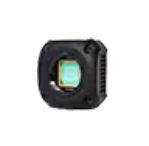
The most affordable way to start using InGaAs SWIR imaging is to use uncooled WiDy SWIR 640 cameras. These cameras are ideal for machine vision, industrial inspection, laboratory assessment, and OEM applications where ambient-temperature operation is permitted since they are lighter, more compact, and easier to integrate than cooled variants.
Source: Pembroke Instruments, LLC
Camera
Model |
Image |
Spectral
Range |
Data Port
Type |
Sensor
Format |
Cooling |
Max
Frame Rate |
Best Fit |
| WiDy SWIR 640V-S |
 |
900–1700 nm |
USB 3.0 |
640 x 512 px/15 µm |
Uncooled |
100 fps |
USB 3.0 entry-level uncooled VGA SWIR. Ideal for machine vision prototyping, university research, and laboratory testing when affordability and ease of use are more important than low-noise performance. |
| WiDy SWIR 640G-SE |
|
900–1700 nm |
GigE Vision/PoE |
640 x 512 px/15 µm |
Uncooled |
100 fps |
GigE Vision with power over ethernet for uncooled VGA SWIR. Ideal for multi-camera configurations and networked machine-vision systems where installation is made easier by GigE Vision standards, PoE power delivery, and lengthy cable runs. |
| WiDy SWIR 640M-SE |
|
900–1700 nm |
Camera Link SDR26 |
640 x 512 px/15 µm |
Uncooled |
100 fps |
VGA SWIR without cooling using Camera Link SDR26. Ideal for industrial OEM integration and production inspection systems where the application does not require cooling, and Camera Link frame grabbers are already in use. |
| WiDy SWIR 640A-SE-PAL |
|
900–1700 nm |
Analog Video (PAL) |
640 x 512 px/15 µm |
Uncooled |
100 fps |
PAL analog visual output and uncooled VGA SWIR. Ideal for legacy inspection equipment and the most economical field deployments in PAL-standard areas with pre-existing analog video infrastructure. |
| WiDy SWIR 640A-SE-NTSC |
|
900–1700 nm |
Analog Video (NTSC) |
640 x 512 px/15 µm |
Uncooled |
100 fps |
NTSC analog visual output and uncooled VGA SWIR. Ideal for legacy inspection systems and economical field deployments in North America and other NTSC-standard locations where analog video monitors and recorders are already in use. |
qVGA High-Speed SWIR Cameras
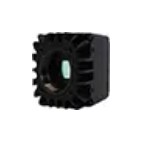
With frame speeds ranging from 1000 fps to 10,000 fps (HS variant), the WiDy SenS 320 range provides 320 x 256 px qVGA SWIR imaging. The high frame rates needed for laser pulse capture, combustion imaging, dynamic process monitoring, and compact OEM integration, where speed is more important than spatial resolution, are made possible by the smaller sensor format.
Source: Pembroke Instruments, LLC
Camera
Model |
Image |
Spectral
Range |
Data Port
Type |
Sensor
Format |
Cooling |
Max
Frame Rate |
Best Fit |
| WiDy SenS 320V-ST |
 |
900–1700 nm |
USB 3.0 |
320 x 256 px/15 µm |
TE cooled |
1000 fps |
Fast qVGA SWIR using USB 3.0 at 1000 frames per second. Ideal for dynamic event capture, laser beam profiling, and laboratory research when 1000 frames per second is adequate, and USB3 communication is preferred. |
| WiDy SenS 320V-ST-HS |
|
900–1700 nm |
USB 3.0 |
320 x 256 px/15 µm |
TE cooled |
10,000 fps |
Ultra-fast qVGA SWIR using USB 3.0 at 10,000 frames per second. The quickest camera available from Pembroke SWIR. Ideal for applications needing sub-100 µs temporal resolution in the SWIR spectrum, such as ballistic imaging, combustion events, and laser pulse capture. |
| WiDy SenS 320M-ST |
|
900–1700 nm |
Camera Link SDR26 |
320 x 256 px/15 µm |
TE cooled |
1000 fps |
qVGA SWIR at 1000 frames per second with Camera Link SDR26. Ideal for production systems and industrial OEM integration that need hardware triggering, deterministic high-speed acquisition, and Camera Link frame grabbers. |
| WiDy SenS 320L-STE2 |
|
900–1700 nm |
Camera Link LSHM130 |
320 x 256 px/15 µm |
TE cooled |
1000 fps |
High-speed qVGA SWIR with second-generation improved cooling at 1000 frames per second using Camera Link LSHM130. The LSHM130's size factor, high-speed acquisition, and minimal dark current in the LSHM130 qVGA family are ideal for small OEM instruments. |
| WiDy SenS 320M-STE2 |
|
900–1700 nm |
Camera Link SDR26 |
320 x 256 px/15 µm |
TE cooled |
1000 fps |
1000 frames per second qVGA SWIR with second-generation improved cooling through Camera Link SDR26. High-speed acquisition with enhanced sensitivity is ideal for industrial systems that need the Camera Link SDR26 qVGA family's lowest dark current. |
| WiDy SenS 320G-STE2 |
|
900–1700 nm |
GigE Vision/PoE |
320 x 256 px/15 µm |
TE cooled |
1000 fps |
GigE Vision with PoE and second-generation improved cooling allows for high-speed qVGA SWIR at 1000 frames per second. Ideal for networked high-speed inspection systems that need greater cooling depth, PoE power delivery, and GigE Vision standards. |
Line Scan SWIR Cameras
Line-scan SWIR cameras capture one line at a time as the target passes the sensor, producing a two-dimensional image from successive line acquisitions. Continuous web inspection, conveyor-based sorting, and any operation where the material passes a stationary camera at a regulated pace are all excellent uses for this method.
Source: Pembroke Instruments, LLC
Camera
Model |
Image |
Spectral
Range |
Data Port
Type |
Sensor
Format |
Cooling |
Max
Frame Rate |
Best Fit |
| LiSA |
 |
900–1700 nm |
Camera Link SDR26 |
2048 x 1 px/7.5 µm |
TE cooled |
60 kHz |
TE-cooled InGaAs line scan camera with 2048 pixels, 7.5 µm pixel pitch, and a line rate of 60 kHz. Ideal for high-throughput processes requiring SWIR line scan imaging at production speeds, food and agricultural inspection, continuous web inspection, and conveyor-based material sorting. |