Polyimide films are key materials in modern electronics, offering a powerful combination of electrical insulation, chemical resistance, high-temperature stability, mechanical strength, and exceptional thin-film flexibility.
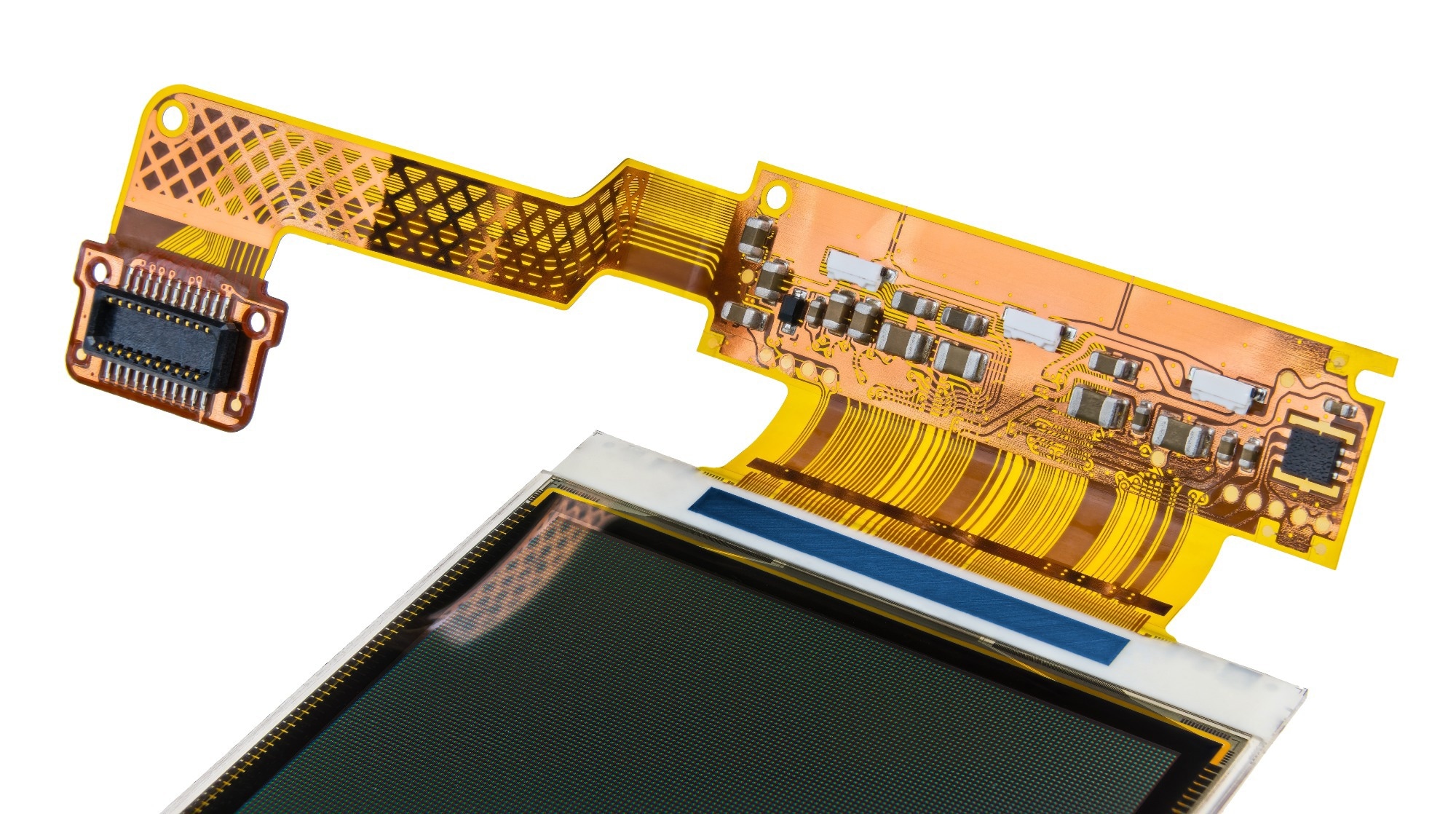
Image Credit: KPix Mining/Shutterstock.com
These films are produced by reacting dianhydrides with diamines. They can be tailored for a range of applications, from semiconductor packaging to foldable displays to flexible printed circuitry.
Their value stems from a number of factors, including withstanding demanding manufacturing conditions, maintaining electrical reliability, and retaining dimensional tolerance as devices become lighter, thinner, and more densely integrated.1,2
Flexible printed circuits (FPCs) provide the clearest example of polyimide’s importance, serving as the insulating base film beneath copper circuitry.
FPCs allow interconnections to fold, bend, and route through confined three-dimensional spaces in a range of devices, including cameras, laptops, smartphones, wearables, medical instruments, aerospace electronics, and automotive displays.
When used as FPCs, films are required to withstand repeated flexing in dynamic applications without delaminating, cracking, or causing copper traces to fail. Their thermal resistance is equally important during adhesive curing, lamination, soldering, and metallization.1,2
Polyimide is used alongside other high-performance substrate materials: liquid-crystal polymer (LCP) and polyether ether ketone (PEEK). Any comparisons should not, however, suggest that these materials are interchangeable.
Polyimide remains a widely applicable choice for flexible circuitry because it delivers a well-established balance of flexural fatigue resistance, thermal endurance, and mechanical toughness. It is employed across a range of applications, from camera modules and display connections to sensor circuits and battery interconnects.1
By contrast, LCP has taken on a more specialized role in high-frequency radio-frequency applications, particularly smartphone antenna modules. Its especially low dielectric loss and low moisture uptake help preserve signal integrity at the high frequencies employed in Wi-Fi, Bluetooth, cellular, and other wireless communications.
An LCP-based antenna flex may be preferable in a smartphone where minimizing signal attenuation and dielectric loss is more important than achieving the broad processing latitude linked to standard polyimide FPC constructions.
LCP is especially relevant to compact antenna designs operating at millimeter-wave and RF frequencies.3,4
This specialization does not diminish the central role of polyimide. A contemporary handset can employ LCP in an antenna assembly while employing polyimide for a range of other key FPC functions, including touch-panel tails, camera-module circuits, display interconnects, button and sensor flexes, battery-management connections, and internal component routing.
PEEK occupies a third position, offering considerable chemical resistance, thermal durability, and mechanical toughness. These characteristics make it especially valuable in transportation, industrial, aerospace, and medical electronics.
PEEK films are less established than polyimide in high-volume, fine-line FPC manufacturing, however, and may be less appropriate for extremely thin circuits necessitating tight folding radii.
Dianhydride selection dictates a polyimide’s ability to meet these requirements. The dianhydride becomes part of the polymer backbone, affecting thermal expansion, moisture affinity, chain rigidity, dielectric behavior, and mechanical response.
Pyromellitic dianhydride (PMDA) produces rigid structures linked to low thermal expansion and excellent thermal stability. PMDA is especially useful for dimensional control in fine circuitry.
Benzophenone tetracarboxylic dianhydride (BTDA®) supports strong thermo-oxidative and thermal performance, while Oxydiphthalic anhydride (ODPA) enhances flexibility and toughness via its ether linkage.
Fluorinated dianhydrides, such as Hexafluoroispropylidene diphthalic anhydride (6FDA), lower moisture affinity and dielectric constant while improving optical transparency.1,5
Polyimide remains the preferred substrate where there is a need for simultaneous flexible circuit processability, flexural endurance, and heat resistance.
LCP maintains a vital, highly targeted role in cell phone antenna structures, while PEEK is ideally suited to use in severe mechanical or chemical environments.
Careful and considered dianhydride selection affords polyimide its critical advantage: a wide molecular design range that can be matched to the thermal, electrical, and mechanical requirements of virtually every other circuit application.
References and Further Reading
- Wu, Z., et al. (2022). Progress in Aromatic Polyimide Films for Electronic Applications: Preparation, Structure and Properties. Polymers, 14(6), p.1269. DOI:10.3390/polym14061269. https://www.mdpi.com/2073-4360/14/6/1269
- Dong, Z., et al. (2023). Microfabrication of functional polyimide films and microstructures for flexible MEMS applications. Microsystems & Nanoengineering, (online) 9(1), pp.1–22. DOI:10.1038/s41378-023-00503-5. https://www.nature.com/articles/s41378-023-00503-5.
- Saki (2025) Polyimide vs. LCP: Best substrates for flex PCBS. Rush PCB. Available at: https://rushpcb.com/polyimide-vs-liquid-crystal-polymer-lcp-for-high-frequency-flex-pcbs/ (Accessed: 11 September 2026).
- MicroConnex (2026) Choosing between Polyimide and LCP for Flex Printed Circuits: A Comparison. Available at: https://www.microconnex.com/news/czcf3losj6vu71rp8n8m5c8yihbykz (Accessed: 11 September 2026).
- Sivagangi Reddy Nagella and Ha, C.-S. (2023). Structural Designs of Transparent Polyimide Films with Low Dielectric Properties and Low Water Absorption: A Review. Nanomaterials, 13(14), pp.2090–2090. DOI:10.3390/nano13142090. https://www.mdpi.com/2079-4991/13/14/2090.

This information has been sourced, reviewed, and adapted from materials provided by Jayhawk Fine Chemicals Corporation.
For more information on this source, please visit Jayhawk Fine Chemicals Corporation.