A new review shows why biodegradable plastics are promising, but not a magic fix, and what must change before they can meaningfully cut global plastic pollution.
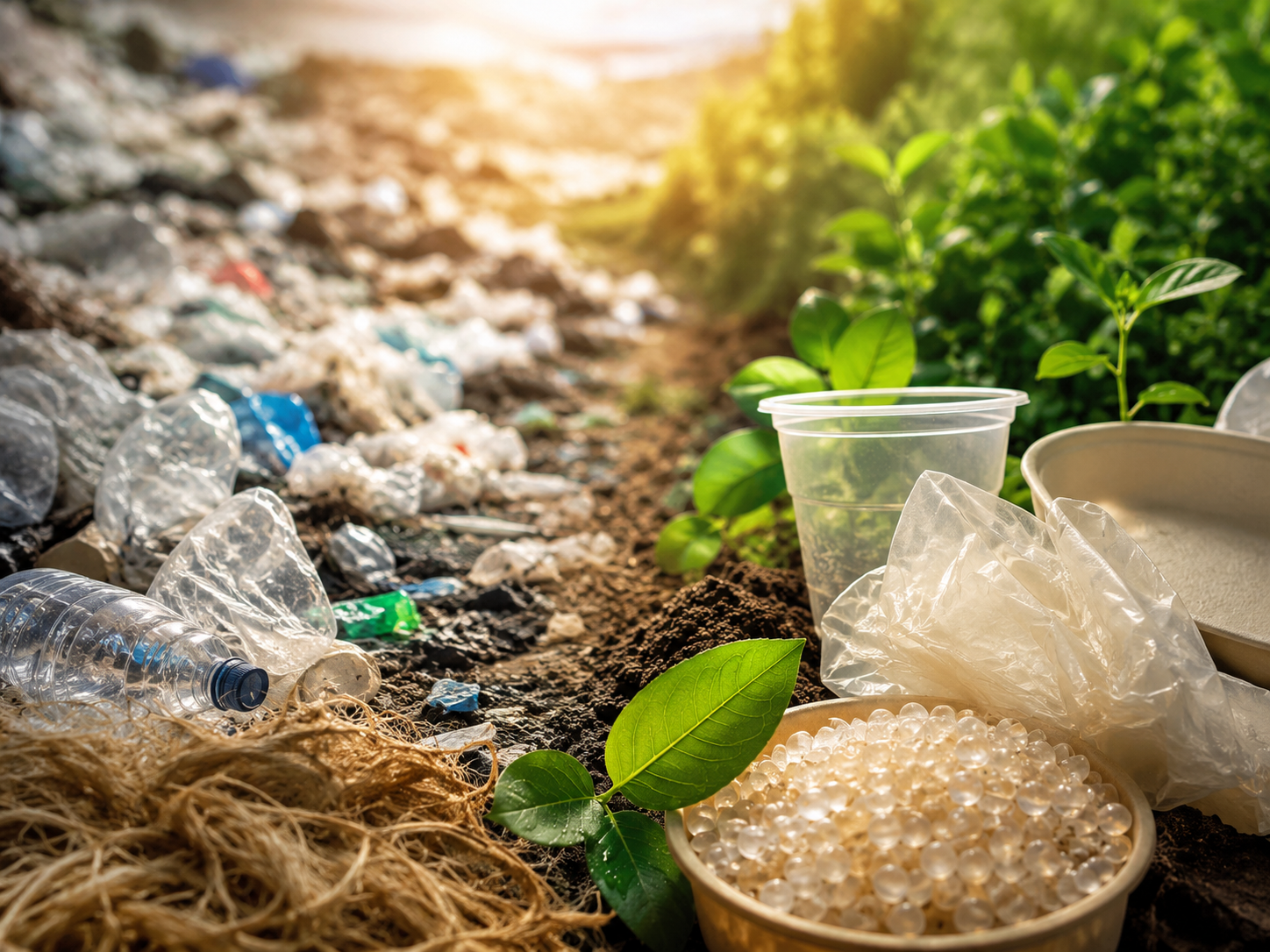
Paper: Scaling biodegradable plastics for a nature-positive future. Image Credit: ChatGPT, OpenAI.
In a recent research review article available as an article in press in the journal NPG Asia Materials, researchers explored the challenges and opportunities of scaling biodegradable plastics as practical transitional tools for achieving a nature-positive future amid persistent global plastic pollution.
Plastic Pollution and Biodegradable Alternatives
Plastic pollution is a critical environmental issue that threatens biodiversity and undermines global sustainable development goals. Conventional petroleum-based plastics, widely used for their low cost and versatility, persist in ecosystems for long periods, contributing to microplastic pollution and significant ecological harm.
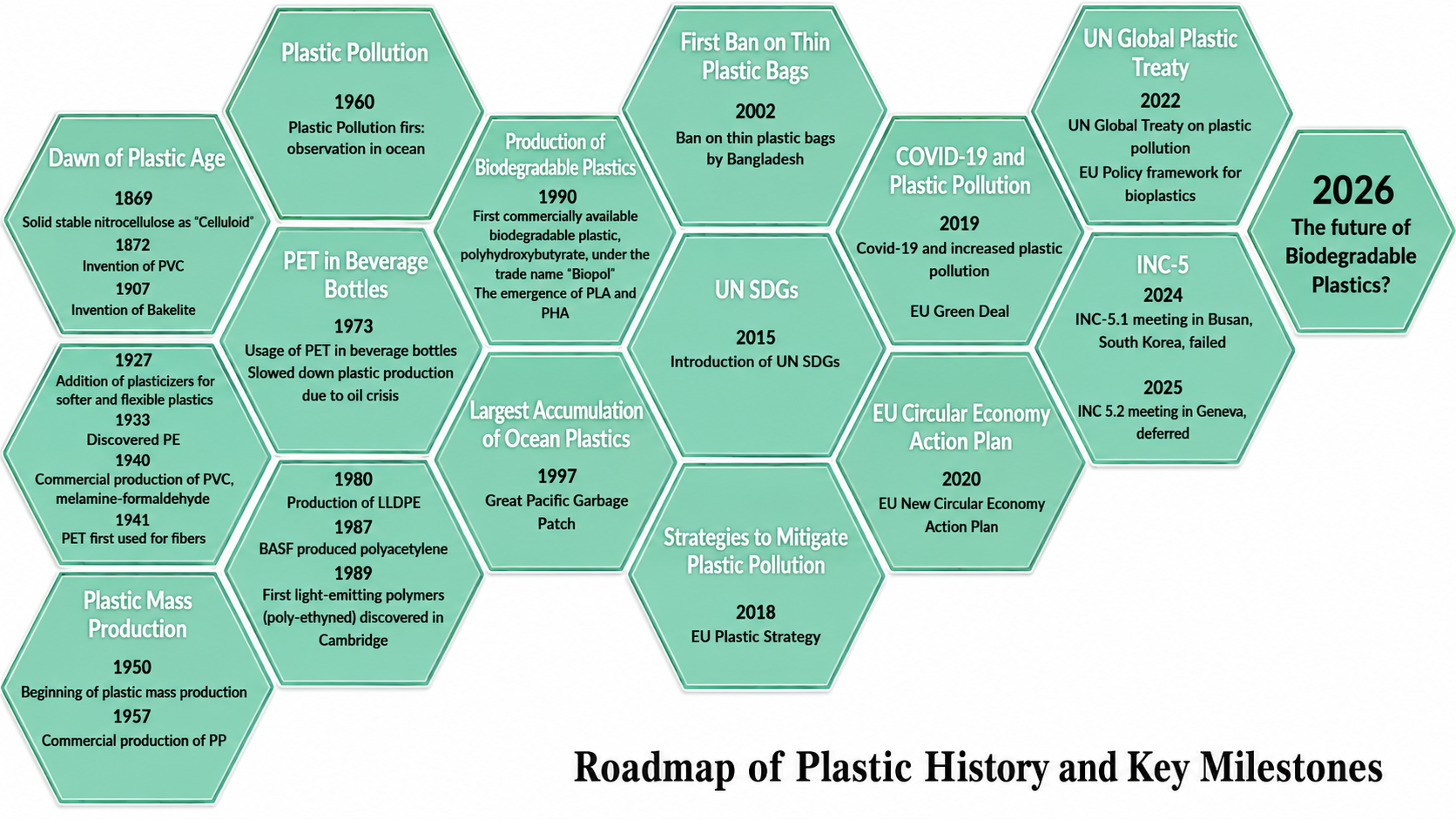
Image Credit: Adapted from Senadheera S.S., Senanayake M., et al. (2026), NPG Asia Materials, DOI: 10.1038/s41427-026-00656-5. Redrawn with ChatGPT, OpenAI.
In light of these challenges, biodegradable plastics have emerged as promising alternatives intended to reduce the environmental footprint of plastic use. Many biodegradable plastics are derived from renewable biological sources, although bio-based origin and biodegradability are distinct properties. These materials have the potential to be degraded by microbial enzymes under suitable conditions into simpler products such as carbon dioxide, water, organic matter, and methane, depending on the degradation pathway.
However, despite growing interest and market expansion, the transition to biodegradable plastics is hindered by significant material, economic, and infrastructural challenges. Polylactic acid (PLA) and polyhydroxyalkanoates (PHA) are key bio-based, biodegradable polymers that have been extensively studied for their eco-friendly profiles, are sourced from renewable feedstocks such as plant biomass or microbial fermentation, and hold promise for integration into circular economy models.
Bioplastic Material Innovations
This comprehensive review synthesized recent advancements in biodegradable polymer materials, covering their chemical structures, functional properties, degradation behaviors, and modifications to enhance performance. It collates data on production metrics, market analyses, and material specifications from experimental studies and industrial reports.
A particular emphasis was placed on molecular design innovations, including optimization of molecular weight, monomer distribution, crystallinity, and polymer architecture; the addition of multifunctional bio-fillers, such as nanocellulose fibers and nanochitin; and the development of composite and hybrid materials to fine-tune mechanical and degradative properties.
The research discussed the influence of biogeochemical factors, temperature, oxygen levels, microbial activity, and environmental medium on degradation efficiency. Life Cycle Sustainability Assessments (LCSAs) were also evaluated as tools for illustrating environmental impact profiles across the production, use, and disposal stages, highlighting trade-offs and identifying hotspots.
In addition to laboratory characterizations, field studies evaluating real-world degradation and ecotoxicological impacts were reviewed to correlate material performance with environmental safety.
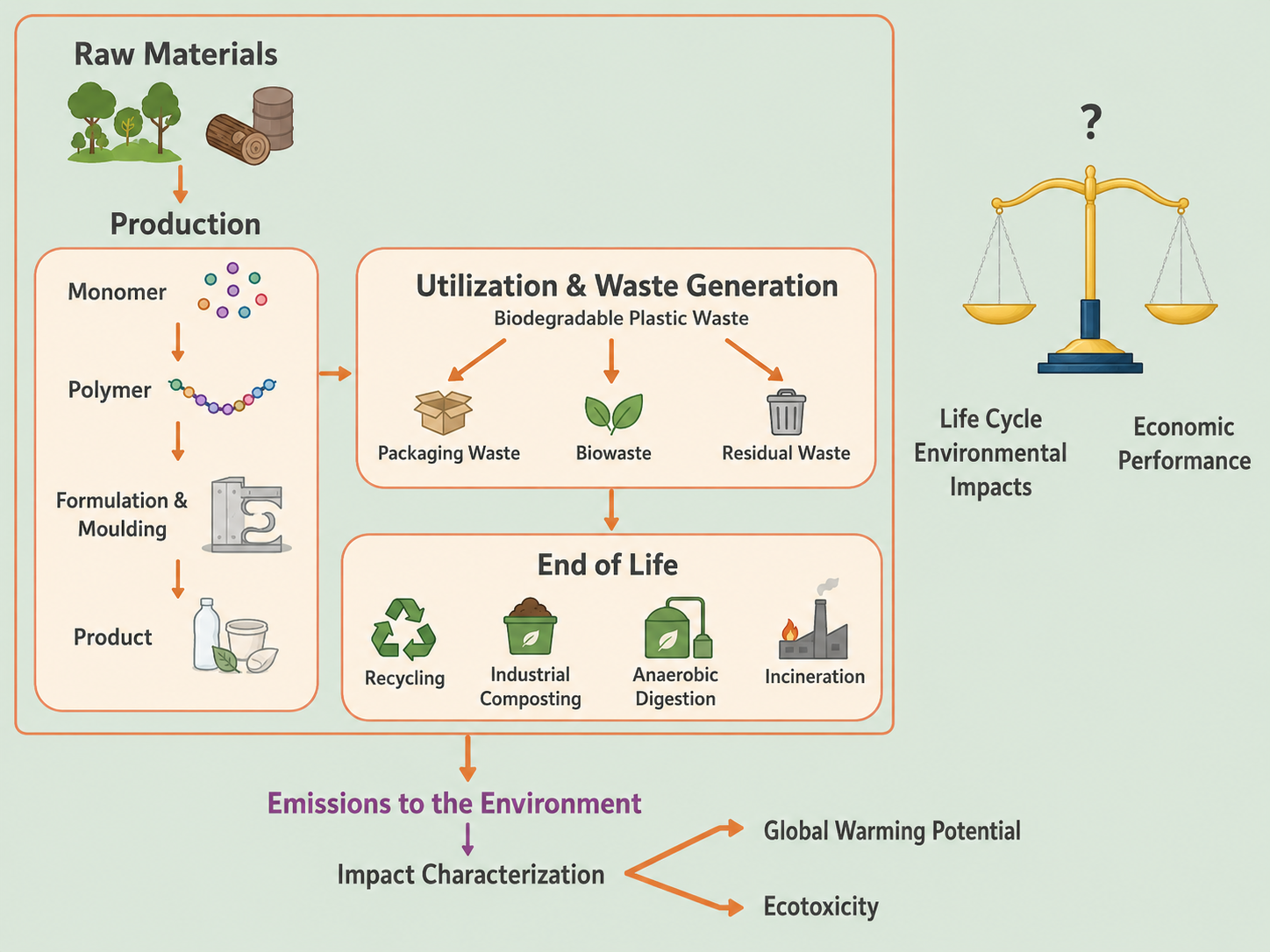
Lifecycle of biodegradable plastics. Image Credit: Adapted from Senadheera S.S., Senanayake M., et al. (2026), NPG Asia Materials, DOI: 10.1038/s41427-026-00656-5. Redrawn with ChatGPT, OpenAI.
Market Growth and Infrastructure Barriers
The material properties of biodegradable plastics exhibit significant variability depending on their polymeric composition and processing methods. PLA, a thermoplastic aliphatic polyester derived from lactic acid, exhibits reasonable thermal stability and mechanical strength suitable for packaging and fiber applications, but suffers from brittleness and slow degradation under natural conditions.
PHA, synthesized via microbial fermentation, presents excellent biodegradability and biocompatibility with promising applications in agriculture and medical devices; however, production costs remain high, limiting large-scale use.
Enhancements in molecular weight, monomer distribution, crystallinity, and polymer structure can improve mechanical properties and help tune degradation rates. Incorporating bio-fillers such as nanocellulose and nanochitin can increase tensile strength and may improve biodegradation performance.
Although biodegradable plastics accounted for 58.1% of bioplastics production in 2022, cited market data indicate that their share of overall global plastics production remained below 1%. Economic constraints pose significant limitations, as biodegradable polymers cost approximately three times as much as conventional plastics.
This cost differential is compounded by infrastructure deficiencies: collection, sorting, and end-of-life treatment facilities tailored to biodegradable plastics are scarce, leading to suboptimal decomposition in uncontrolled disposal settings. Moreover, degradation tests are often conducted under idealized laboratory conditions that do not accurately replicate complex environmental settings, leading to overestimated biodegradability claims.
Environmental Trade-offs and Disposal Challenges
Environmentally, when properly managed, some biodegradable plastics may pose a lower risk of long-term persistence and microplastic accumulation than fossil-based plastics. However, field studies reveal that, like conventional plastic litter, biodegradable items can induce localized ecological disruptions, such as anoxic conditions in sediment, and alter microbial community structure.
Comprehensive life cycle analyses indicate that while biodegradable plastics can reduce fossil fuel consumption and carbon emissions in some pathways, sourcing biomass feedstock may compete with food production and land use, raising ethical considerations.
Emerging technologies such as artificial intelligence (AI) and 3D printing offer opportunities to design biodegradable polymers with tailored molecular structures that simultaneously optimize degradation profiles and mechanical performance.
Innovative digital tools for consumer education and eco-labeling further support market adoption by enhancing awareness and promoting responsible disposal practices. Corporate initiatives increasingly invest in developing biodegradable materials aligned with sustainability goals, often focusing on short-term applications such as packaging, while hybrid plastic systems are being explored for durable goods that require longer lifespans.
Strategies for Sustainable Scaling
Biodegradable plastics hold substantial promise as transitional materials toward a nature-positive future by potentially alleviating plastic pollution and aligning with sustainable development objectives. However, the review emphasizes that they are not a stand-alone solution and must be paired with reduced plastic consumption, improved recycling, effective regulation, and appropriate end-of-life infrastructure.
Strategic collaboration among researchers, industry stakeholders, policymakers, and consumers is essential to drive innovation, reduce costs through economies of scale, and establish end-of-life infrastructure customized for biodegradable materials.
Emerging technologies such as AI-assisted material design and digital waste tracking show promise in optimizing production and disposal pathways. Ultimately, biodegradable plastics represent a vital component within a multipronged approach to addressing plastic pollution, complementing policies and practices aimed at reducing overall plastic consumption and enhancing recycling.
With continued multidisciplinary effort, biodegradable plastics could transition from niche products toward mainstream materials if technical, economic, certification, and waste-management barriers are addressed, helping support global efforts in biodiversity conservation and climate mitigation.
Download your PDF copy by clicking here.