Converting waste into energy is the key role of any waste-to-energy plant. This central requirement has evolved into an essential public service that should ensure valuable resources are not lost while protecting both people and the environment throughout the process.
The waste-to-energy process places significant demands on equipment and operators as it must run reliably and virtually continuously to convert variable waste streams into steady, usable power and produce as few emissions as possible.
Responsible waste-to-energy plant operation means emissions must be consistently low, transparent, and clearly measurable, particularly when the plant is located in a densely populated city like Nuremberg. This approach must be prioritized, even when doing so adds operational complexity.
Emissions Monitoring as Part of Daily Operation
The City of Nuremberg’s waste incineration plant has measured emissions from the outset, seeing this as an integral part of the facility’s operation.
The need to remain compliant with regulatory requirements prompts the implementation of emissions monitoring systems. Nuremberg’s plant sought to develop a state-of-the-art facility that could coexist with its community and surroundings.
This monitoring had to remain available without interruption throughout startup, load changes, and maintenance activities.
Philipp Woerner, Technical Engineer at the City of Nuremberg Waste Incineration Power Plant, began exploring options for continuous emissions monitoring systems (CEMS) to help ensure reduced downtime, improved efficiency, and minimal maintenance needs.
It was also important that the CEMS could adapt to the plant’s ongoing and long-term requirements while ensuring consistent, highly accurate emissions monitoring.
The city started to explore replacements for outdated devices and operations at its plant in 2018. The plant itself was built between 2000 and 2002, with a strong relationship between the plant operators and the local community from the outset. This positive relationship was largely due to the plant’s approach to day-to-day operations, which helped ensure it had minimal impact on its surroundings.
Woerner and Nuremberg selected ABB as their emissions monitoring partner after canvassing options for the ideal CEMS system. The plant was fitted with three ACF5000 CEMS systems, each monitoring one of the plant’s three incinerators.
Waste incineration is becoming a central service, carrying with it an unavoidable social and environmental responsibility. It is also a technically complex process that produces variability by design, due to constantly changing factors such as load profiles, waste composition, and ambient conditions.
Treating emissions monitoring as an operating responsibility, rather than a reporting function, ensures these realities remain clearly visible and manageable. Woerner and Nuremberg knew that the right CEMS operations were key to maintaining this essential balance.
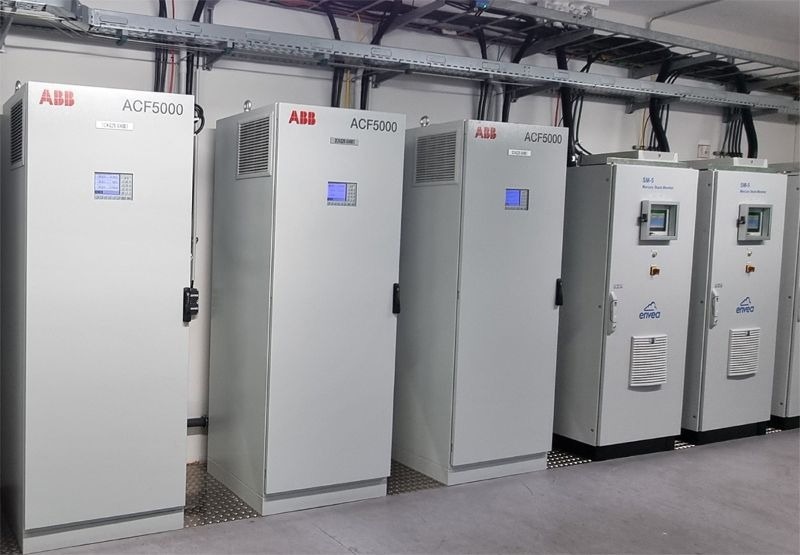
Image Credit: ABB Measurement & Analytics
We wanted a state-of-the-art system. Not because it sounds good, but because we are responsible for what happens here. We were looking for a system with no moving parts that...consumed less energy. The ACF5000 is robust and easy to maintain.
Philipp Woerner, Technical Engineer, City of Nuremberg Waste Incineration Power Plant
Ensuring Maximum Efficiency with Minimal Impact and Emissions

Image Credit: ABB Measurement & Analytics
Nuremberg’s waste incineration facility is located two kilometers from the city center, with the closest building just 130 meters away from the plant’s chimney.
The three incinerators each burn up to 12 tons per hour; the facility as a whole can burn up to 36 tons of waste hourly. Each incineration process requires approximately 40 tons of hot water to generate enough steam for the electricity generator.
The plant is connected to Nuremberg Energy (N-ERGIE), a local energy supplier, meaning efficiency is a key priority. A highly optimized, closed-loop chemical process is also in operation, and it was imperative that the plant’s CEMS system work seamlessly with this process.
The Nuremberg facility employs three water-cooled reciprocating Von Roll grates, with each grate originally designed with a waste throughput capacity of 10.5 tons per hour.
The flue cleaning process features an electrostatic precipitator, acid scrubber, neutral gypsum scrubber, and an adsorbent entrainment step, followed by the application of an SCR catalyst for NOx removal. The acid scrubber generates 12% hydrochloric acid, which is then neutralized in the wastewater treatment system, and the neutral scrubber generates gypsum as a by-product of the flue gas treatment.
The combustion heat feeds a four-pass steam generator, with generated process steam then fed to N-ERGIE’s combined heat and power plant.
An ACF5000 has been installed for each of the three incinerators, enabling this decades-old plant to outperform contemporary waste-to-power plants.
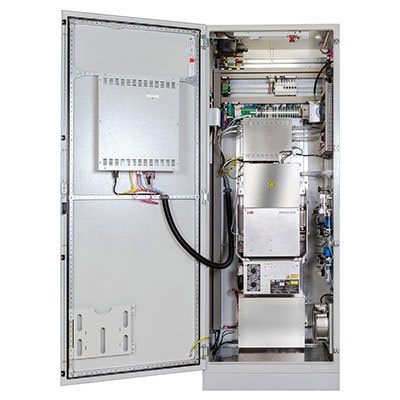
Image Credit: ABB Measurement & Analytics
Our emissions are lower today than the allowed emissions for a newly constructed waste incineration power plant. We have no problems with these limits. We are located in the middle of a city and want to keep it clean.
Philipp Woerner, Technical Engineer, City of Nuremberg Waste Incineration Power Plant
Availability as a Functional Requirement
Continuous operation presents predictable challenges. For example, aging components necessitate maintenance that does not disrupt the overall process.
Variation introduced by external conditions cannot be entirely engineered away, yet emissions monitoring is expected to remain online. Availability is not an isolated performance metric, however, because measurement gaps rapidly compound uncertainty.
Continuous Fourier Transform Infrared (FTIR) measurement is ideally suited to the complex gas matrix found in municipal waste streams, where acid gas load, moisture, and organic components vary significantly.
FTIR measurement technology is an advanced analytical method employed in continuous emission monitoring systems to simultaneously detect and quantify multiple gas pollutants. It works by passing infrared light through a gas sample and measuring the absorption patterns of different molecules.
This technology enables the real-time identification of a range of compounds in industrial emissions, including hydrogen fluoride (HF), ammonia (NH3), sulfur dioxide (SO2), and hydrogen chloride (HCl). It differs from traditional single-gas analyzers in that it can simultaneously monitor dozens of gases without requiring separate sensors for each pollutant.
This key characteristic makes FTIR highly effective for complex emission sources, providing accurate, continuous data that helps industries optimize combustion processes and comply with environmental regulations. Its minimal maintenance requirements make it especially suitable for challenging industrial environments where conventional sensors would fail.
Grate temperature control, waste heat recovery, and flue gas cleaning stages all rely on real-time SO2, HCl, NOx, and CO measurements, which can rapidly shift as waste composition changes.
Almost 95% availability is considered a routine working expectation at the Nuremberg plant. Monitoring must rapidly recover after disturbances, continuing to deliver readable data without requiring offline reconciliation or extended resets.
This tangible concern shapes maintenance planning, spare-parts handling, and tolerance requirements for systems expected to behave unpredictably under stress.
Operating Through Disruption
No continuous process remains constantly stable. Failures are routinely encountered by the operating team, requiring restarts and transients. The obligation to operate within emissions limits and to understand the process’s current operating conditions remains constant, however.
The plant encountered a rare system fault in July 2025, with an error message appearing late on a Saturday evening. Woerner reached out to ABB’s service team to explore fix options, but an on-site visit was deemed necessary.
The problem was fixed, and the system was back online by early Sunday morning, so only five hours of data were lost. No other issues have arisen since.
The ACF5000 supports continuous hot/wet measurement through these transitions, meaning the operators know exactly what has occurred once stability has returned. The disturbance does not disappear, but its impact remains observable while decisions about how to address it are still being made.
Woerner believes that the ACF5000 exceeds every need the team has had and expects to have in the future.
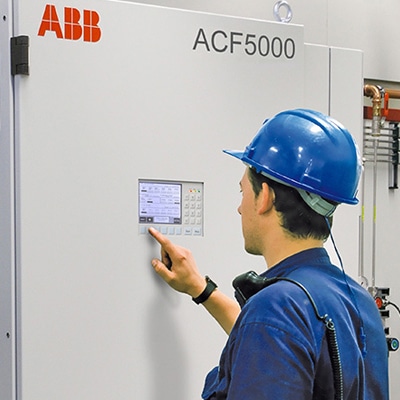
Image Credit: ABB Measurement & Analytics
If the system fails, you still have to operate. You still have to meet emissions limits. You cannot turn everything off and reset.
Philipp Woerner, Technical Engineer, City of Nuremberg Waste Incineration Power Plant
Technology as an Enabler
The ACF5000 system can simultaneously monitor up to 15 components, including HF, HCl, H2O, O2, SO2, CO, CO2, NO, NO2, NH3, N2O, H2CO, CH4, and volatile organic compounds.
A high-resolution FTIR spectrometer leverages onboard references for continuous validation, enabling essential and regulatory-required QAL3 checks with very low detection limits and without the need for test gases. An air-driven injector pump facilitates sample transport with no moving parts.
The ACF5000’s proven hot/wet extractive method maintains stability during variable flue gas moisture and load swings, both of which are considered normal conditions in municipal waste combustion.
Image Credit: ABB Measurement & Analytics
It has a very, very tiny, heated room and doesn't need much energy. It uses no moving parts for the flow of the measurement gas, no membrane pump, just an injector. You just turn on the air and it works quite nicely. It’s very easy to do maintenance. It’s nice to have a running system without problems.
Philipp Woerner, Technical Engineer, City of Nuremberg Waste Incineration Power Plant
The advanced monitoring and data accuracy afforded by the ACF5000 installation enable operators to maintain data integrity and measurement continuity even under the most variable conditions.
Acknowledgments
Produced from materials originally authored by Habeab Kurdi from ABB Inc.

This information has been sourced, reviewed, and adapted from materials provided by ABB Measurement & Analytics.
For more information on this source, please visit ABB Measurement & Analytics.