As clean energy demand drives increased mining, researchers propose a data-driven framework to identify which tailings could become feedstocks for lower-carbon concrete rather than long-term waste.
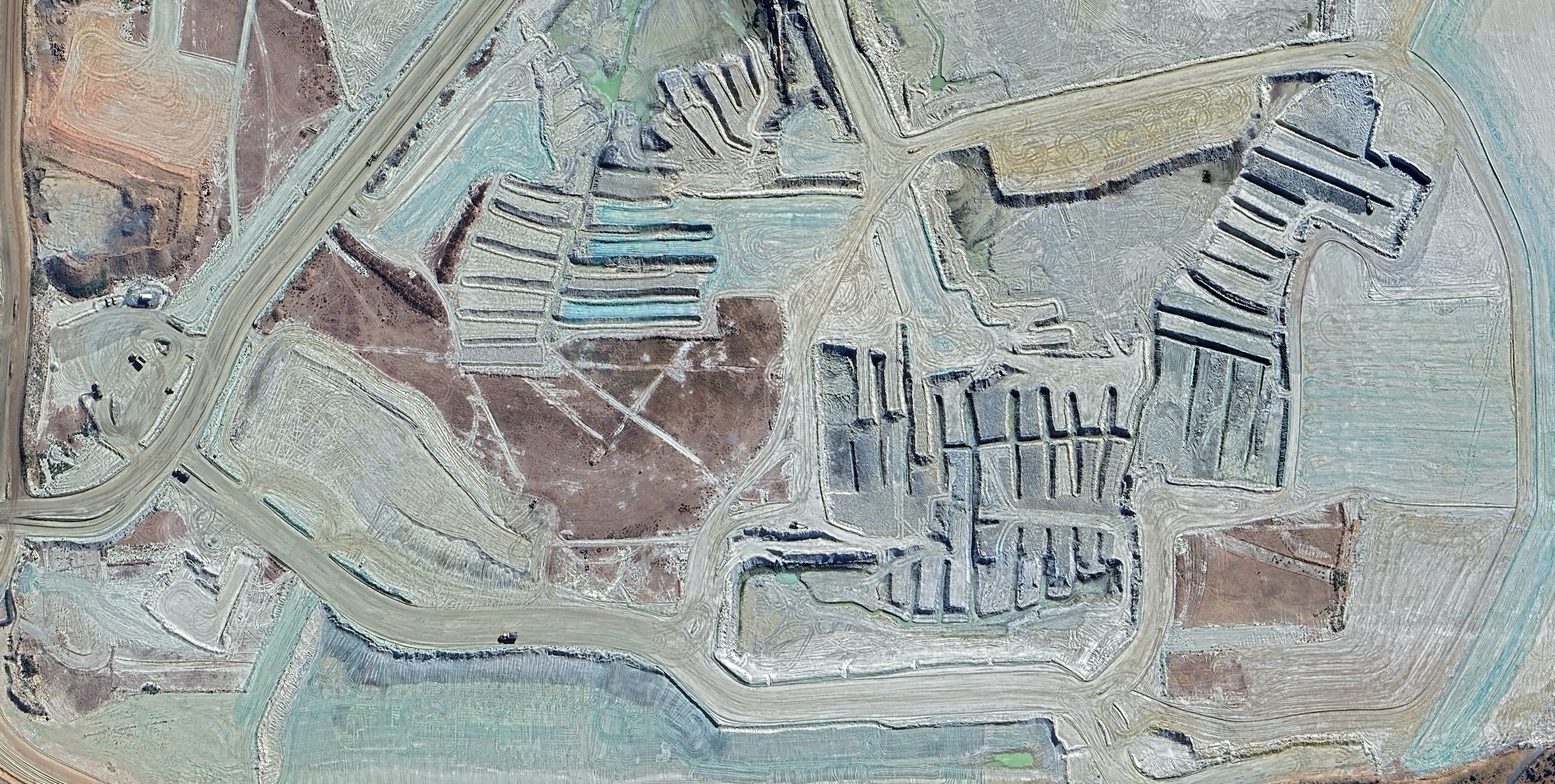
Paper: Developing a Database of Critical Mineral Tailings to support Circularity. Image Credit: Aerial Viewer
A recent conference paper presented at the World Renewable Energy Congress (WREC 2026) proposes the development of a comprehensive database for critical mineral tailings to support low-carbon concrete and related construction materials. The authors at Murdoch University, Australia, propose a structured framework that could identify, characterize, and map tailings with potential suitability for geopolymer cement production. The framework aims to support circular economy principles, reduce waste accumulation, and accelerate the adoption of sustainable materials in the construction sector.
Transforming Mine Tailings into Valuable Materials
The rapid expansion of renewable energy technologies is driving strong demand for critical minerals, including lithium, nickel, cobalt, copper, graphite, and rare earth elements. These materials are essential for batteries, electric vehicles, wind turbines, solar energy systems, and energy storage technologies. Most of the resulting tailings are stored in tailings storage facilities, where they can pose long-term environmental risks, such as land degradation, water contamination, and ecosystem impacts.
This study explores how critical mineral tailings could support the production of low-carbon concrete. Some critical mineral tailings may contain aluminosilicate-rich phases with potential for geopolymer production, subject to detailed characterization and validation. However, limited access to standardized data on tailings composition, location, and material properties continues to hinder their large-scale utilization. To address this gap, the authors propose a dedicated database to identify and repurpose critical mineral tailings for low-carbon construction.
Designing a Materials Database for Circular Utilization
The study adopts a database development and resource assessment approach rather than a conventional experimental materials investigation. The researchers first identify mine sites that produce critical minerals used in renewable energy technologies and compile data on associated tailings streams. The database captures key information, including physical properties, chemical composition, mineralogical characteristics, source and processing information where available, and location data.
The framework links mine sites, waste streams, and potential end-use applications within a single platform. Each tailings source receives a unique identifier that connects geological information with characterization data and suitability assessments for geopolymer production. The system is intended to record performance data such as strength, setting behavior, and durability to support material selection.
The database integrates geospatial mapping and logistics information to facilitate practical implementation. Users can identify suitable tailings resources, assess transportation requirements, and evaluate their proximity to concrete batching plants that could potentially be converted for geopolymer production.
The proposed platform combines PostgreSQL and PostGIS for data management, QGIS for geospatial visualization, and Power BI for analytics and reporting. Industry partners, mining companies, government agencies, and research institutions are expected to support data validation and updating. Together, these capabilities create a decision-support tool for identifying and valorizing critical mineral tailings as feedstocks for low-carbon concrete.
Materials Opportunities in Critical Mineral Tailings
The study highlights the significant potential of critical mineral tailings as feedstocks for low-carbon concrete and other construction materials. Some tailings may contain aluminosilicate-rich phases that could be assessed for geopolymer synthesis. Unlike ordinary Portland cement, geopolymer binders form through the alkali activation of aluminosilicate materials, eliminating the need for energy-intensive clinker production and substantially reducing carbon emissions. The paper notes that cement production accounts for about 7 to 8% of total emissions, while one ton of ordinary Portland cement produces about 0.8 to 0.9 tons of CO2.
However, the suitability of tailings for geopolymer production varies considerably. Factors such as mineralogy, chemical composition, particle size distribution, and processing history directly influence material performance. The proposed database addresses this challenge by helping researchers and industry stakeholders identify and classify tailings resources with the greatest potential for construction applications.
Western Australia alone hosts 1,022 tailings storage facilities, and more than 50 produce alumina-silicate residues that may warrant assessment for geopolymer applications. These materials could represent a substantial secondary resource for developing low-carbon construction materials while advancing circular resource utilization.
Beyond simple resource mapping, the proposed database combines detailed materials characterization data with performance testing results. This integration supports the identification and selection of suitable geopolymer feedstocks. The framework links chemical composition, mineralogical properties, and physical characteristics with engineering performance metrics such as strength, durability, and setting behavior. It could help establish standardized criteria for evaluating tailings resources.
The study also highlights the potential use of tailings-derived geopolymer materials in renewable energy infrastructure. These structures require large volumes of concrete and therefore offer significant opportunities for substituting low-carbon materials. Replacing conventional cement and, in some validated applications, natural aggregates with tailings-derived geopolymer materials could reduce embodied carbon and lower reliance on virgin raw materials.
Toward Data-Driven Circular Materials Systems
The study outlines a framework for integrating critical mineral extraction with sustainable materials development. The proposed database provides a foundation for identifying, characterizing, and repurposing these resources within a circular economy framework.
The work highlights the growing importance of data-driven resource management. Successful tailings utilization depends on a detailed understanding of chemical composition, mineralogy, reactivity, and processing history. A centralized database could streamline material selection, reduce redundant testing, and support the development of standardized geopolymer formulations.
The framework also links two carbon-intensive sectors: mining and construction. Converting mineral processing residues into geopolymer feedstocks could reduce reliance on virgin raw materials, lower emissions associated with cement production, and minimize the environmental impacts of tailings storage.
Future efforts should focus on implementing the proposed database, validating datasets with industry stakeholders, and expanding coverage across a broader range of critical mineral deposits. As demand for critical minerals and low-carbon concrete grows, integrated resource databases could become key enablers of circular materials systems.
Download your PDF copy by clicking here.
Disclaimer: The views expressed here are those of the author expressed in their private capacity and do not necessarily represent the views of AZoM.com Limited T/A AZoNetwork the owner and operator of this website. This disclaimer forms part of the Terms and conditions of use of this website.
Source:
- Varghese, A., Anda, M., Rai, S., & Kurup, B. (2026). Developing a Database of Critical Mineral Tailings to Support Circularity. Proceedings of the World Renewable Energy Congress 2026, Perth, Western Australia. SSRN Electronic Journal. DOI: 10.2139/SSRN.6909378, https://papers.ssrn.com/sol3/papers.cfm?abstract_id=6909378