Emcee's Model 1152 Digital Conductivity Meter is the sole conductivity meter globally recognized as inherently safe by ATEX, UL, CSA, ULC, and LCIE. Furthermore, it is the only conductivity meter sanctioned by ASTM D1655 & D7566, with full intrinsic safety accreditation for hazardous settings.
This digital conductivity meter measures the electrical conductance of liquids, primarily hydrocarbon fuels such as jet fuel, in picosiemens per meter (pS/m), consistent with ASTM D2624 specifications.
Its application spans both laboratory and field settings to confirm adequate fuel conductivity for safe dissipation of static charge, thereby averting explosion and fire risks during rapid pumping and filtration operations.
The Model 1152 features protection from liquid ingress, boasts enhanced durability, and is supported by the sole comprehensive intrinsic safety accreditation within its category, encompassing ATEX, UL, CSA, ULC, and LCIE (Europe/UK).
The system is produced in a USA ISO/IEC 80079-compliant facility, precision-calibrated in an ISO/IEC 17025 laboratory, and adheres to ASTM D2624, IP 274, and ISO 6297 standards.
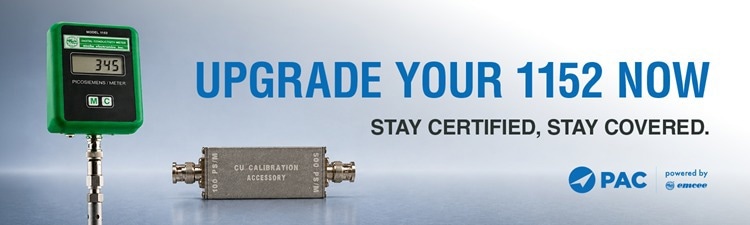
Image Credit: PAC L.P.
Take advantage of the company's special exchange offer and obtain the same dependable measurements, but with more of every other aspect:
- On-site self-verification and traceability using a CU Box: Valued at $698 and temporarily included at no cost with the exchange
- ATEX-certified: Globally, it is the sole ASTM D1655 & D7566-certified conductivity meter with complete intrinsic safety approvals for hazardous areas: ATEX, UL, CSA, ULC, and LCIE (Europe/UK).
- Comprehensive one-year manufacturer's guarantee
The enhanced Model 1152 provides the identical established performance (accuracy and precision) and ASTM adherence users consistently trusted, now protected from fluid entry, constructed more robustly, and supported by the sole complete intrinsic safety approval within its class: ATEX, UL, CSA, ULC, and LCIE (Europe/UK).
Why Choose the Model 1152?
Model 1152 is the only conductivity meter certified intrinsically safe by UL, CSA, and ATEX, making it the sole secure option for gauging fuel conductivity in hazardous environments.
The Only Meter with Full Intrinsic Safety Certification for Hazardous Environments
ATEX, UL, CSA, ULC, and LCIE (Europe/UK). No alternative conductivity meter possesses this full array of certifications – positioning the Model 1152 as the singular secure selection for determining fuel conductivity in dangerous locations.
Sealed Against Liquid Ingress
Eliminate jammed switches: The enhanced casing resists fluid entry, ensuring the meter operates dependably on-site and in laboratory settings.
Proven Circuitry, Same ASTM Compliance
Constructed for extended durability: The same established precision and accuracy users consistently trusted, now more robustly constructed, without altering the ASTM adherence that supports the readings.
Compliant with ASTM D2624, IP 274, and ISO 6297
Readings can be recorded to the three primary regulatory benchmarks for fuel's electrical conductivity. Model 1152 is produced in an ISO/IEC 80079 plant and calibrated within an ISO/IEC 17025 lab, demonstrating compliance from production to deployment.
On-Site Verification
With the CU Box, conduct self-validation and preserve tracking without shipping the device elsewhere. This allows for regular validation inspections, aids audit records, and sustains assurance in the device's daily operation between manufacturer's calibrations.
Model 1152 Features and Specifications
- Typical electrical conductivity spans from 1 to 2000, increasing by 1 picosiemen per meter (pS/m) at each step
- Also offered in additional standard and custom conductivity capacities reaching 20M pS/m
- Spacious digital, liquid crystal display unit
- Dependable, cutting-edge integrated circuit design methodology
- Self-testing calibration, featuring on-site adjustment functionality
- Automated over-range and low-battery-level indicators
- Able to measure storage tanks and tanker trucks using a short cable or a cable reel assembly
- Operates on three easily obtainable alkaline batteries
- Electronics are enclosed within a durable cast aluminum casing, finished with solvent-resistant paint, and include a removable stainless steel probe
- Features an intrinsically safe design, certified for hazardous locations by Underwriters Laboratories (UL) in the US and Canada, and LCIE in Europe
Source: PAC L.P.
| Specification |
Detail |
| Standard measurement range |
1 to 2000 pS/m, in 1 pS/m increments |
| Extended ranges available |
Up to 20M pS/m (standard and non-standard) |
| Measurement standard |
ASTM D2624 |
| Fuel specifications supported |
ASTM D1655, ASTM D7566 |
| Intrinsic safety certifications |
ATEX, UL (US), CSA, ULC (Canada), LCIE (Europe/UK) |
| Manufacturing standard |
ISO/IEC 80079 facility |
| Calibration |
ISO/IEC 17025 laboratory |
| Display |
Large digital liquid crystal display |
| Power |
Three readily available alkaline batteries |
| Housing |
Rugged cast aluminum case, solvent-resistant paint |
| Probe |
Detachable stainless steel |
| Tank/tanker measurement |
Via short cable or cable reel kit |
| Warranty |
Full one-year factory warranty |
What Is the Model 1152 Used for?
The Model 1152 Digital Conductivity meter measures fluid electrical conductivity using conductivity units (CU), specified as picosiemens per meter under ASTM D2624. Featuring a sturdy electromechanical build, the Model 1152 device ensures straightforward operation across both laboratory settings and field environments.
Originally, this instrument was engineered to evaluate the electrical conductivity of hydrocarbon fuels, specifically jet fuels, for safety compliance. Over time, the unit was adapted to include alternate measurement ranges, enabling conductivity testing for multiple liquid types across diverse applications.
Why Does Fuel Conductivity Matter for Safety?
Since hydrocarbon fuels generally possess low electrical conductivity, they easily hold onto static charge. These electrostatic charges accumulate heavily when fuel moves rapidly through filtration systems. Owing to this minimal conductivity, the charge fails to discharge quickly, persisting for a significant duration instead. Such circumstances create a serious risk of fire or explosion.
Furthermore, because conductivity fluctuates alongside temperature changes, recording the exact fuel temperature during testing remains essential.
How Is Conductivity Used in Process Control?
Beyond safety considerations, fluid electrical conductivity serves to track manufacturing processes. Correctly incorporating and blending diverse components may be tracked throughout various production phases.
Far from being restricted to hydrocarbons, these uses now encompass additional materials such as paints, solvents, and inks, as well as other non-organic substances. Additionally, the stainless steel probe resists degradation from the majority of acidic or caustic liquids.
How Does the Model 1152 Work?
Featuring a removable stainless steel probe paired with an electronics unit, the EMCEE Model 1152 instrument assesses fluids directly. Functioning like a concentric-electrode capacitor, this probe is submerged in the liquid until it reaches the upper set of apertures.
Depressing the "M" button transmits a minor direct electrical current through the liquid separator. After amplification inside the main electronic package, this current shows on the digital screen, measured in picosiemens per meter (pS/m).