Measurements taken in a vacuum environment require advanced sensors. Micro-Epsilon’s sensors help to achieve this by ensuring precise measurements. These stable, reliable, and contactless sensors provide exact data on various vacuum classes. The sensors can be tailored for particular uses and optimized for the given environment.
Measurements taken under vacuum conditions have become an essential part of life and are followed in the optics, semiconductor, or aviation industries. They also create high demands on sensor technology. Micro-Epsilon provides both specially designed and catalog sensors that perform with high reliability and accuracy under extreme environmental conditions.
Their optimized design and specialized materials enable them to measure from the outside through vacuum windows as well as directly in the vacuum.
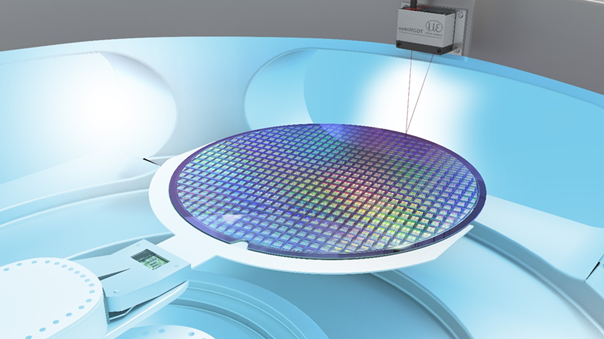
Image Credit: Micro-Epsilon
Based on the end-use sector, various sensors, including inductive, optical, interferometric, or capacitive sensors, are employed. Laser sensors from the optoNCDT series are used for measuring distances in the additive manufacturing or laser welding processes. ConfocalDT sensors are suitable for use on displays or wafers to measure nanometer-precise thickness.
In certain applications, including the production of semiconductors, absolute interferometers help to precisely measure thickness and distance. Other sensors used for vacuum applications, such as in the aviation sector, include the capaNCDT capacitive sensors, inductive eddy current sensors from the induSENSOR series, and the mainSENSOR magneto-inductive sensors.
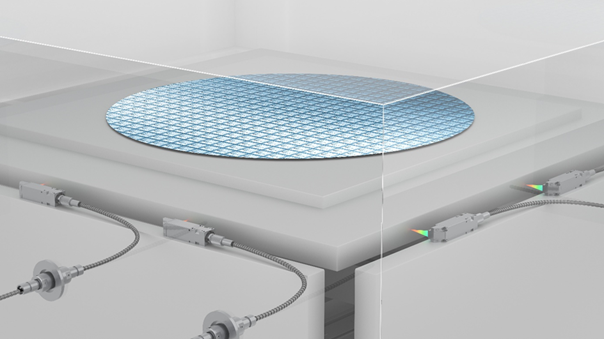
Image Credit: Micro-Epsilon
All the sensors are manufactured to meet the required standards and checked on a regular basis (e.g., by TENAX sampling). They can be easily integrated into existing systems, and installation is quick thanks to their smart interfaces, compact design, and integrated controllers. Micro-Epsilon thus provides tailored measurement technology suitable for every vacuum application. They can also be implemented without any delay.