Cryogenic grinding is a technique used for processing thermally sensitive and elastic materials by cooling them with liquid nitrogen. Retsch's CryoMill apparatus is a specialized laboratory ball mill designed for this specific purpose.
It is equipped with an integrated cooling system that continuously cools the grinding jar with liquid nitrogen both before and during the grinding operation. This process embrittles the sample and helps in preserving volatile components.
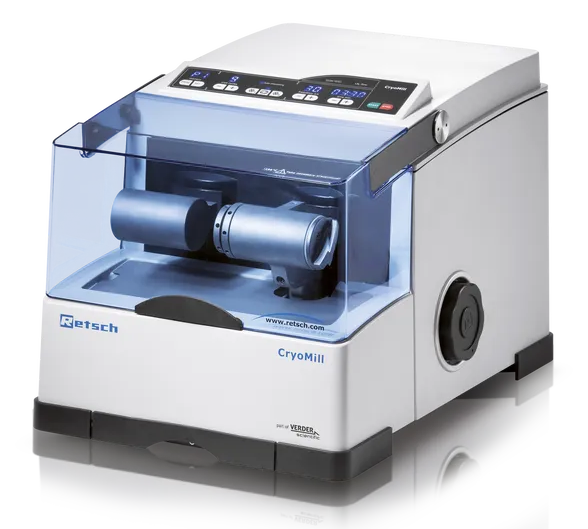
Image Credit: Retsch GmbH
Liquid nitrogen is supplied continuously from an autofill system, delivering the precise amount needed to maintain a temperature of -196 °C. Users do not come into direct contact with LN2, which significantly enhances operational safety. The versatility of the CryoMill, allowing for cryogenic, wet, and dry grinding at room temperature, makes it the ideal grinder for sample volumes of up to 20 mL.
The powerful impact ball milling ensures maximum grinding efficiency.
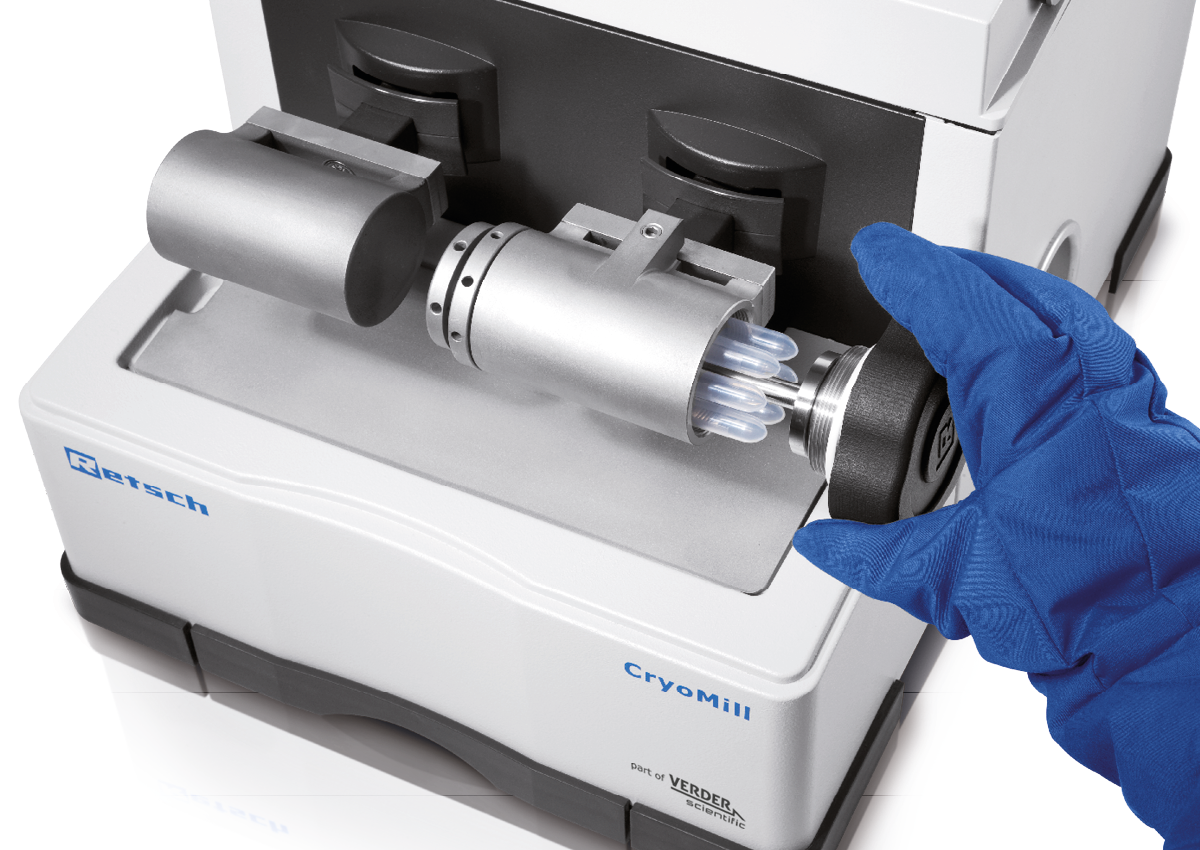
Image Credit: Retsch GmbH
Cryogenic ball mill CryoMill - Introduction #RETSCH #cryomill #laboratoryinstruments
Video Credit: Retsch GmbH
Unmatched Performance for Cryogenic Ball Milling
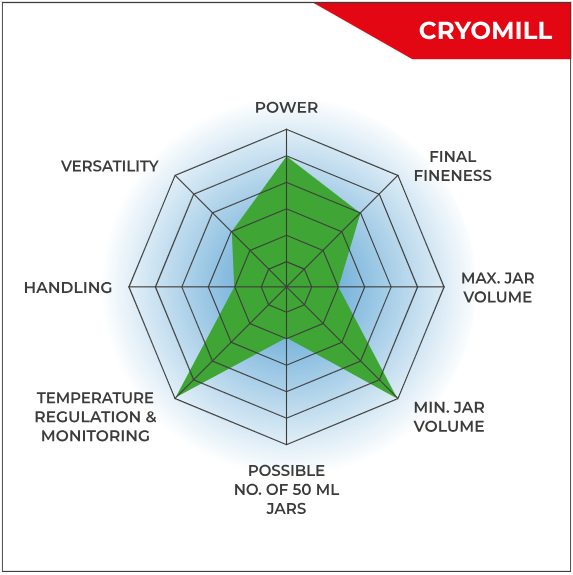
Image Credit: Retsch GmbH
- Maximum speed of 30 Hz
- Horizontal oscillation generates significant impact effects for efficient sample processing
- Features one grinding station suitable for jars ranging from 5 mL to 50 mL, with an adapter for six 2 mL tubes
- Accommodates feed sizes up to 8 mm and achieves a final fineness of 5 µm
- Jars are continuously cooled with liquid nitrogen during operation, ensuring safe handling through an autofill tank
- Compact benchtop design
- Allows for the storage of standard operating procedures (SOPs) and cycle programs, with four different jar materials available for both dry and wet grinding
Versatile and Safe
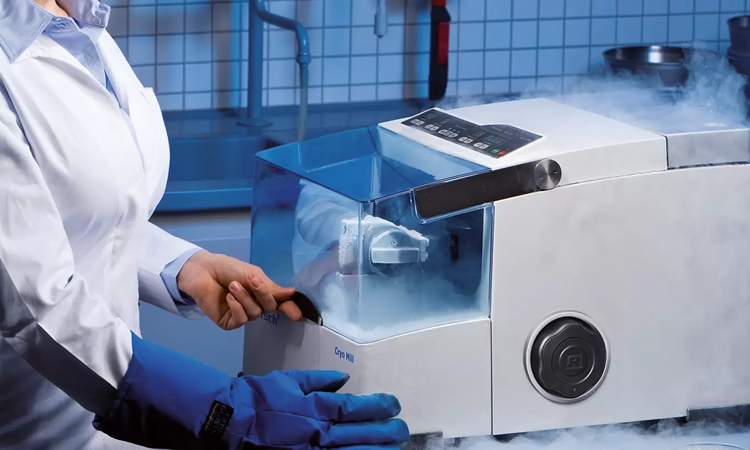
Image Credit: Retsch GmbH
- The system delivers highly effective cryogenic grinding utilizing both impact and friction at frequencies of up to 30 Hz.
- Three distinct grinding modes are available: cryogenic, dry, and wet at ambient temperature.
- A closed LN2 system with autofill functionality enhances user safety.
- Screw-top jars provide a convenient and leak-proof operation.
- A broad selection of accessories is offered, including various jar and ball sizes, adapter racks, and an LN2 feeding system
- Optional zirconium oxide jars are specifically engineered for cryogenic grinding.
- Nine programmable cooling and grinding cycles are available, ranging from 10 seconds to 99 minutes.
User Safety and Perfect Results Guaranteed
CryoMill - Application Video #RETSCH #cryomill #laboratoryinstruments
Video Credit: Retsch GmbH
The CryoMill is a cryogenic grinder specifically engineered with user safety as a priority. The liquid nitrogen circulates within a closed system, preventing direct contact between the user and LN2, thereby ensuring a high level of operational safety.
The automatic cooling mechanism ensures that the grinding process commences only after the sample has cooled sufficiently. This leads to minimized consumption and guarantees consistent results in cryogenic grinding.
Operating the CryoMill is straightforward. Users can digitally adjust parameters such as oscillation frequency, pre-cooling, and grinding duration through a well-organized keypad. The display features LEDs that indicate the current operational status, such as whether the system is in cooling or grinding mode.
Typically, the grinding process lasts only a few minutes, preventing the sample from warming up. However, if extended grinding times are necessary, users can pre-select intervals for intermediate cooling and the number of cryogenic cycles.
All instrument settings are preserved during standby mode for future processes. The laboratory mill can function without cooling, making it versatile for a wide array of applications.
Accessories for the CryoMill
Grinding Jars and Adapters
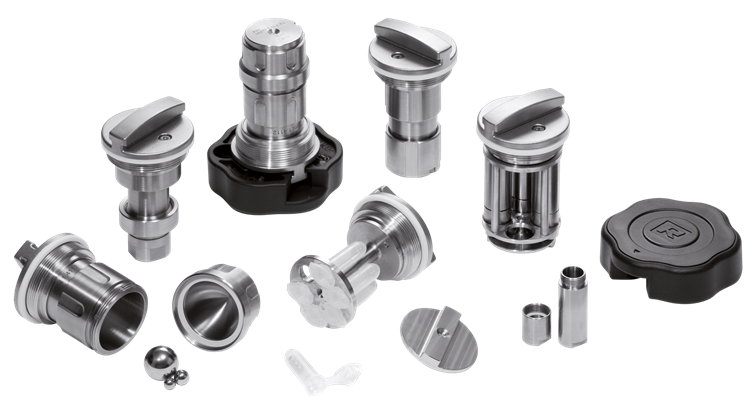
Image Credit: Retsch GmbH
The CryoMill incorporates a single processing station that accepts threaded grinding jars in 10 mL, 25 mL, 35 mL, or 50 mL capacities. Additionally, specialized adapters accommodate four 5 mL grinding jars or six 2 mL reaction vials per batch.
For procedures where metallic components might introduce sample impurities, a 25 mL zirconium oxide jar with matching grinding media, as well as a dedicated PTFE container, are provided.
Liquid Nitrogen Feed
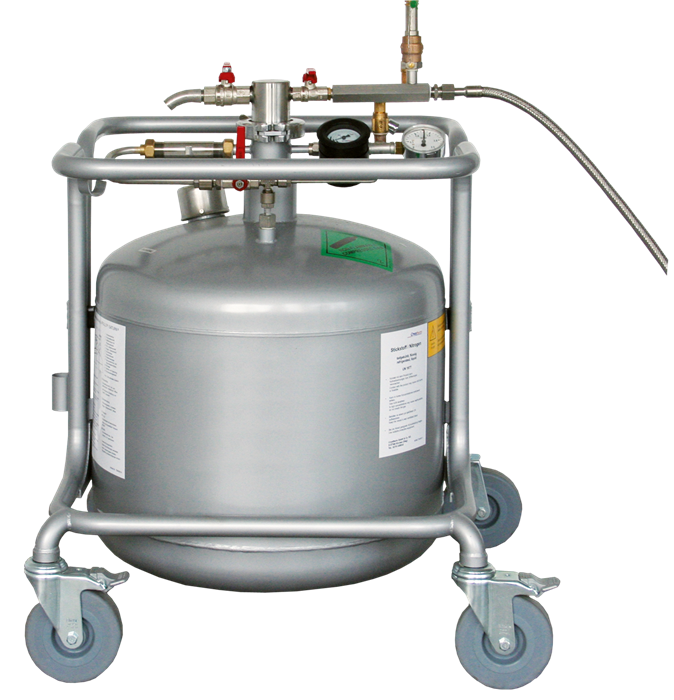
Image Credit: Retsch GmbH
To ensure safe and user-friendly operation, RETSCH offers an automatic liquid nitrogen supply system with a 50-liter reservoir, providing roughly five hours of continuous cooling during cryogenic milling. Alternatively, operators can link external cryogenic storage tanks directly to the mill using a specialized feed line equipped with a safety relief valve.
Technical Data
Source: RETSCH GmbH
|
|
| Applications |
Size reduction, mixing, homogenization, cell disruption |
| Field of application |
Agriculture, biology, chemistry/plastics, construction materials, engineering/electronics, environment/recycling, food, geology/metallurgy, glass/ceramics, medicine/pharmaceuticals |
| Feed material |
Hard, medium-hard, soft, brittle, elastic, fibrous |
| Size reduction principle |
Impact, friction |
| Max. feed size |
=8 mm |
| Final fineness |
∼5 µm |
| Batch size/feed quantity |
Maximum 20 mL |
| No. of grinding stations |
One |
| Vibrational frequency |
Digital, 5–30 Hz (300–1800 min-1) |
| Typical mean grinding time |
10 minutes/four minutes (cooling/grinding) |
| Dry grinding |
Yes |
| Wet grinding |
Yes |
| Cryogenic grinding |
Yes |
Cell disruption with
reaction vials |
Yes |
| Self-centering clamping device |
Yes |
| Type of grinding jars |
Screwtop design |
| Material of grinding tools |
Hardened steel, stainless steel, zirconium oxide, PTFE |
| Grinding jar sizes |
5 mL/10 mL/25 mL/35 mL/50 mL |
| Autofill |
50 L |
| Setting of grinding time |
Digital: 30 seconds to 99 minutes |
| Storable SOPs |
Nine |
| Electrical supply data |
100–240 V, 50/60 Hz |
| Power connection |
One-phase |
| Power consumption |
260 W |
| Protection code |
IP 30 |
| W x H x D closed |
395 x 373 x 577 mm (D: 710 mm with exhaust tube) |
| Net weight |
∼45 kg |
| Standards |
CE |