Cutting mills are ideal for grinding a variety of materials, including soft, medium-hard, tough, elastic, fibrous, and heterogeneous mixtures. The Cutting Mill SM 300 stands out in demanding applications due to its robust 3 kW drive, which offers high torque and incorporates RES technology, making it more effective than other cutting mills in challenging tasks.
This mill features adjustable speed settings ranging from 100 to 3000 min-1, allowing for precise adaptation to specific application needs. Additionally, a selection of bottom sieves with aperture sizes ranging from 0.25 to 20 mm is available, guaranteeing a consistent final fineness.
Cutting Mill SM 300 - Introduction #RETSCH #cuttingmill #laboratoryinstruments
Video Credit: RETSCH GmbH
High Torque and RES Technology
The inclusion of an additional flywheel mass contributes to a significantly high torque, allowing the SM 300 to achieve analytical fineness in grinding various materials in just a single operation (RES Technology, illustrated in the graphic below).
The enhanced peak power generated by the flywheel mass is used to navigate potential blockages, even when processing exceptionally tough materials. Furthermore, the RES technology facilitates rapid sample feeding.
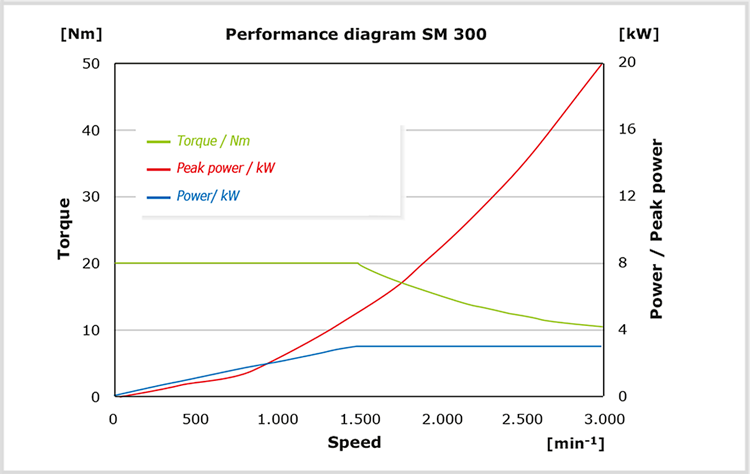
The diagram shows the torque (green) and the power (blue) of the drive as well as the temporarily achievable peak power (red) against the speed. The peak power increases over the entire speed range. That means the higher the speed, the more power is temporarily available for the cutting events. Image Credit: RETSCH GmbH
The Most Powerful Cutting Mill for a Wide Range of Applications
The video below demonstrates the remarkable versatility of the SM 300 cutting mill, which comes equipped with a variety of accessories such as different hoppers, collection vessels, and rotors. These features enhance feeding and the collection of sample materials of various shapes, sizes, and quantities.
The adjustable speed enables the selection of optimal cutting parameters, while the robust 3 kW motor with RES technology provides the mill with exceptional pulling power.
View the video to observe how the SM 300 successfully manages these eight applications:
- Wood chips: Effective size reduction of larger sample volumes
- Leather and table tennis balls: Comminution of textiles and rubber through the cyclone for swift sample discharge from the grinding chamber
- PC boards: Pulverizing solid PCBs using the six-disc rotor for precious metal analysis
- Secondary fuels: Efficient comminution of highly heterogeneous materials for quick calorific analysis
- Injection molding sprues: Grinding at low speeds to reduce fines (dust) content
- Hay: Consistent size reduction of fibrous, light, and voluminous materials
- Toys: Crushing of tough plastics by embrittling samples with liquid nitrogen
The SM 300 achieves outstanding results even for the most challenging grinding tasks!
Cutting Mill SM 300 - RETSCH
Video Credit: RETSCH GmbH
Superiority in Detail
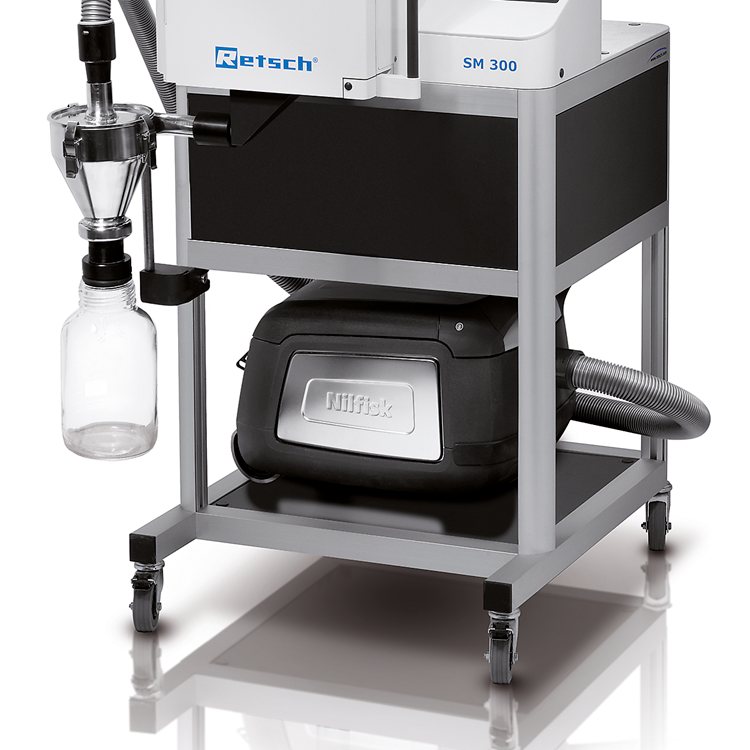
Image Credit: RETSCH GmbH
The SM 300 is well-suited for materials that are sensitive to light and heat.
An optional cyclone separator can be connected to the SM 300 instead of the gravity outlet. Using the cyclone is especially beneficial for samples that are sensitive to light and heat.
- Enhanced throughput
- Optimized sample discharge from the grinding chamber
- Effective cooling of both samples and cutting tools
- The cyclone unit offers collecting vessels in sizes of 0.25, 0.5, 1, 2, 5, and 30 liters.
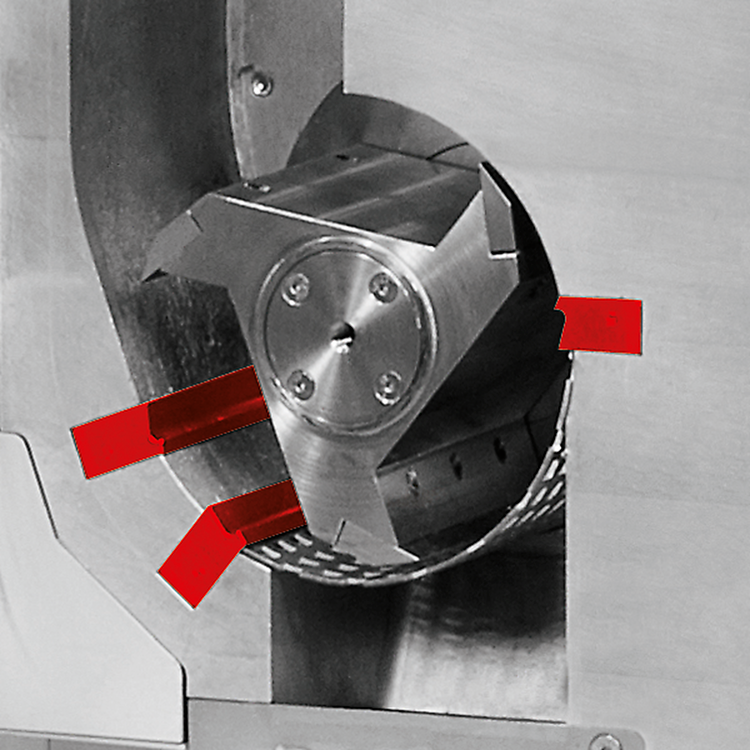
Image Credit: RETSCH GmbH
The SM 300 features double-acting cutting bars that significantly enhance both the quantity and efficiency of cutting actions. For instance, the parallel-section rotor produces 18 cutting events per rotation.
Easy Operation and Cleaning
Convenient Operation
The SM 300 operates with remarkable simplicity and safety, with a push-fit rotor and lower sieves that are effortlessly detachable without requiring tools. A safety interlock prevents the mill from initiating operation if the door is ajar, while an electronic safety mechanism guarantees the door remains secured while the motor is active.
Cutting Mill SM 300 - Handling & Cleaning #RETSCH #cuttingmill #laboratoryinstruments
Video Credit: RETSCH GmbH
Quick and Easy Cleaning
The hopper folds back, providing complete access to the grinding chamber, which, along with its smooth interior surfaces, significantly simplifies mill cleaning. Similarly, the design of the lower sieves minimizes the retention of sample fragments.
Cutting Mill SM 300 - Cleaning #RETSCH #cuttingmill #laboratoryinstruments
Video Credit: RETSCH GmbH
Speed Reduction: Fewer Fines, Less Temperature Rise
Slowing the rotational velocity reduces the fine-particle count in the sample and increases the proportion of particles within the desired size spectrum.
For this particular application, the SM 300's lowest operational speed was decreased to 100 min-1. This also proves advantageous for processing thermally sensitive materials: reduced speed translates into lower energy input, preventing the sample from becoming excessively hot during operation.
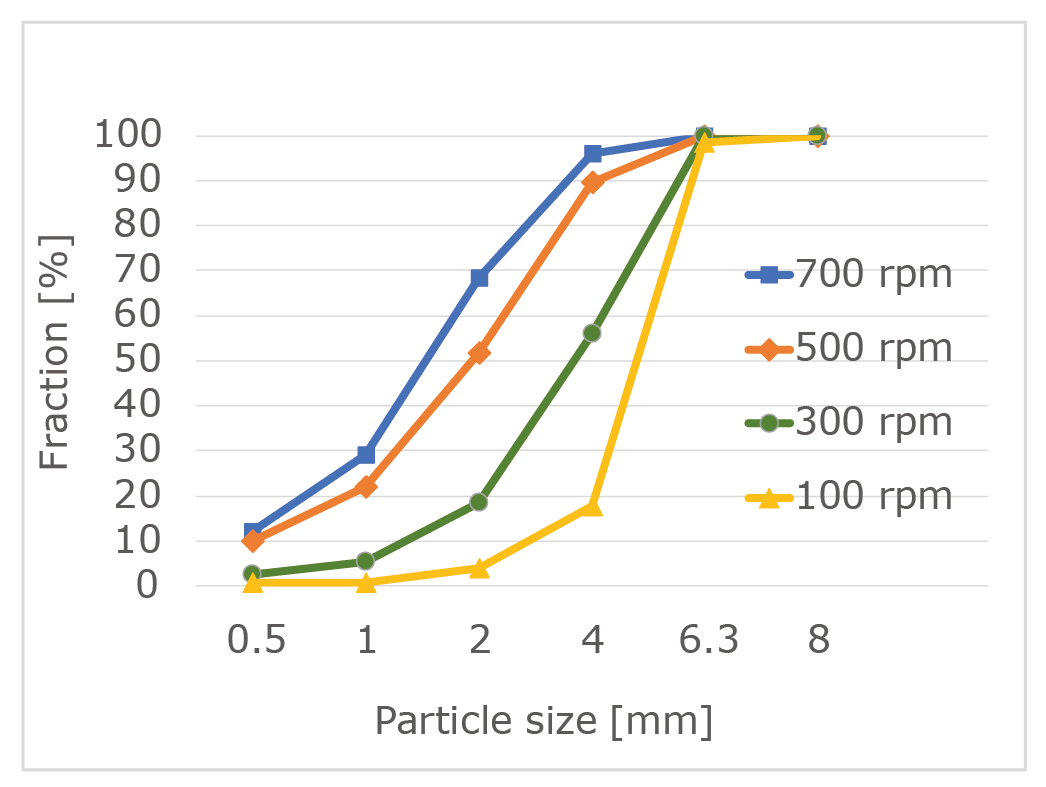
Image Credit: RETSCH GmbH
316L Stainless Steel Version FoodGrade
For uses such as limited production of food or cosmetic items, the SM 300 is offered in a 316L food-grade stainless steel model that complies with food and pharmaceutical industry standards.
The model features an extended hopper for simple feeding of substances like cannabis plant components. All parts contacting the sample are constructed from 316L, and the optional rotary blades and cutter bars are made from an FDA-approved stainless steel that exhibits greater wear resistance under continuous operation than 316L.
The device can be fitted with an optional cyclone separator and a spacious 30-liter container (both in 316L stainless steel) for collecting large quantities of material. Smooth interior finishes result in nearly 100% sample retrieval and straightforward cleaning.
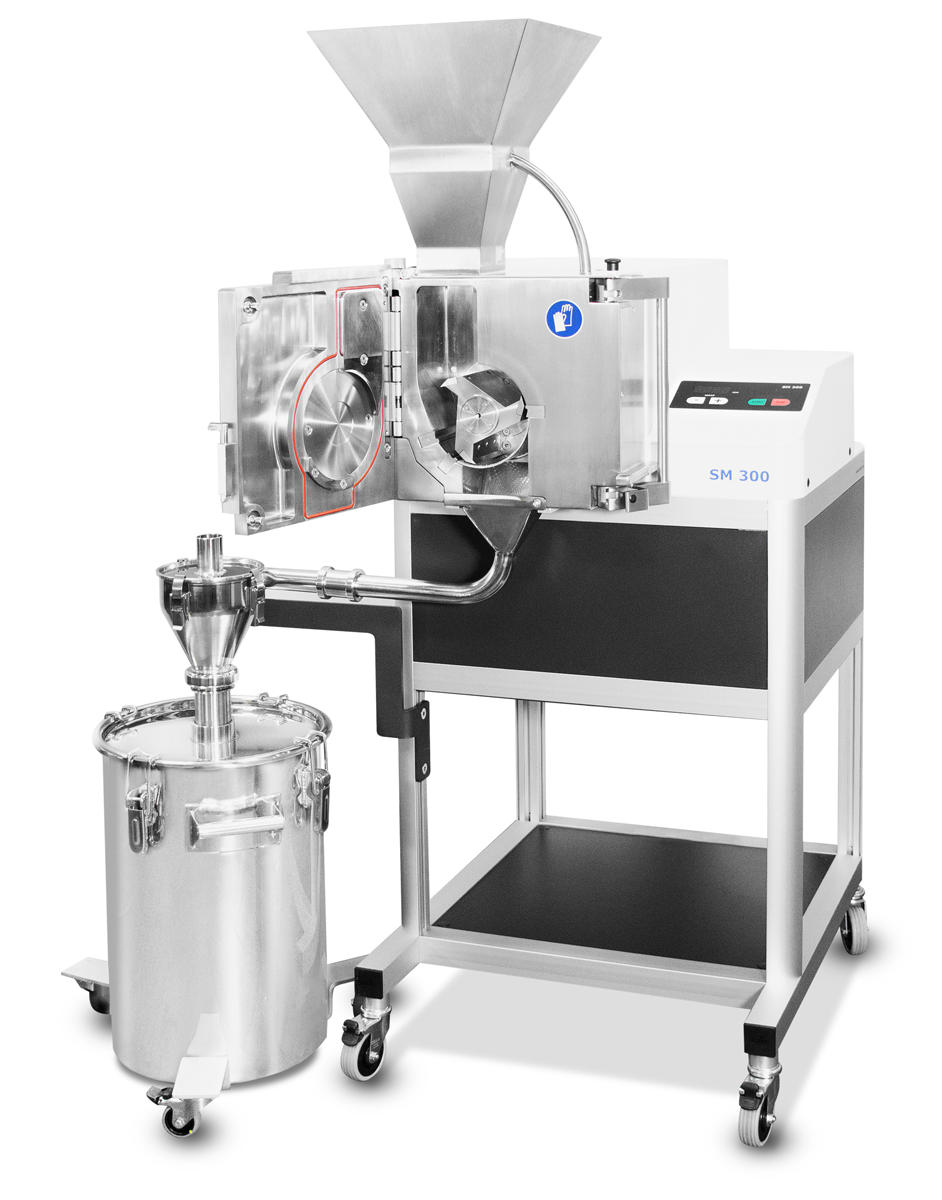
Image Credit: RETSCH GmbH
Accessories for Safe and Effective Grinding Processes
The SM 200 can be outfitted with various rotors, hoppers, and bottom sieves. The grinding mill and its associated accessories, including cutting bars and cutting plates, are additionally provided in versions suitable for heavy-metal-free size reduction.
Rotor Types
A parallel-section rotor and a six-disc rotor are offered in both stainless steel and heavy-metal-free steel for optimal adaptation to specific sample properties.
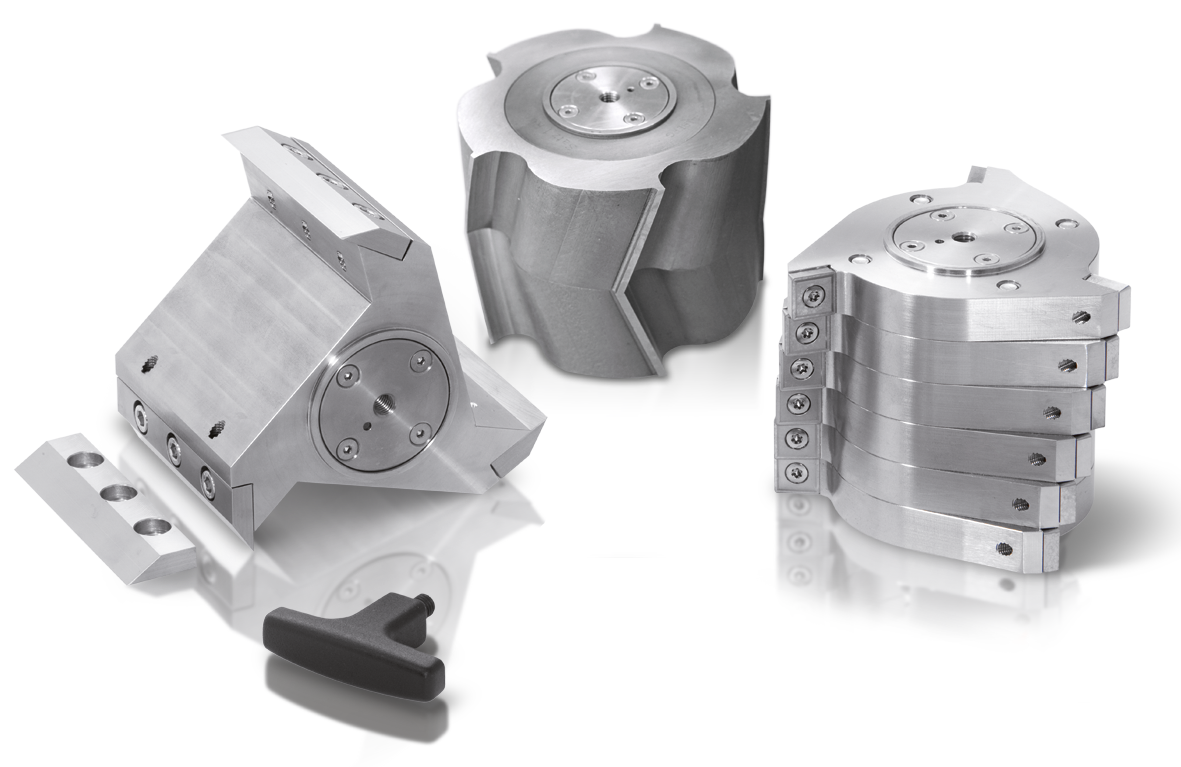
Image Credit: RETSCH GmbH
Hopper Types
The SM 300 can be fitted with either the universal hopper, which is suitable for most samples, or the long-stock hopper, which is engineered for long samples.
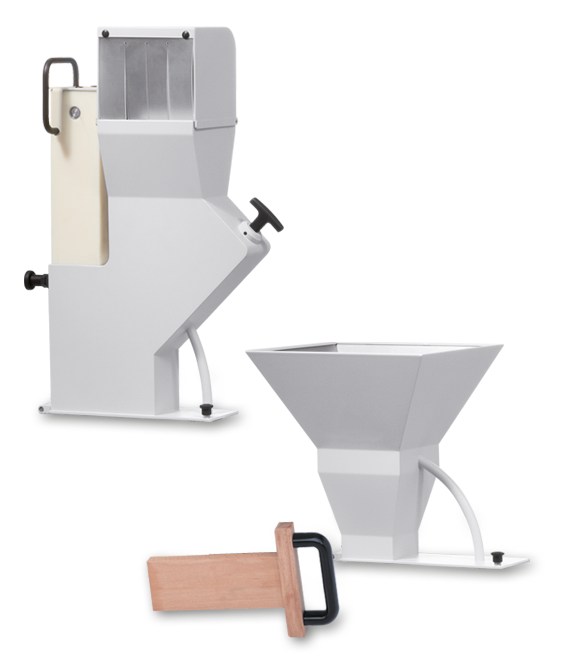
Image Credit: RETSCH GmbH
Bottom Sieves
The bottom sieves, featuring either trapezoidal or square perforations, are manufactured from stainless steel or heavy-metal-free steel.
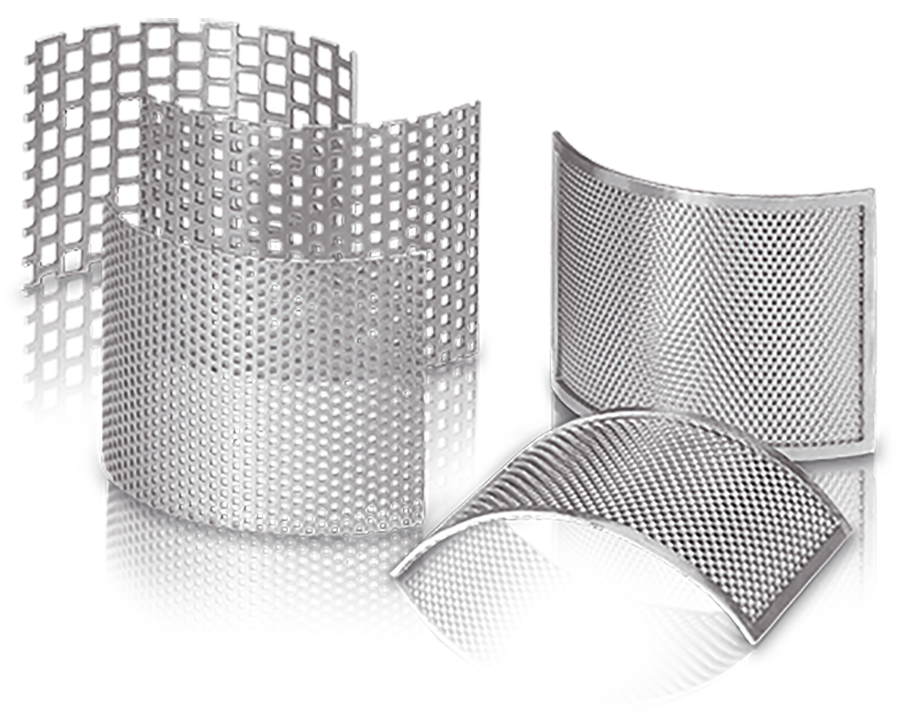
Image Credit: RETSCH GmbH
Typical Sample Materials
RETSCH cutting mills handle a broad spectrum of diverse applications. Common substances encompass: PET preforms, animal feed, aluminum slag, cables, bones, cardboard, electronic components, foils, feed pellets, food, leather, material mixtures, lignite, non-ferrous metals, paper, plant materials, pharmaceutical products, plastics, plastic toys, polymers, refuse derived fuels, resins, rubber, spices, straw, textiles, waste, wood, etc.
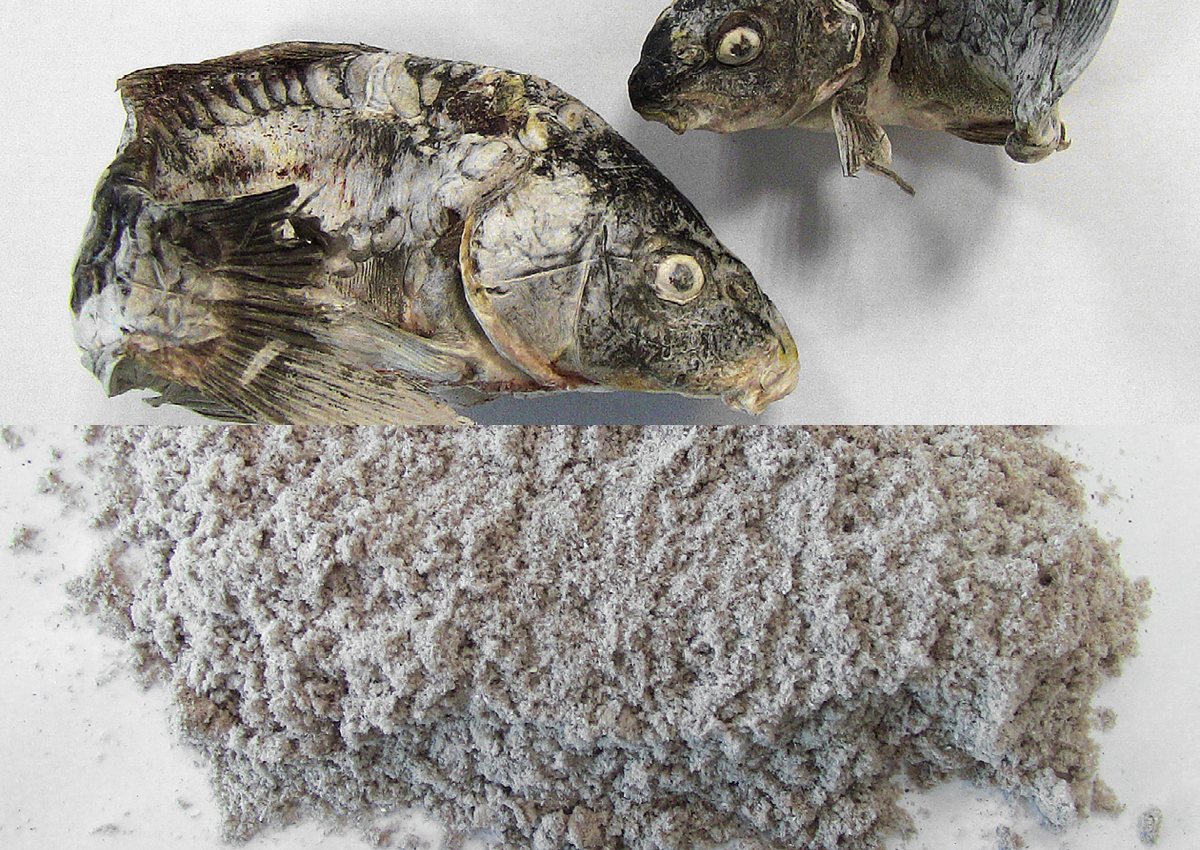
Fish. Image Credit: RETSCH GmbH
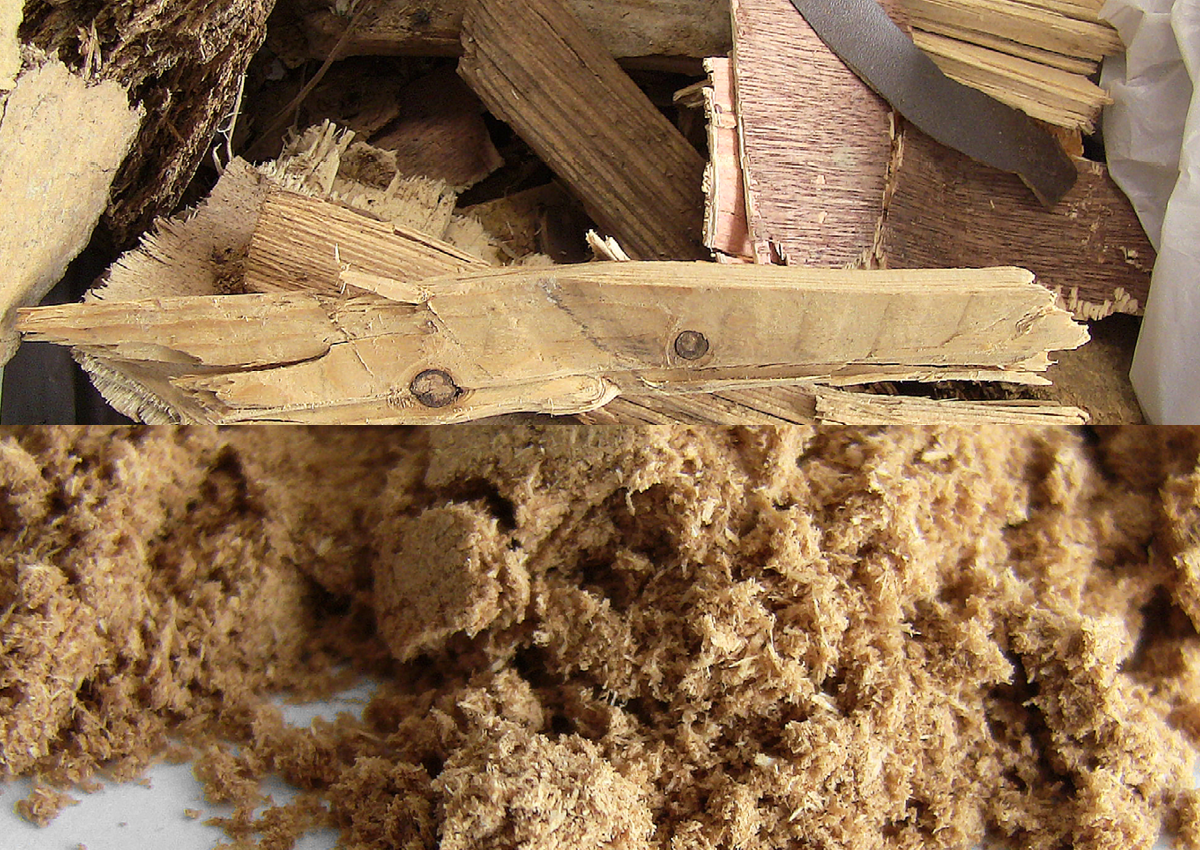
Wood. Image Credit: RETSCH GmbH
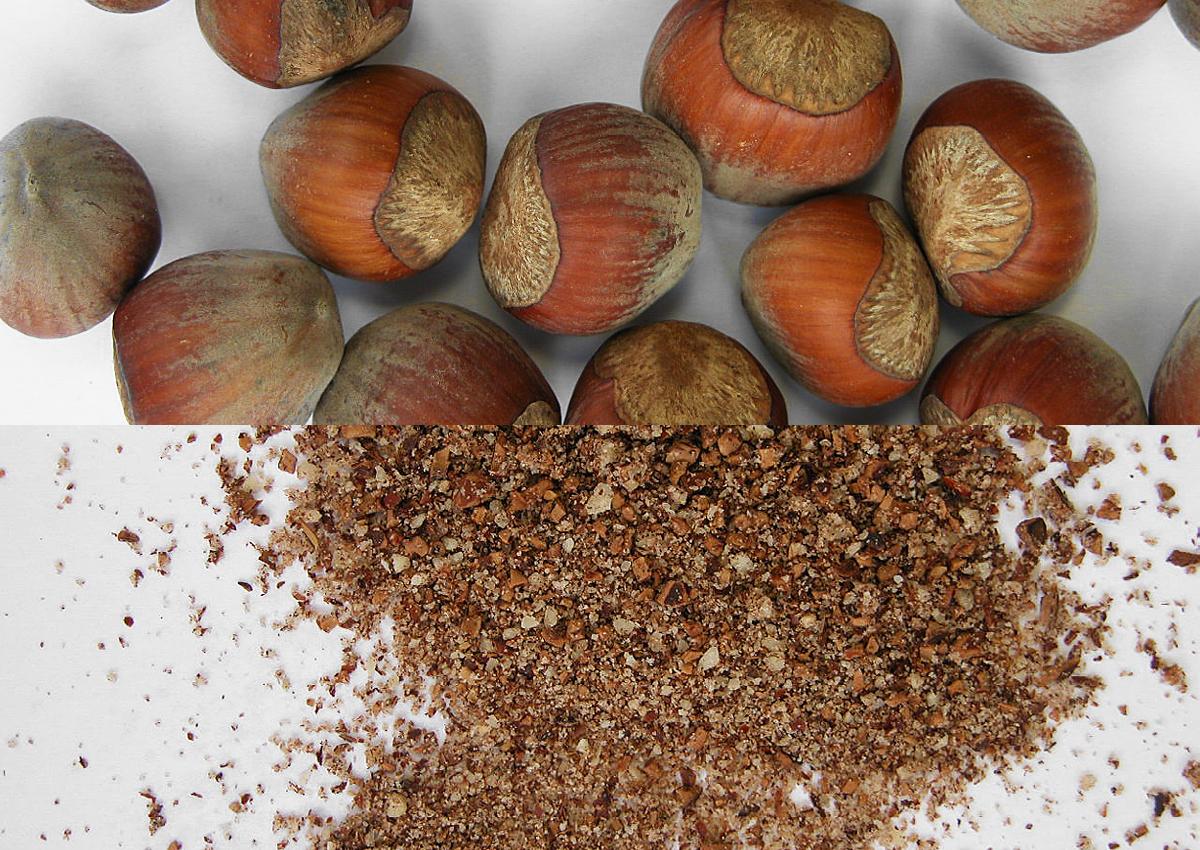
Nuts. Image Credit: RETSCH GmbH
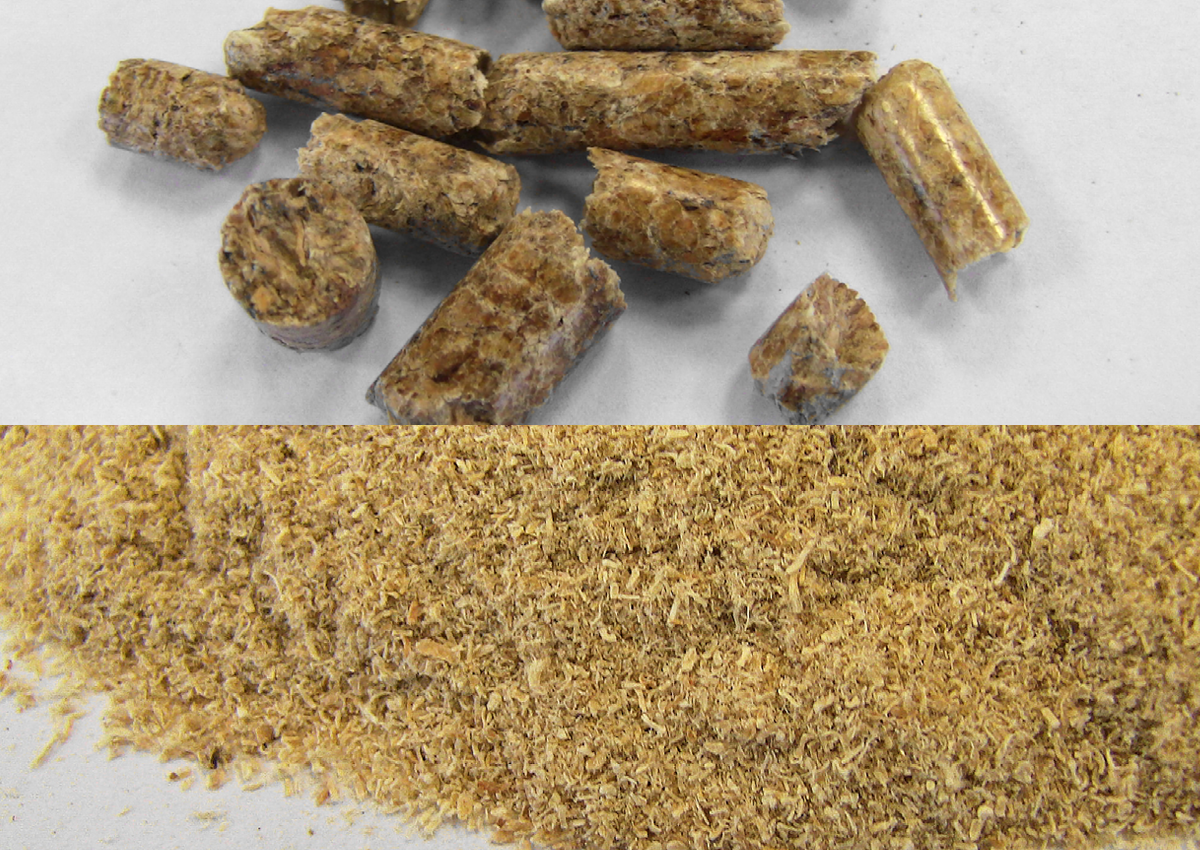
Animal feed. Image Credit: RETSCH GmbH
Pre-cutting of dried parsley in Heavy Duty Cutting Mill SM 300 - RETSCH
Parsley 1. Video Credit: RETSCH GmbH
Fine grinding of dried parsley in Cutting Mill SM 300 -RETSCH
Parsley 2. Video Credit: RETSCH GmbH
Functional Principle
Material size reduction within the SM 300 Cutting Mill occurs through cutting and shearing forces. The sample comes into contact with the rotor and is pulverized between the blades and the stationary, double-action cutting bars inserted into the housing.
Within the six-disc rotor, spirally arranged reversible hard-metal plates perform cutting operations sequentially. The knives of the parallel-section rotor perform material comminution through a powerful cutting action.
An additional flywheel mass (RES technology) on the drive shaft delivers the outstanding performance of the SM 300. Due to its variable speed, ranging from 100 to 3000 min-1, the SM 300 can be readily configured for diverse application requirements.
Function Principle of Retsch Cutting Mills
Video Credit: RETSCH GmbH
Technical Data
Source: RETSCH GmbH
| |
|
| Applications |
Size reduction by cutting |
| Field of application |
Agriculture, biology, chemistry/plastics, engineering/electronics, environment/recycling, food, medicine/pharmaceuticals |
| Feed material |
Soft, medium-hard, tough, elastic, fibrous |
| Size reduction principle |
Shearing, cutting |
| Max. feed size |
60 x 80 mm |
| Final fineness |
0.25–20 mm |
| Speed at 50 Hz (60 Hz) |
100–3000 min-1 |
| Rotor peripheral speed |
4.7–20.3 m/s |
| Rotor diameter |
129.5 mm |
| Types of rotors |
Parallel section rotor / six-disc rotor / V-rotor |
| Types of hoppers |
Universal, long stock |
| Material of grinding tools |
Stainless steel, steel for heavy-metal-free grinding, tungsten carbide |
| Sieve sizes |
Trapezoid holes 0.25/0.50/0.75/1.00/1.50 mm
Square holes 2.00/4.00/6.00/8.00 /10.00/20.00 mm
|
| Collector systems/capacities |
Collecting receptacle 5 L/optional: 30 L
Collecting unit 0.25 /0.5 L
Cyclone-suction combination (0.25–30 L)
|
| Drive |
Three-phase asynchronous motor with frequency converter |
| Drive power |
3 kW with flywheel mass ∼28.5 kg |
| Electrical supply data |
Different voltages |
| Power connection |
One-phase |
| Engine brake |
Yes |
| Protection code |
IP 20 |
| W x H x D closed |
576 (1080 opened) x 1677 x 750 mm (with base frame and universal hopper) |
| Net weight |
∼160 kg |
| Standards |
CE |