The HORIBA DeltaFlex™ system is the preferred TCSPC system for measuring fluorescence lifetimes ranging from picoseconds to seconds. HORIBA's EzTime™ touchscreen software interface powers a complete fluorescence/phosphorescence system that leverages over 45 years of TCSPC innovation. The system includes innovative pulsed lasers and LEDs, timing electronics, detectors, and sample handling components.
Features
Unique Benefits from a Lifetime in Fluorescence
- Flexibility to fulfill any requirement
- Improved user experience through automated component recognition and control
- An extensive selection of sources and detectors to fulfill all wavelength and lifetime needs
- EzTime is touchscreen software that is automatic and easy to use
DeltaFlex: Flexibility is in the Name and Flexibility is in the Design
The Modular DeltaFlex System is Comprised of a Choice of the Following Main Components:
- Optical configuration
- Select between simultaneous dual detectors (T Format) or filters or monochromators and a single detector (L Format)
- Excitation sources
- Numerous LED and pulsed laser sources are available for selection
- Detection modules
- Select from a variety of specialized TCSPC detectors based on the emission wavelength range, lifetime needs, and financial constraints
- Timing electronics
- Depending on the lifetime needs, select between standard or high-resolution electronic interfaces
EzTime software, which offers complete instrumentation control and acquisition and a full suite of data analysis modules for determining the lifetimes of fluorescence and phosphorescence, decay-associated spectra (DAS), time-resolved anisotropy, and uncorrected steady-state emission spectra (if equipped with a scanning emission monochromator), is used to control all DeltaFlex systems.
Product Variants
EzTime Software. Image Credit: HORIBA
Specifications
DeltaDiode™ General Specifications
Source: HORIBA
| DeltaDiode Type |
Pulse Duration |
Repetition Rate |
Available Wavelengths |
DeltaDiode Laser
(Denoted with an “L” on part number) |
35 to 200 ps |
10 kHz to 100 MHz |
375 to 1310 nm |
DeltaDiode LED
(No “L” on part number) |
750 to 950 ps |
10 kHz to 25 MHz |
265 to 455 nm |
DeltaDiode Controller Specifications
DD-C1 Controller. Source: HORIBA
| Function |
Specification |
| Repetition Rates |
10 kHz, 20 kHz, 50 kHz, 100 kHz, 250 kHz, 500 kHz, 1 MHz, 2 MHz, 4 MHz, 5 MHz, 8 MHz, 10 MHz, 16 MHz, 20 MHz, 25 MHz, 50 MHz, 80 MHz, 100 MHz, or Trigger Input (single-shot to 50 MHz). Subject to attached head |
| Trigger Input |
Pulse amplitude +0.5 V to +5 V, trigger threshold software programmable from +0.2 V to +2 V, 50 Ω, 20 ns minimum spacing |
| Sync Outputs |
Simultaneous output of NIM-compatible (-0.8 Vpp 50 Ω) and TTL-compatible (+2 Vpp 50 Ω), automatic width selection 4-15 ns nominal |
| Sync Delay Control |
Adjustment of sync output pulse timing in range -10 ns to +10 ns nominal in 1 ns steps, uncalibrated |
| Fast Gate Input |
Pulse amplitude +0.5 V to +5 V, trigger threshold software programmable from +0.2 V to +2 V, 50 Ω. Selectable Inhibit/Enable modes |
| Slow Gate Input |
Pulse amplitude +2 V to +5 V. 10 kΩ. Selectable Inhibit/enable modes. Operates in Pulsed and CW modes |
| Interlock |
2-pin connector (included). Contacts must be short-circuited to enable emission |
| Connection to Head |
1.5 m cable (included) |
| User Interface |
LCD (stand-alone operation) or software (PC control) |
| PC interface |
USB 2.0 with integral hub for downstream connection to other USB peripherals (cable to host PC and software supplied) |
| Power Requirement |
90 V to 250 V AC, 50/60 Hz, 100 VA |
| Operating Temperature |
+15 ˚C to +30 ˚C (ambient) |
| Weight & Dimensions |
3.1 kg, 234 x 255 x 92 mm |
Solas MOFA Fiber Laser Specifications
Source: HORIBA
| Parameter |
Solas 355L |
Solas 532L |
Solas 1064L |
| Power |
> 7 mW at 80 MHz |
> 30 mW at 80 MHz |
> 300 mW at 80 MHz |
| Power Stability |
0.5% RMS over 10 min |
| Pulse duration |
80 to 100 ps (FWHM) |
| Spectral Width |
< 0.2 nm |
< 0.4 nm |
| Resolution Rate |
Pulse on demand to 100 MHz |
| Pointing Stability |
< 1 μrad |
| Polarization Extinction Ratio |
> 20 dB |
| Beam Quality |
Multi-mode fiber output |
Circular TEM00 beam |
SpectraLED Specifications
Source: HORIBA
| |
Pulse Duration |
Repetition Rate |
Available Wavelengths |
| SpectraLED |
< 250 ns to > 10 s |
0.1 to 100 kHz |
265 to 1275 nm |
SpectraXE Specifications
Source: HORIBA
| |
Pulse Duration |
Repetition Rate |
Available Wavelengths |
| SpectraXE |
0.4 μs |
0.1 Hz to 80 Hz |
185 to 2000 nm |
HPPD Specifications
Source: HORIBA
| Model |
Wavelength Range |
Temporal Response
(IRF FWHM) |
Dark Count |
Quantum Efficiency |
| HPPD-650 |
220 to 650 nm |
50 ps |
< 100 cps |
28% (340 nm) |
| HPPD-720 |
300 to 720 nm |
120 ps |
< 1000 cps |
47% (530 nm) |
| HPPD-860 |
220 to 860 nm |
50 ps |
< 200 cps |
23% (280 nm) |
| HPPD-870 |
300 to 870 nm |
130 ps |
< 500 cps |
26% (630 nm) |
| HPPD-890 |
380 to 890 nm |
160 ps |
< 1000 cps |
16% (630 nm) |
MCP-PMT Detectors
Source: HORIBA
| |
HPPD-860 COOLED |
MCP-PMT (R3809-50) |
| Typical IRF FWHM at 400 nm |
40-45 ps |
40-45 ps |
| Shortest Measurable Lifetime |
40-45 ps |
5 ps |
| Wavelength Response |
220-860 nm |
160-850 nm |
| Robust for Steady State Spectra |
Yes |
No |
| Amplifier + CFD |
Integrated (no cable) |
External |
| High Voltage Bias |
Integrated (no cable) |
External |
| Compatible with Phos and Steady State |
Yes |
No (requires second detector) |
| Temperature Control |
Integrated TEC (air-cooled) |
External (water-cooled) |
| Dark Count Rate (Cooled) |
< 200 cps |
< 20 cps |
| PC Interface |
N/A |
N/A |
NIR TCSPC Specifications
Source: HORIBA
| Model |
Sensor |
Wavelength Range |
Temporal Response |
Dark Count |
Cooling |
| NIR-R4 |
R5509-43 PMT |
300 to 1,400 nm |
1.5 ns (TTS) |
< 25,000 cps |
Liquid nitrogen |
| NIR-R7 |
R5509-73 PMT |
300 to 1,700 nm |
1.5 ns (TTS) |
< 250,000 cps |
Liquid nitrogen |
| NIR-H2 |
H10330-25 PMT |
950 to 1,200 nm |
400 ps (TTS) |
< 2500 cps |
Thermo-electric |
| NIR-H4 |
H10330-45 PMT |
950 to 1,400 nm |
400 ps (TTS) |
< 25,000 cps |
Thermo-electric |
| NIR-H7 |
H10330-75 PMT |
950 to 1,700 nm |
400 ps (TTS) |
< 250,000 cps |
Thermo-electric |
| NIR-S1 |
Count-100N SPAD |
400 to 1,000 nm |
< 3 ns (TTS) |
100 cps |
None |
FiPho TCSPC Electronics Specifications
Source: HORIBA
| Specifications |
FiPho |
FiPho-HR |
| Full Detectable TCSPC Lifetime Range |
<20 ps to 30 sec |
5 ps to 30 sec |
| TCSPC Converter Type |
Digital TDC |
Digital TDC and Analog TAC |
| TCSPC Bin Width |
<15 ps |
~ 250 fs |
| Phosphorescence Mode |
MCS |
MCS |
| Independent Stop Channels |
1 to 4 |
1 to 4 |
| Photon Streaming |
Included |
Included |
| FLIM Capable |
Yes |
Yes |
Detailed FiPho Electronics Specifications
Source: HORIBA
| Specifications |
FiPho (TDC, MCS) |
FiPho-HR (TDC, TAC, MCS) |
| Full Detectable Lifetime Range |
<20 ps to 30 sec |
5 ps to 30 sec |
| TCSPC Time Range |
<2 ns to 55 μs |
<2 ns to 55 μs |
| Deadtime |
5 ns |
5 ns |
| TCSPC Bin Width |
<15 ps |
~ 250 fs |
| Electronics Jitter (FWHM) |
30 ps |
< 10 ps |
| TCSPC Histogram Size |
Up to 16k |
Up to 64k |
| Histogram Bin Depth |
32 bit |
32 bit |
| Independent Stops |
1 to 4 |
1 to 4 |
| Maximum Start Rate |
100 MHz |
100 MHz |
| Maximum Stop Rate |
40 Mcps |
40 Mcps |
| Operating Mode |
Automatic Forward Timing |
Automatic Forward or Reverse timing |
| Streaming Mode |
Photon Streaming (Time-Tag) |
Photon Streaming (Time-Tag) |
| MCS Bin Width |
5 ns |
5 ns |
| MCS Time Range |
< 2.5 μs to 330 seconds |
< 2.5 μs to 330 seconds |
| Maximum MCS Histogram Size |
64k |
64k |
| Acquisition and Analysis Macro Scripting |
Yes |
Yes |
| PC Interface |
USB 3.0 |
USB 3.0 |
| Software |
EzTime, EzTime Image |
EzTime, EzTime Image |
Applications
Dye‐Protein Binding Monitored in a Microliter Volume Using Time-Resolved Fluorescence
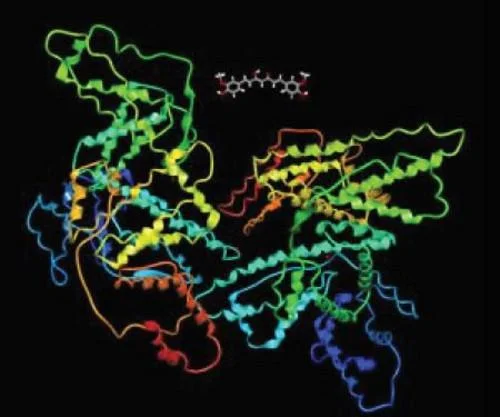
Image Credit: HORIBA
Several study groups have expressed interest in the possible health advantages of curcumin's antioxidant activity, which is widely found in turmeric (Curcuma longa L).
Stopped Flow Time‐Resolved Fluorescence Study of Serum Albumin – Curcuminoid Binding
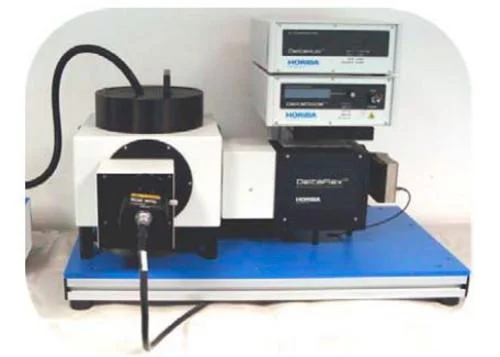
Image Credit: HORIBA
Rapid mixing accessories for stopped flow measurements have been used to characterize interactions and reactions in solution. Reactants are discharged from syringes, mixed, and injected into a flow cell.
Fluorescence Anisotropy Studies
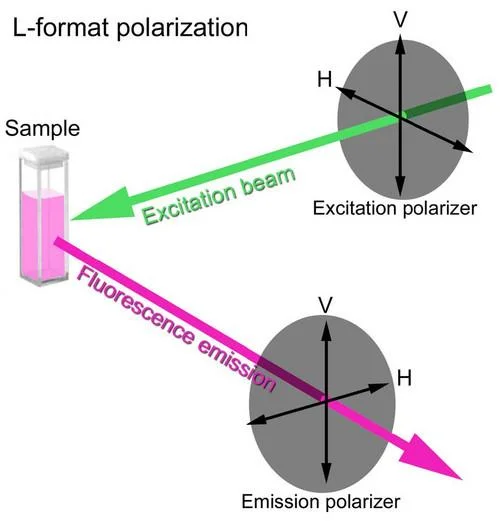
Image Credit: HORIBA
When polarized light strikes a fluorescent molecule, it produces polarized fluorescence. This polarized emission gradually transitions to unpolarized fluorescence as a result of rotational diffusion and other reasons. Anisotropy is the ratio of the polarized light component to the total light intensity.
Measuring PL Upconversion Spectra and Lifetimes of Lanthanide-Doped Nanoparticles
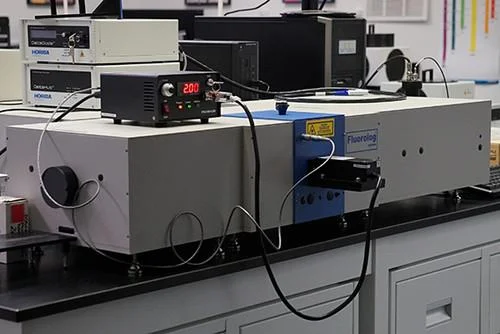
Image Credit: HORIBA
Upconverting lanthanide-based nanomaterials have a distinct fluorescence anti-Stokes shift that allows them to convert NIR wavelength excitation into visible shorter wavelength emissions (NIR-UV-Vis).
Characterizing Lanthanides in Glasses for Optical Applications
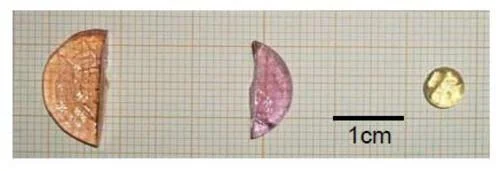
Image Credit: HORIBA
Glasses are a crucial material with a wide range of applications and forms. In optoelectronics, there is a desire to change the glass composition to promote the integration of lanthanide elements.
Upconversion of Lanthanide-Containing Glasses Using DD‐980L Excitation
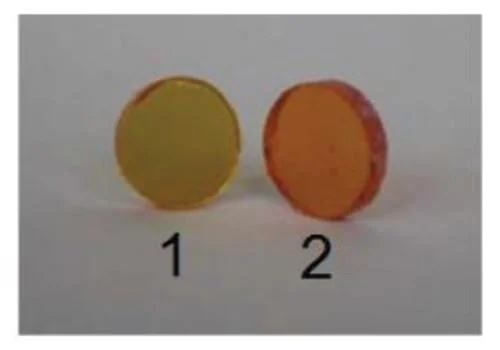
Image Credit: HORIBA
Upconversion is an optical process that absorbs lower-energy photons (longer wavelengths) and emits higher-energy photons (shorter wavelengths).
Measurement of Carrier Lifetime in Perovskite for Solar Cell Applications
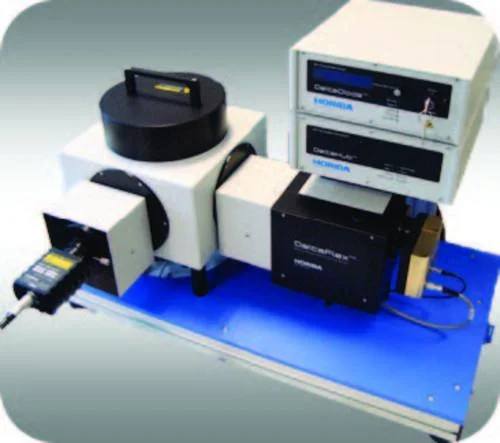
Image Credit: HORIBA
Hybrid perovskite photovoltaics (PV) show promise due to their high efficiencies, which can reach 20%. Perovskite materials and their PV properties display a significant degree of radiative recombination.
Monitoring Whole Leaf Fluorescence Using Time‐Resolved Techniques
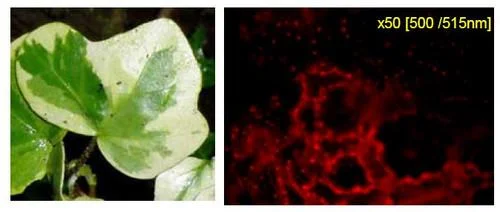
Image Credit: HORIBA
Light incident on a leaf can be absorbed by chlorophyll, triggering the photosynthetic cycle. Excess energy can be released as heat or fluorescence, which can be used to determine the efficiency of the photosynthetic process.
The Measurement of Singlet Oxygen Lifetime Sensitized using Rose Bengal
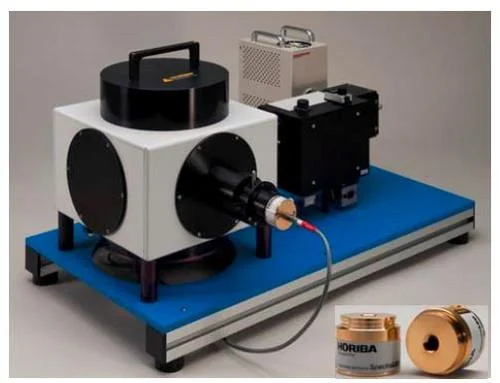
Image Credit: HORIBA
The study of singlet oxygen (1O2) is particularly interesting because it is a highly reactive species. It can be created through photosensitization, which usually involves a chemical, such as a dye or porphyrin. Thus, 1O2 can be selectively created using a suitable sensitizer, oxygen, and light. From a biological standpoint, it has the ability to harm and destroy cells, prompting interest in its usage as an anticancer drug in photodynamic treatment.
Effect of Temperature on HSA Structure Inferred Using Time-Resolved Room-Temperature Phosphorescence
Image Credit: HORIBA
To use intrinsic amino acids as probes, such as tryptophan, UV excitation wavelengths for pulsed phosphorescence measurements have traditionally been reserved for low-repetition-rate gas-filled lamps or bigger laser systems. Recent advancements have allowed the use of replaceable semiconductor diodes.
Plasmon Enhancement of Protein Fluorescence by Silver Nanostructures
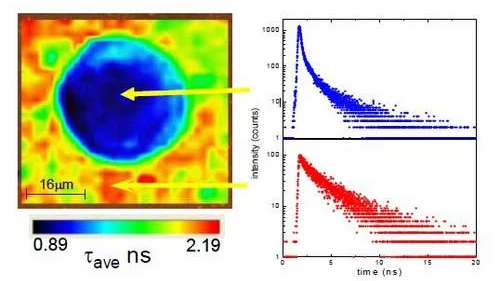
Image Credit: HORIBA
Metal surfaces, in conjunction with fluorescence molecules that use a plasmon effect, also known as metal-enhanced fluorescence, can be beneficial due to the potential augmentation of photophysical properties.
Investigating Photocleavage Using Time‐Resolved Emission Spectra
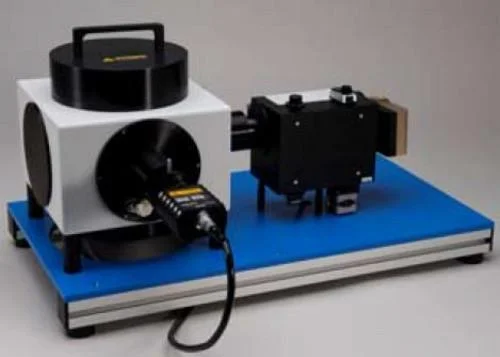
Image Credit: HORIBA
The selection of a protective group is critical to the success of many processes in organic synthesis and polyfunctional molecule manipulation because it prevents the creation of undesirable side products and reactions.
Time‐Resolved Luminescence of Security Inks from the UV to NIR
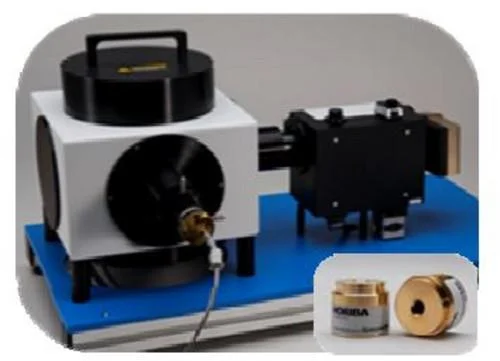
Image Credit: HORIBA
Security elements, such as luminescent inks, have become increasingly popular in an effort to prevent fraud and counterfeiting of materials and items.
Elucidating Local Viscosity Using Fluorescence Lifetime Measurements
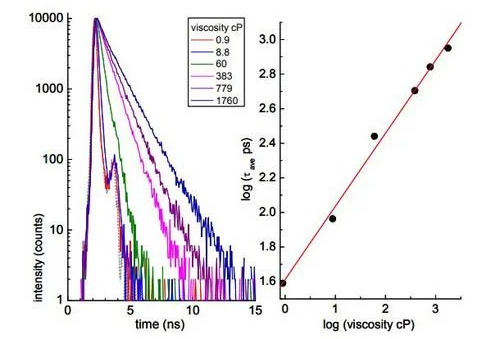
Image Credit: HORIBA
Certain fluorescent molecules, known as molecular rotors, can determine local (nanoscale) viscosity in microheterogeneous environments by measuring their fluorescence lifetimes. This method can be more favorable than the traditional fluorescence anisotropy method because it is simpler and faster to perform. The HORIBA Scientific TemPro fluorescence lifetime device monitors silica gelation using the sol-gel process.
MCS and Protein Phosphorescence
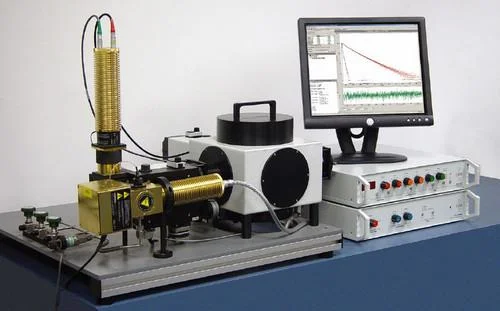
Image Credit: HORIBA
Tryptophan phosphorescence within protein molecules is gaining popularity as a marker of protein dynamics and structure. The tryptophan phosphorescence lifetime, τ, depends on the protein molecule's immediate environment and conformation.